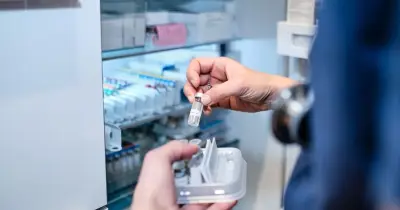
An expert has warned about the seriousness of pneumonic plague following the death of a laboratory worker in Russia. The researcher at the Irkutsk Anti-Plague Research Institute of Siberia and the Far East died of "pneumonia of unknown aetiology" or origin, according to the country's consumer welfare service on Sunday. The 28-year-old's exact cause of death has not been confirmed by Russian authorities. However, they said no evidence of it being caused by any of the pathogens she worked with was found.
Expert warns of deadly form of plague
Dr Simon Clarke, an associate professor in cellular microbiology at the University of Reading, explained that pneumonic plague is caused by the bacterium Yersinia pestis. It is the deadliest and most virulent form of the plague, affecting the lungs, and causes severe pneumonia.
Dr Simon Clarke said: "Pneumonic plague is particularly serious because it means the infection has reached the lungs and is nearly always fatal if not treated promptly. Unlike the bubonic plague, which enters the body via infected flea bites, pneumonic plague can spread between people through respiratory droplets during close contact."
Lab infections rare but possible
He did, however, assure that it is "generally treatable with antibiotics if identified quickly". In response to the latest incident, he explained that pathogens escaping labs aren't rare. However, getting infected is.
He said: "One claim attracting attention is that a laboratory worker may have been infected after breaking a test tube in the lab. It is not unheard of for pathogens to escape from labs, but an awful lot must have gone wrong for a lab worker to be infected by a broken test tube.
"Having worked in high-containment laboratories, I know that handling dangerous pathogens involves multiple layers of protection, strict procedures, safety cabinets, airflow systems and careful procedures carried out by well-trained staff."
Need for transparency and rapid diagnosis
"Lab-acquired infections are rare events, and a broken tube would not automatically lead to exposure or infection. We also don't tend to use test tubes very much.
"Until more details emerge, it is difficult to assess whether this represents an isolated case, an occupational exposure, or evidence of wider transmission.
"Transparency, rapid diagnosis and effective contact tracing would be the most important factors in managing an outbreak."