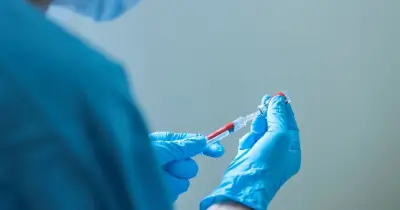
Vladimir Putin has been accused of concealing a pneumonic plague outbreak in Russia after nearly 200 people had been forced into quarantine. The accusation follows the death of a 28-year-old lab worker at a research facility in Siberia.
Darya Shipilova died at the Shelekhov Hospital in a suspected case of the plague. She had been hospitalised with acute pneumonia symptoms on September 29, with reports saying she died two days later on Thursday.
Quarantine and official reassurances
The incident prompted Shelekhov Hospital to quarantine, soon followed by several others in the Irkutsk region. However, health authorities reassured residents that everything was fine. Public health officials have insisted the epidemiological situation in the region is "stable" and walked back on multiple of their earlier statements.
According to Russian officials, Shipilova died after developing "pneumonia of unknown aetiology".
Conflicting statements and alleged cover-up
On Saturday morning, the local government for the town of Baykalsk advised residents to avoid travelling to Shelekhov and other nearby towns because of a plague-related death, but the post was taken down shortly after, according to the Times.
Igor Kobzev, the governor of the Irkutsk region, did not identify the illness as the plague and referred to it only as "a dangerous infectious disease", but shut down all public events in the region, according to the New York Post.
Shipilova had reportedly been exposed to the disease after she had accidentally broken a test tube containing live bacteria on September 25.
Epidemiologist disputes official account
According to epidemiologist Mikhail Favorov, who now lives in the US, the alleged broken test tube story is a government cover-up.
"It's laughable," Favorov said, according to the Post. "Someone working at the anti-plague Institute in Irkutsk wears a protective anti-plague suit. If you break a test tube, the likelihood of infection is actually very low. In short, it doesn't matter to the general public — they'll believe the 'dropped test tube story.'"