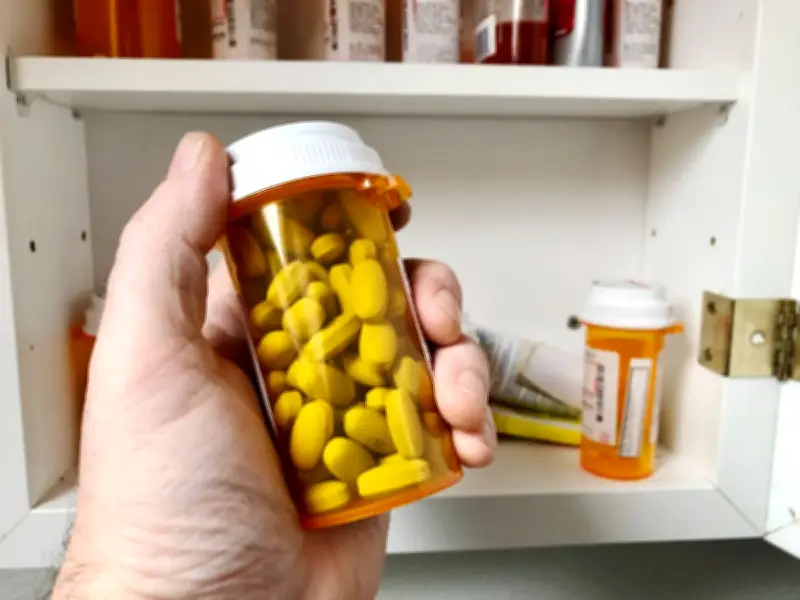
Households preparing for winter are being urged to reconsider where they keep their medication, as a pharmacist warns that heat and moisture can affect medicines even before their expiry date.
Ting-Hoi Chan, GPhC-Registered Pharmacist and Pharmacy Governance Manager at Phlo Clinic, said medicines are designed to be stored under specific conditions and that packaging plays an important role in protecting them.
Why the bathroom is unsuitable
Mr Chan explained that unless instructions specify refrigeration, most medications should be kept in a cool, dry place, as moisture and excessive heat can cause them to deteriorate, potentially affecting their safety and effectiveness.
Despite its convenience, the bathroom is the worst location in the house for storing medication. Mr Chan said this is particularly the case in winter, when moisture from hot showers and baths can linger longer due to colder temperatures.
The NHS advises that medicines kept at room temperature should be stored somewhere dry, away from heat and humidity. Powys Teaching Health Board also recommends against using warm or humid rooms, including kitchens and bathrooms.
Best storage practices
For medicines that can be kept at room temperature, Mr Chan recommends choosing a secure spot away from direct sunlight and heat sources. He advised checking storage instructions on the label or patient information leaflet and storing medicines in a place where moisture cannot reach them.
He also suggests leaving tablets and capsules in their supplied packaging, which helps protect them and keeps important information close to hand.
Pill organisers may help with remembering doses, but they are not suitable for every medicine. Mr Chan noted that while pill organisers can be a handy reminder or useful for carrying a specific amount for a trip, not all medication is suitable for them.
Checking for damage
If tablets or capsules look or feel different, it is important to check with a pharmacist before taking them. Mr Chan said that if medications have become damp, changed colour, started sticking together or developed an unusual texture, patients should ask their pharmacist for advice before taking them.
Medicines should also be kept out of sight and reach of children and pets, ideally in a secure cupboard. Anyone unsure about the right conditions for a particular medicine should check its patient leaflet or ask a pharmacist, as some products need refrigeration rather than room-temperature storage.