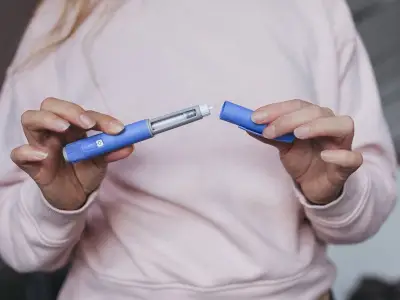
A pharmacist has warned that anyone taking semaglutide weight-loss or diabetes medicines who experiences sudden sight loss should go to A&E urgently, because of a rare but potentially serious side effect.
Pharmacist's urgent warning
Raj Patel, known as the Straight Talking Pharmacist on TikTok, shared the advice with his more than 100,000 followers. He described a rare condition affecting the blood supply to the optic nerve, which can cause sudden and potentially permanent sight loss.
In the clip, Mr Patel said: "No pain, but that still needs urgent checking. Not every vision change is caused by your medicine, but if you get sudden sight loss or quickly worsening eye symptoms, vision problems, you need to go to casualty or A&E." He explained that one possible cause is reduced blood flow to a nerve at the back of the eye.
What is NAION?
The condition is called non-arteritic anterior ischaemic optic neuropathy (NAION), and the Medicines and Healthcare products Regulatory Agency (MHRA) says it has been very rarely reported in people taking semaglutide, a GLP-1 medication sold under the brand names Ozempic and Rybelsus for patients with type 2 diabetes. It is also sold as Wegovy, used for weight management and cardiovascular risk reduction in patients who are overweight or obese.
According to the MHRA, the condition typically causes sudden, painless loss of vision, usually in one eye. The MHRA updated its guidance in February, advising people taking semaglutide to attend eye casualty or A&E urgently if they experience sudden sight loss or rapidly worsening eyesight. The risk is estimated at up to one person in every 10,000 taking the medicine.
Other medicines and next steps
Mr Patel also mentioned Mounjaro, but the MHRA's specific NAION warning concerns semaglutide rather than tirzepatide, the active ingredient in Mounjaro. The regulator says it is reviewing evidence for a possible association with other GLP-1 medicines, so the same confirmed warning should not be assumed to apply to every injection.
The NHS says sudden loss of vision in one or both eyes requires immediate action, advising people to go to A&E or call 999. It also warns people not to drive themselves and recommends taking any medicines they use with them.
Mr Patel's advice was clear: "Don't drive, don't stop the treatment yourself and tell the team what you take." The MHRA says semaglutide should be discontinued if NAION is confirmed, but patients should not make that decision themselves before medical assessment.
Any sudden loss of sight, including partial loss, should be treated as an emergency rather than something to monitor at home. People experiencing rapidly worsening vision while taking these medicines should seek urgent medical assessment and tell clinicians exactly what they have been prescribed.