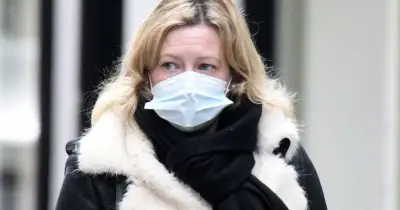
Covid-19 case rates have increased across the North East, with Newcastle recording its highest rate since November 2025, according to new data from the UK Health Security Agency (UKHSA). The rise is linked to the XFG variant, sometimes called 'American Covid'.
Figures released on Thursday showed that between September 28 and October 4, flu and Covid-19 levels both increased nationally. UKHSA reported that Covid-19 activity is now "circulating at low levels" with increases in positive cases and hospitalisations.
Rates in the North East
In Newcastle, the seven-day case rate was 8.05 per 100,000 people for the week to September 30, the highest since November 2025. This compares with lower rates elsewhere in the region: County Durham saw 2.30 cases per 100,000, Gateshead 2.04, North Tyneside 3.35, Northumberland 1.87, and Sunderland 1.82. South Tyneside saw 3.38 cases per 100,000 as recently as September 28, though this had fallen to 1.35 two days later.
UKHSA experts explained that the increases have been observed consistently across England, Scotland, Wales and Northern Ireland, as well as across Europe and the United States, indicating this is not a localised trend.
Variant behaviour
UKHSA wrote: "Current data does not indicate that these variants lead to more severe illness than other variants in circulation. UKHSA monitors a range of surveillance systems, including GP appointments, A&E attendances and hospitalisations, alongside genomic sequencing, to track how variants are behaving."
They added: "As increases in hospitalisations are rising in line with overall increases in COVID-19 circulation – rather than rising sharply on their own – this suggests a general increase in COVID-19 activity rather than a variant causing more severe disease."
On the variant itself, UKHSA stated: "XFG – sometimes referred to in the media as the Stratus variant – remains the most common current COVID-19 variant. XFG has also been referred to as ‘American Covid’ in some media coverage, though it is not new and has been circulating in the UK and other countries for around a year. The name reflects where the strain was first sequenced and detected, rather than necessarily where it originated."
Winter pressure warnings
Prof Frankie Swords, NHS national medical director, described "ominous" signs of winter pressure building on the health service, with more patients than usual for this time of year heading to A&E with respiratory viruses like Covid.
She said: "NHS staff have done fantastic work to deliver record levels of elective care this summer and now supporting the busiest September on record for A&E attendances and ambulance incidents. But now the focus is on the looming winter months ahead."
She added: "Staff are already seeing the ominous early signs of pressure, with more patients coming to A&E with flu and other respiratory viruses than usual for this time of year, and unfortunately many people are still waiting longer than we would like them to. This is why it’s absolutely crucial to take up the offer of flu, RSV, Covid and other vaccinations if you’re eligible, to protect yourself, your family and the public. We all have our part to play, so please don’t wait for winter – come forward to your GP or pharmacy now and get protected."