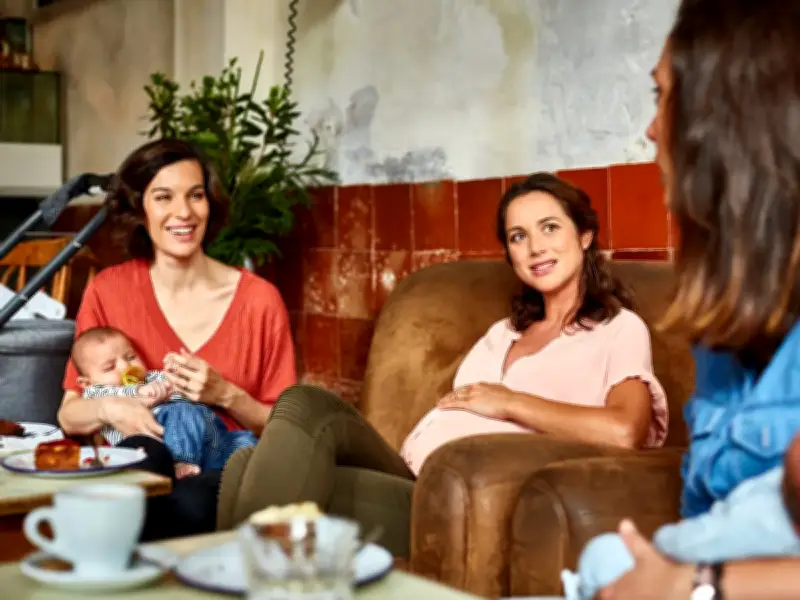
The NHS has advised pregnant women to stay away from people who are smoking, warning that being around them could be harmful to both their own health and their unborn baby.
On its website, the NHS cautions: "Pregnant women exposed to passive smoke are more prone to premature birth, and their baby is more at risk of low birthweight and sudden infant death syndrome (SIDS)."
What is secondhand smoke?
Explaining passive smoking, the health service says: "Secondhand smoke is dangerous, especially for children. The best way to protect loved ones is to quit smoking. At the very least, make sure you have a smoke-free home and car."

"When you smoke a cigarette (or roll-up, pipe or cigar), most of the smoke does not go into your lungs – it goes into the air around you where anyone nearby can breathe it in."
Secondhand smoke is the smoke that you exhale plus the "sidestream" smoke created by the lit end of your cigarette. It warns: "When friends and family breathe in your secondhand smoke – what we call passive smoking – it is not just unpleasant for them, it can damage their health too."
Risks and how to protect against it
People who are regularly exposed to secondhand smoke are at higher risk of many of the same illnesses as smokers, including lung cancer and heart disease. The NHS advises pregnant women not to smoke and to avoid secondhand smoke as much as possible, which may mean steering clear of people who are smoking in public places, such as outside a café, or at work.
The only way to protect friends and family from secondhand smoke is to keep the spaces around them smoke-free. The best way to do that is to quit smoking completely. If you're not ready to stop, do everything you can to keep smoke away from other people – and never smoke indoors or in the car.
You should always smoke outside, ask your visitors to smoke outside, and not smoke in the car or allow anyone else to. Even if you smoke outside, chemicals from the smoke can stay on your clothes and affect the people around you.
Health impact on children
The NHS stresses that this is a "lethal cocktail of more than 5,000 irritants, toxins and cancer-causing substances. Most secondhand smoke is invisible and odourless, so no matter how careful you think you're being, people around you still breathe in the harmful poisons."
Opening windows and doors or smoking in another room in the house does not protect people. Smoke can linger in the air for hours after you've finished a cigarette, even with a window open. "Also, even if you limit smoking to one room, the smoke will spread to the rest of the house, where people will inhale it."
The health service adds that passive smoking is "especially harmful for children as they have less well-developed airways, lungs and immune systems." Children who live in a household where at least one person smokes are more likely to develop asthma, chest infections like pneumonia and bronchitis, meningitis, ear infections, and coughs and colds.
Children are especially vulnerable in family cars, where secondhand smoke can build up to dangerous levels even if the windows are open. To help protect them, smoking in cars and other vehicles carrying children was banned in 2015. It is against the law to smoke in a private vehicle if someone under 18 is present. The NHS says that your GP can also give you advice on how to quit smoking.