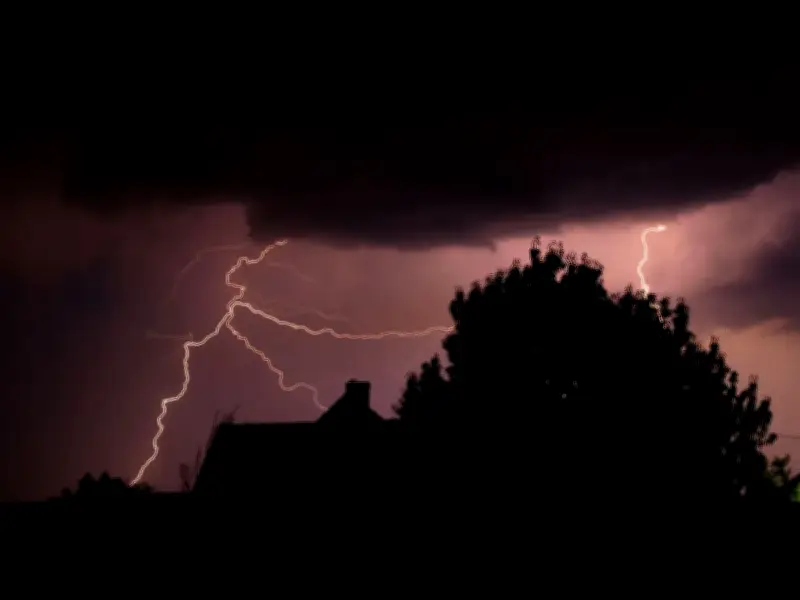
The NHS has issued a warning that thunderstorms can trigger a sudden worsening of symptoms for people with certain conditions, particularly asthma sufferers. The alert, shared on social media, tells asthma patients to be especially aware if they find themselves needing to use their inhaler more when stormy weather arrives.
The NHS said: "Thunderstorm can trigger symptoms for those with lung conditions, like asthma". Anyone whose symptoms get worse and who needs to use their inhaler more is advised to speak to a pharmacist, contact their GP or call NHS 111.
What is thunderstorm asthma?
The warning comes as health experts highlight a little-known phenomenon known as 'thunderstorm asthma', in which storms can cause a surge in breathing problems. The reason has little to do with the thunder itself. Instead, it is the combination of wind, moisture, pollen and fungal spores that can create a dangerous cocktail for some people with sensitive airways.

The UK Health Security Agency says thunderstorm asthma is linked to the airflow generated by storms. When warm, wet air rises rapidly, cooler air moves down towards the ground, creating strong winds. Those winds can sweep pollen grains and fungal spores into the air and towards the storm. The high levels of moisture within the storm can then cause pollen grains and fungal spores to break apart into much smaller particles.
How storms affect the lungs
Rain subsequently brings these tiny particles back down towards ground level. Crucially, because the particles are much smaller than intact pollen grains, they can be inhaled more deeply into the lungs. For someone with asthma or an allergy to pollen, this can trigger inflammation and narrowing of the airways – causing coughing, wheezing, chest tightness and breathlessness.
The NHS says asthma symptoms occur when the airways become swollen and narrower, making it harder to breathe. Pollen is already a recognised asthma trigger, while hay fever symptoms tend to be worse when conditions are warm, humid and windy.
Who is at greater risk?
Thunderstorm asthma is considered relatively rare, but the UKHSA says everyone can potentially be affected. Those with asthma – including people who have asthma but have not yet been diagnosed – and people with hay fever are at greater risk. There is also evidence that younger adults, particularly those under 30, can be disproportionately affected. Asthma + Lung UK says the risk can be higher among people who have both asthma and hay fever, as well as those whose asthma is not well controlled.
There is also concern for people with other respiratory illnesses. Asthma + Lung UK says there is some evidence that emergency hospital admissions for COPD increase after thunderstorms, although more research is needed to establish exactly why. The danger is that people can be exposed to the concentrated airborne particles when they are outside just before or during a storm. A person may therefore feel relatively well before the storm but develop breathing problems as conditions change.
History and monitoring
The UKHSA says thunderstorm asthma has been recognised since the 1980s and has been observed in the UK, including a notable event in Birmingham in 1983. The phenomenon is sufficiently well recognised for UK health authorities to monitor NHS 111 calls, GP consultations, emergency department attendances and ambulance data for signs of an increase in breathing problems associated with storms. UKHSA monitoring detected potential episodes in June 2021 and on several days in June 2022.
Advice for asthma sufferers
People who know that storms can trigger their asthma are advised to take precautions. Asthma + Lung UK recommends staying indoors before, during and after a thunderstorm where possible, keeping windows closed and making sure asthma treatment is being taken as prescribed. Anyone who needs to go outside may consider wearing a mask to reduce exposure to airborne pollen particles. People with hay fever should also make sure they are following their usual treatment.

The NHS says people with asthma should always carry their inhaler and use inhalers as recommended by their healthcare team. It also advises seeking medical advice if asthma treatments are not helping or if an inhaler is needed more often than usual. A sudden severe asthma attack can be life-threatening. If someone is having a severe asthma attack and their usual treatment is not helping, they should seek emergency medical help. For urgent medical advice which is not an emergency, NHS 111 can assess symptoms and direct people to the appropriate service.
The key message is that the thunder is not the threat – the storm can effectively turn pollen and fungal spores into tiny airborne particles capable of penetrating deep into sensitive airways. That is why a spectacular summer storm can, for some asthma sufferers, become a serious health event.