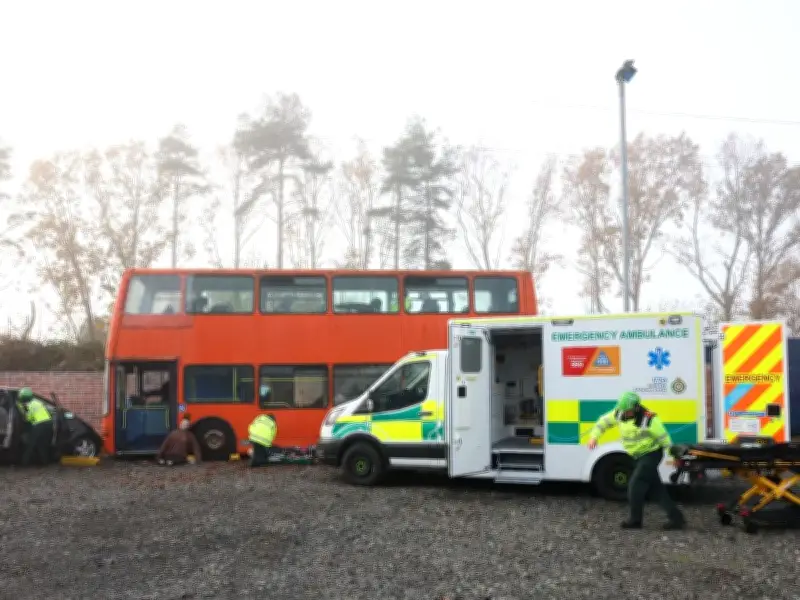
North East Ambulance Service (NEAS) crews have demonstrated how they respond to life-threatening road traffic collisions, staging a simulated multi-casualty crash as figures show a 25% rise in serious incidents this October compared to the same month in 2025.
At the service's resilience training centre in Washington, teams including paramedics and operational commanders ran through the response to a mocked-up collision between a car and a bus, working through thick fog and fake smoke.
Rise in serious collisions
Specialist critical care paramedic Thomas Mortillaro, who is often deployed to the most serious incidents and can also help co-ordinate the response from NEAS's operation centre, told ChronicleLive how vital it was for the public to take basic precautions before heading out on the roads.
He said: "Over the last two years there has been a 25% spike in the amount of serious collisions we have been called out to. Our plea to the public is to make sure they use the road safely."
More than 300 collisions were reported in October, a rate of upwards of close to ten each day. NEAS bosses are urging members of the North East public to take extra care on the roads as the nights draw in, with darker evenings and icy roads often seeing a rise in collisions.
Co-ordinating the response
Clinical team leader Rebekah Hunter said: "My role involves helping to co-ordinate the right response. I will arrive [on scene] and I will be seeing if we need further resources based on the updates I can provide from the scene. It's about making sure that our colleagues have all the support that they need - both during and after an incident."
The exercise saw paramedics arrive at the simulated incident scene, rapidly assess its nature, prioritise the most in-need casualties and leap into action while relaying up-to-date information to those co-ordinating the response.
Prevention advice
The demonstration was designed to highlight the complex nature of road traffic collisions. The hope is that by following simple advice - such as driving with the conditions in mind and ensuring that vehicles are roadworthy - serious collisions can be prevented.
Mr Mortillaro added: "What we want to see is that accidents are prevented - that would be fantastic. But, if you are to be involved in a collision, we know that if you have a seatbelt on, if you have a headrest and if your airbag inflates, then your potential for being seriously injured is going to be a lot less."