
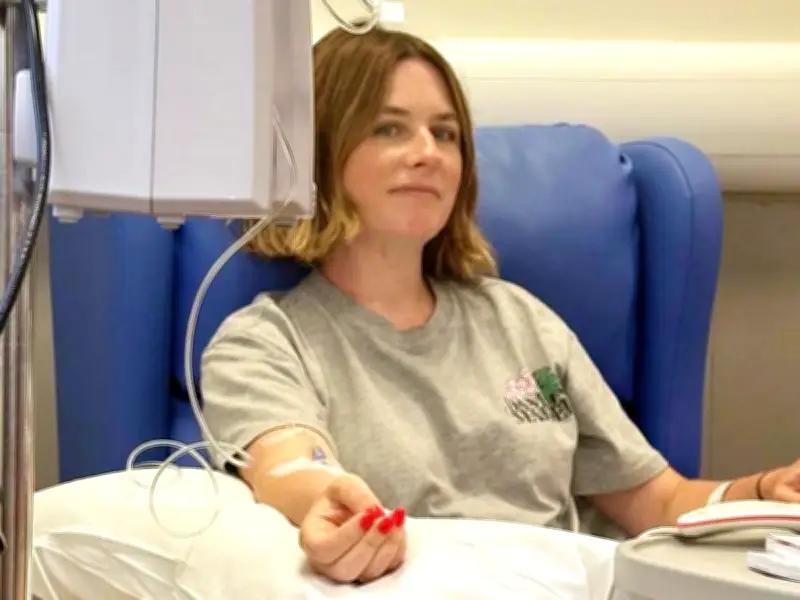
Sarah Goldup, a 42-year-old freelance copywriter from Farnham, Surrey, was diagnosed with stage three melanoma after dismissing a mark on her neck as a birthmark for years. She believes her history of jetting off on girls' holidays to get a tan contributed to the disease.
Ignored Mark Turned Out to Be Cancer
Sarah had the marking since her teenage years and tried to ignore it. However, when it started to change shape and colour, she sought medical advice and was told she had cancer. She underwent two surgeries to remove the cancer – one on her neck and another for a second melanoma found on her chest – and was given the all clear.
In August, Sarah began a year of immunotherapy treatment as a precautionary measure to stop the cancer returning. But in November 2024, she discovered a raised lymph node on her neck, on the same side where the melanoma had been. A needle biopsy confirmed a further recurrence of melanoma. She underwent more surgery to remove 35 lymph nodes, 25 of which were cancerous, with her cancer now at stage three.
Tanning Holidays Blamed
Sarah says trips to places like Tenerife in her teens and 20s contributed to her diagnosis. She recalls: “I was never a sunbed user but that was the era of girls’ holidays when it was all about flying off to the sun and getting a tan. One time, when I was 19, we went to Tenerife. Some of my friends had darker skin but I’m from an Irish background and I used oil instead of sunscreen, so I got really burnt.”
She added: “I was diagnosed with melanoma when I was 38, so I’m pretty sure the damage happened then but only started to emerge years later.”
Treatment and Vigilance
In April 2025, Sarah started a three-month combination of immunotherapy drugs. She is now on four-weekly maintenance treatment until April 2027, and her scans have been clear. She said: “I’m doing everything I can – I eat well, I exercise every day, I cover up in the sun and I use factor 50 sunscreen every day, even in the winter.”
Sarah is married to Lee and has two sons, Lucien, 10, and Rafferty, seven. She is very vigilant about protecting their skin: “I make them wear sunscreen and hats – they don’t particularly like it, but it’s so important. It’s not just lighter-skinned people who get skin cancer – darker skins can get it too. And you don’t have to go on a plane to get it – the sun here can also damage your skin.”
Cancer Statistics and Advice
According to Cancer Research UK, melanoma skin cancer is the fifth most common cancer in the UK, accounting for almost 20,000 new cases. It is the 19th most common cause of cancer death, accounting for two per cent of all UK cancer deaths.
Claire Knight, senior health information manager at Cancer Research UK, said: “Sunburn is a clear sign of skin damage but, even if you’ve been sunburnt before, it’s never too late to start protecting your skin. So, we’re grateful to Sarah for supporting our campaign with NIVEA Sun. Whether you’re enjoying being outside at home or abroad, when the sun is strong: seek shade, cover up - especially your shoulders - and wear sunscreen with at least SPF 30 and four or five stars. Make sure you put plenty on and reapply it regularly.”
Symptoms to Look For
As per the NHS, signs of melanoma include: asymmetrical moles, ragged borders, different colours, diameter larger than 6mm, and changing size, shape or colour. Other signs include moles that are swollen, sore, bleeding, itchy, or crusty. The NHS advises seeing a GP if you have a mole that has changed, is painful, inflamed, bleeding, or if you have a new or unusual mark that hasn't gone away after a few weeks, or a dark area under a nail not caused by injury.
Reducing Your Risk
The NHS recommends staying out of the sun between 11am and 3pm, covering arms and legs, wearing a wide-brimmed hat and UV-protective sunglasses, and using sunscreen with at least SPF 30 and 4-star UVA protection, reapplied regularly. Babies and children should be protected as their skin is more sensitive.




