
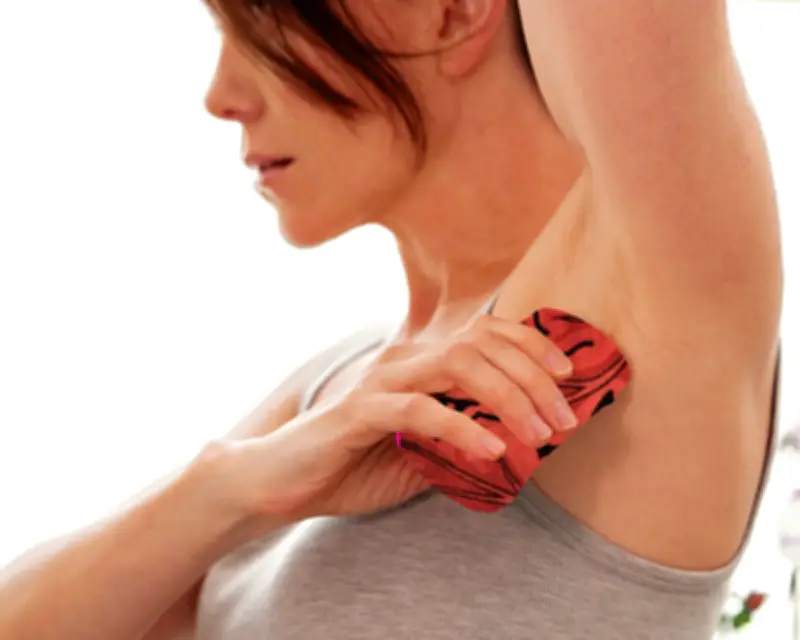
Every day, 5 billion people worldwide use deodorant, often assuming that managing sweat is essential. However, routine underarm antiperspirant and deodorant use is unlikely to cause harm. Understanding sweat's functions and what these products actually do can help you make informed choices.
What's the Purpose of Sweat?
Sweating to cool down is a genuine superpower: a well-trained human can shed nearly 4 liters per hour, keeping the body functional in heat that would incapacitate most other animals. Sweat also has a social dimension. The odor that rises from your body—not the sharp armpit kind, but the ambient chemistry that makes you recognizable to loved ones—results from compounds in your blood, oil gland output, and the unique microbial ecosystem on your skin. Siblings can identify each other by smell, and a loved one's scent can trigger memories faster than any other sense.
Are Antiperspirants and Deodorants the Same Thing?
No, and the difference matters. Antiperspirants physically block sweat ducts using aluminum-based compounds, forming a temporary gel plug that prevents sweat from reaching the skin. Because they alter body function, the US Food and Drug Administration classifies them as over-the-counter drugs. The plug naturally exits over time, requiring reapplication. Deodorants target sweat already on the skin using fragrances, acids that reduce odor-causing bacteria, or compounds that neutralize smelly molecules. In the US, they are regulated as cosmetics, not drugs, so companies are not required to prove safety or efficacy. The claim that antiperspirant aluminum causes breast cancer or Alzheimer's disease has been extensively studied and consistently disproven.
Does Blocking Armpit Sweat Interfere with Cooling?
Not meaningfully. Eccrine glands, responsible for cooling, cover almost the entire body. Apocrine glands in the armpits and groin produce a thicker fluid that bacteria metabolize into body odor. Blocking a few sweat glands in an area not primarily responsible for temperature regulation will not compromise your ability to stay cool.
Should I Use a Whole-Body Deodorant?
If considering whole-body products, ask what problem you are solving. Eccrine sweat on most of the body is largely inoffensive and does not give bacteria much to work with. With regular cleaning, there is no genuine hygiene issue on shins or forearms. Certain foods, medications, or medical conditions can temporarily alter eccrine sweat odor, but for most people, ambient body odor is not the armpit kind.
Whole-body deodorant sprays are often just alcohol and fragrance—essentially diluted perfume. Creams and sticks are more substantive, containing acids or odor-neutralizing compounds, but eccrine sweat typically does not contribute to odor, so they are mostly useful in apocrine-rich areas like armpits and groin. For these areas, using a product on intact, non-irritated skin is fine, but avoid use on just-shaved areas. Do not expect it to reduce sweating. "Suggesting you should put some of this all over your body is not biologically based," says Adam Friedman, a dermatologist at the George Washington University.
What If I Sweat Excessively?
Hyperhidrosis, where the body produces far more sweat than needed for cooling, affects about 5% of Americans. For those affected, it can be genuinely disabling: sweat may soak through clothing, make gripping difficult, and cause significant anxiety. Over-the-counter deodorants are inadequate for treating these symptoms, says Friedman, also a faculty member of the International Hyperhidrosis Society. He often recommends prescription topical medications and Botox injections as therapy, sometimes off-label. If you suspect hyperhidrosis, consult a dermatologist experienced with the condition.
Is My Usual Deodorant Routine OK?
If your current approach works and you have no bothersome symptoms, there is no reason to change. Routine antiperspirant and deodorant use in the underarms is safe and effective for most people. If you have symptoms to address, see a clinician rather than reaching for unproven cosmetic products. For most, a daily shower and standard underarm deodorant or antiperspirant suffice.




