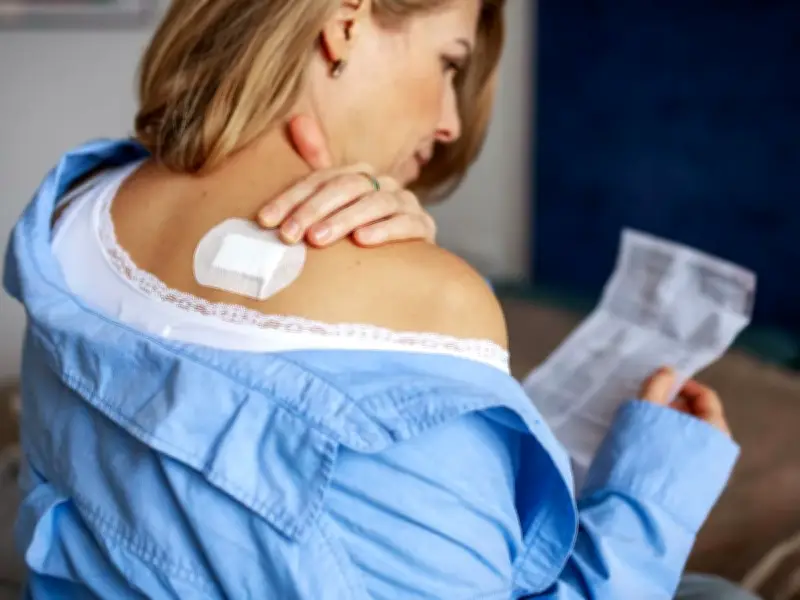
More than two million women received Hormone Replacement Therapy (HRT) treatment on the NHS last year, but the National Pharmacy Association has warned that shortages of certain HRT medications are causing major issues in pharmacies across the UK.
HRT is a medical treatment that replenishes falling or fluctuating female hormones—primarily oestrogen and progesterone—during perimenopause and menopause. The country has been hit by shortages, partly caused by increasing prescriptions.
Shortages and Price Controls
Speaking on BBC Radio Scotland, Sehar Shahid, NPA Board Member for Scotland, said some HRT treatments are in short supply, especially: “We know that the Estradot patches, for example, in all the strengths, remain in short supply, and there are other patches as well. But what we also need to understand that they’re not automatically dose equivalent. So you can’t just switch straightforwardly to something else.”
She explained that if there is a shortage, then the UK is worse served too because of the price controls on drugs, meaning other countries prepared to pay more get priority. Ms Shahid said: “The UK probably gets the medication the most cost-effectively, or the cheapest, compared to other countries.
“So when there is a shortage in any medication the UK is probably bottom of the list to get that medication because it tends to go to other countries perhaps where wholesalers or manufacturers can get sell on at a greater price. So the government really do need to strengthen our supply chains when it comes to medication because I think the UK is in the most vulnerable position.
“There’s also a demand shifting between products. So for example, if one brand of formulation becomes unavailable, the prescribers are then switching patients alternatives. Of course, that’s the right thing to do. But that then can lead to putting additional pressures on those other formulations or brands as well. But I think it is important to understand and highlight it’s not that every HRT product right now is in short supply.”
Record Number Accessing HRT
Commenting on new data from the NHS Business Services Authority showing over two million women received HRT treatment on the NHS last year, Olivier Picard, Chair of the National Pharmacy Association said: “This is very significant data and shows that a record number of women are accessing HRT support through the NHS.
“However, these surges in prescriptions for particular products do have unintended short-term consequences for medicine supply to patients and can exacerbate medicine shortages that blight pharmacies on a daily basis.
“Although supply for some HRT products are improving, shortages of certain strengths of Estradot are now some of the longest running of any medicine in NHS history. When prescribing habits change, we must make sure supply chains can keep up or we risk worsening access to medicines for patients and put more pressure on over stretched pharmacy teams.”
Long-Running Shortages and Next Steps
Last month the NPA released a statement over the long running shortages: “It is deeply depressing for pharmacies and patients alike that Creon and Estradot have now had their unhappy title extended as being Britain’s longest running medicine shortage on record.
“Creon is a lifeline to patients that depend on it, helping people with Pancreatic Cancer and Cystic Fibrosis digest food. Although we recognise support is being put in place, pharmacies continue to report to the NPA that they are finding patients that are being forced to skip meals and travel many miles to source supplies.
“This must act as an alarm call to the new Secretary of State to convene a taskforce to fully grasp this issue, bringing together all aspects of the supply chain.
“We have been clear for many years that although supply problems are frustrating to both patients and pharmacies, they can also present a serious risk to patient safety.
“The government should also urgently publish the outcome of its consultation on allowing pharmacies to make substitutions to a prescription, where there is a shortage of a particular medicine, rather than a patient having to potentially having to go back to their GP.”
The NHS Serious Shortage Protocol is in place until January 8 2027. A health department spokesperson said: “We regularly speak to NHS trusts and national clinical leads about medicine availability.
“The vast majority of the UK’s licensed medicines are in good supply, and we have robust measures in place to mitigate disruption for patients. This government is investing in the UK medicine manufacturing industry to manage supply disruptions where they occur.”