An Oldham father has described feeling 'shocked and disgusted' after his GP practice sent him a text message inviting him to book his young children, including his seven-year-old son, into a contraceptive implant clinic.
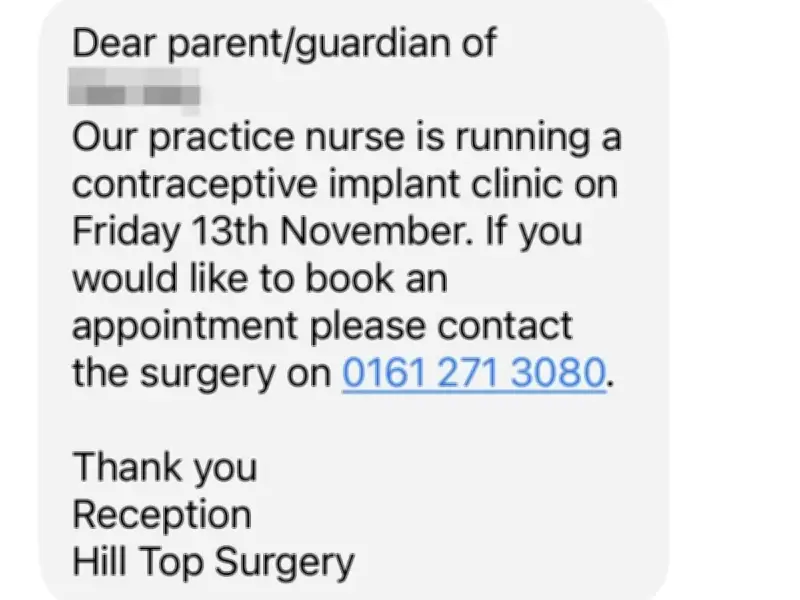
Chris, 35, who did not wish to give his last name, received the message from the Hill Top GP surgery in Fitton Hill on Wednesday morning (November 11). The text directly addressed him as the parent or guardian of his seven-year-old son, inviting him to book an appointment with the contraceptive implant clinic at the surgery. He received identical texts for his daughters, aged six and 13.
Father describes shock at receiving the messages
Chris told the Manchester Evening News that he was having a coffee when his phone began receiving multiple messages. 'It was an offer of a contraception clinic for my 13-year-old daughter,' he said. 'Then another one came through ten minutes later for my son and other daughter who are aged seven and six.'
He contacted the surgery and spoke to a receptionist who said management were aware of the issue and apologised, describing it as a generic message. Chris said he felt the receptionist had been dealing with calls about the matter all day.
Surgery apologises and pledges additional staff training
The GP surgery has apologised and told the Manchester Evening News it would be 'undertaking additional training' with staff after the text was sent to the whole practice rather than 'specific cohorts'.
A spokesperson for the surgery said: 'Hill Top Surgery works hard to create opportunities for patients to receive healthcare. We are excited to be able to offer access to long-term contraception clinics.'
'Like many GP Practices we used text messages to update patients and share information. On this occasion the message was sent to our whole practice. We will be undertaking some additional training with our staff about sending text messages to specific cohorts in the future and apologise to any patients who were concerned.'