
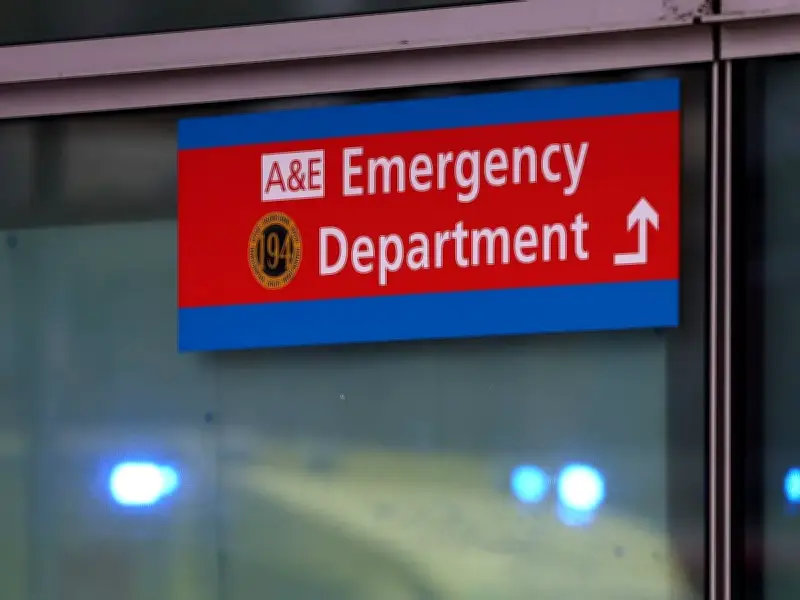
Hospital admissions for flu in the North West have more than doubled in a single week, with the region now recording a rate around 50 per cent higher than the national average, according to new figures.
Data from the UK Health Security Agency (UKHSA) shows the rate of hospital admissions for flu in the North West jumped from 6.15 per 100,000 people to 13.46 per 100,000 in the week ending November 16. This compares with an average of 8.98 per 100,000 across England.
Despite the surge in admissions, flu positivity in the North West remains below the national average, at 14.81 per cent compared with 16.94 per cent across England.
NHS chief warns of 'horrible spike'
The figures come as NHS England chief executive Sir Jim Mackey warned the health service should prepare for a 'horrible spike in flu', with hospital admissions already at their highest level for this time of year since before the Covid pandemic.
Speaking at the NHS Alliance autumn conference, Sir Jim said: "Today, I think we have more beds occupied with flu than we did this time last year, as we're just about going to that horrible spike in flu."
He also noted that some hospitals have introduced mask wearing in response to rising levels of respiratory illnesses, including flu, Covid and RSV. In Greater Manchester, Bolton NHS Foundation Trust has introduced mandatory face masks in Royal Bolton Hospital following a rise in flu cases.
Local teams respond to rising respiratory illness
On mask wearing, Sir Jim said: "About three weeks ago I did a visit, and I had to mask up for the first time in a couple of years, which was a bit of a shock actually."
"Walking into a hospital building, immediately seeing a colleague who was very polite and very forceful about making me put a mask on, which was good… we hadn't sent data to say 'mask up'… we hadn't asked people to do anything – local clinical teams had observed what was happening: more Covid, flu, RSV around, and they responded really effectively, really quickly and really proportionately."
Nationally, the rate of flu hospital admissions in England increased to 8.98 per 100,000 in the week ending November 16, up from around five per 100,000 the previous week. The rate stood at 4.9 per 100,000 in the same week last year, with UKHSA figures showing admissions have not been at such a high level at this point in November in any previous year this decade.
Vaccine uptake remains low
The UKHSA also confirmed that attendances at hospital emergency departments for flu-like illnesses were 'above seasonally expected levels'. Health officials have urged all those eligible for a flu vaccine to come forward after figures revealed uptake remains low among vulnerable groups.
Almost 9.5 million people under the age of 65 in clinical risk groups are eligible for a flu jab, including people with lung conditions, kidney or liver disease and diabetes. However, just 34.2 per cent of those eligible had received their vaccine by November 22, the UKHSA warned. Uptake among people aged 65 and over stood at 67.6 per cent, while just a third of healthcare workers had received the jab. The figure was 34.9 per cent among pregnant women and 32.1 per cent among school-aged children.
Dr Suzanna McDonald, national lead for the flu programme at the UKHSA, said: "Flu can be very serious for people of all ages living with certain long-term health conditions, especially chronic liver disease, chronic neurological disease and those with a weakened immune system or 'immunosuppression'."
"Every winter we see many thousands having to be hospitalised and tragically too many unnecessary deaths. A flu vaccine will help protect you and could save your life."
She added: "As we have seen from inside our hospitals this week, flu levels are sharply increasing with more people being admitted and in intensive care. If you have a long-term clinical condition, but are unsure if you are eligible, speak to your GP practice or pharmacy to find out. I can't stress enough how important it is for all those eligible, including older adults, pregnant women and young children, at much greater risk from flu to get protected as soon as possible."




