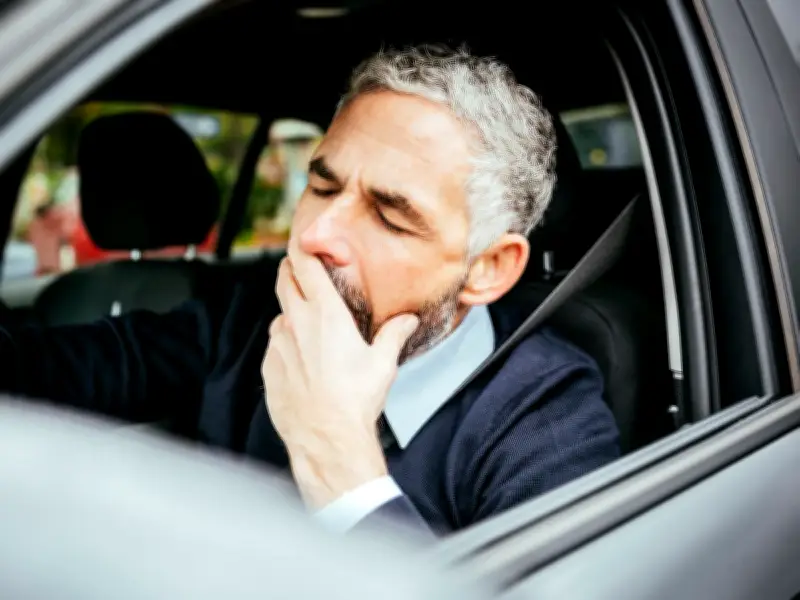
The Driver and Vehicle Licensing Agency (DVLA) has confirmed the full list of sleep disorders that legally require drivers to notify the agency or face severe penalties, including a £1,000 fine, an automatic driving ban, and a criminal record. Failure to declare a notifiable sleep condition can also invalidate insurance and lead to prosecution for dangerous driving if involved in a collision.
Notifiable Sleep Disorders
The DVLA mandates disclosure for the following sleep conditions: confirmed moderate or severe Obstructive Sleep Apnoea Syndrome (OSAS) with excessive sleepiness; narcolepsy and/or cataplexy; and any sleep condition or extreme tiredness causing excessive sleepiness for three months or more, including suspected or mild OSAS.
According to the DVLA, a diagnosis does not automatically lead to a revoked licence. Drivers may retain their licence if the agency's medical advisory panel deems it safe.
Assessment Process
Upon notification, the DVLA assesses fitness to drive through a health questionnaire, contacting the driver's GP or hospital consultant for independent medical reports, and possibly requiring a practical driving assessment or independent examination to test reaction times, spatial awareness, and physical control.
Possible Outcomes
After review, the DVLA may allow the driver to keep a full licence, issue a medically restricted licence valid for one to three years with mandatory reviews, or revoke the licence, requiring an immediate stop to driving.
Penalties for Non-Disclosure
Drivers caught failing to report a condition face a fine of up to £1,000. If the hidden condition causes an accident, a mandatory driving ban and up to six months in prison may be imposed. Causing death by dangerous driving due to an undisclosed condition carries a maximum penalty of life imprisonment.
The law applies across England, Scotland, and Wales, with similar rules in Northern Ireland. Motorists are urged to check the GOV.UK A-to-Z directory and consult a doctor if unsure about their fitness to drive.