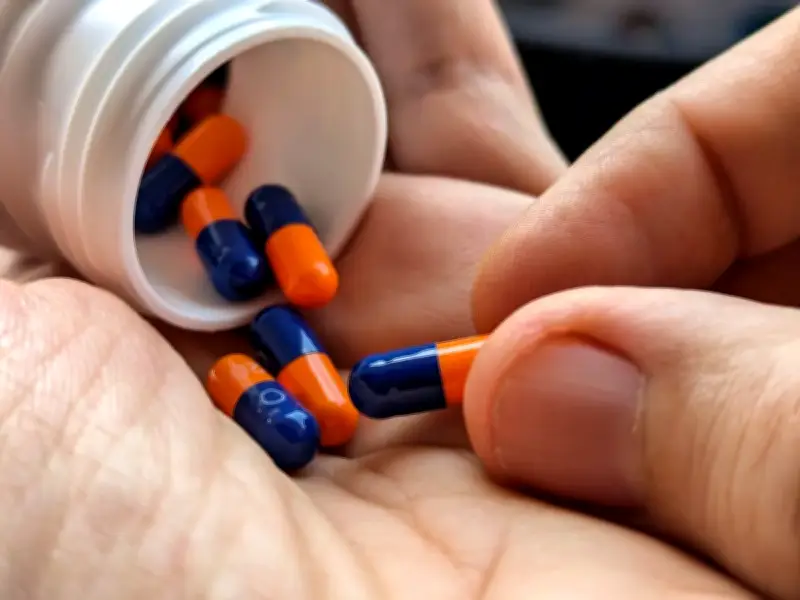
Health expert Dr Eric Berg DC has issued a warning about the dangers of staying on Proton Pump Inhibitors (PPIs) for too long. PPIs, which include Omeprazole, Esomeprazole, and Lansoprazole, are used to relieve symptoms of chronic acid reflux and stomach ulcers. They are among the most widely-used medications in the UK, taken by roughly one in seven Brits, while Omeprazole is the 10th most-used drug in the US.
Warning on long-term use
Dr Berg, a popular online health educator, author, and former chiropractor with more than 15 million YouTube subscribers, released a new video warning about the consequences of long-term use. He noted that over-the-counter antacids advise against taking them for more than 14 days, and prescriptions for PPIs typically recommend 4-8 weeks maximum. However, he said: "But today, 25 per cent of these people take it for over a year, and 3,9 take it for more than five years."
He highlighted that long-term use can deplete magnesium, which is needed in many biochemical pathways. "Just by depleting magnesium alone, you develop additional symptoms like tremors, leg cramps, being irritable, and having anxiety," he said. He also explained that reducing stomach acid decreases mineral absorption, as acid is needed to absorb many minerals.
NHS guidance on Omeprazole
The NHS says that taking an extra dose of omeprazole "is unlikely to cause problems, but it's important to get medical advice if you take too much because it can sometimes be dangerous." It lists common side-effects as headache, stomach pain, feeling sick or being sick, constipation or diarrhoea, and farting more than usual. The NHS website adds: "Omeprazole will not usually affect your ability to drive, ride a bike or use machinery. But if you feel dizzy or have problems with your vision after taking it, wait until you no longer have these side effects."
How long should you take Omeprazole?
The length of time you spend on Omeprazole, or any PPI, depends on how long it is prescribed for by your doctor. A small dose might mean you are taking it for just a few weeks. However, others remain on it for longer, which is generally safe, but the longer you take it, the greater the chance of side-effects. These can include vitamin B12 deficiency, low magnesium levels, a small increased risk of bone fractures (especially in older people), a slightly higher chance of getting a stomach bug, and acid 'rebound' when coming off PPIs.
Dr Berg explained that PPIs do not reduce the frequency of acid reflux, only acid production. He said: "When you start lowering the acid in the stomach, you sometimes can get a 3-5 times more production of gastrin, which will actually lead to more acid production. That can last between 2-8 weeks." He suggested that "a little baking soda and water might give you some relief as you make the transition." He also recommended intermittent fasting and a low-carb diet to help the digestive system rest and improve protein digestion.