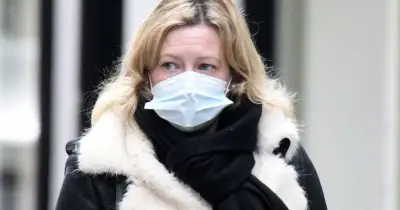
Health experts have issued advice on whether Britons should start wearing face masks again as a rise in Covid infections and hospital admissions sparks concern over the so-called 'American Covid' variant.
The strain, officially known as XFG or Stratus, emerged in early 2025 and is a combination of two Omicron descendants, LF.7 and LP.8.1.2. American Covid is its media nickname as the variant continues to spread in the US.
Hospital admissions rise by 48%
Figures show that Covid hospital admissions in England have risen by approximately 48%, although overall infection levels remain low. However, it remains the most common current variant.
Dr Matthew Siggins, Lecturer in Immunity and Infection Biology at the University of Surrey, said masks are not routinely required but can offer protection in crowded indoor spaces.
He told the Express: "Despite the recent rise, the latest published UKHSA data show COVID levels remain low, with hospital admissions still at baseline levels. Masks are not routinely required but can help reduce the risk of catching or spreading infection, particularly in crowded indoor spaces or around vulnerable people.
"A well-fitting FFP2 mask offers better personal protection than a loose-fitting face covering. However, masks do not eliminate the risk, so anyone with COVID symptoms should avoid close contact with others where possible."
Experts on symptoms and vulnerable people
Dr Bruno Silvester Lopes, Senior Lecturer in Microbiology at Teesside University, added that masks can help people with weakened immune systems. Dr Lopes told the Express that the rise in infections and hospitalisations was consistent with the beginning of the autumn and winter respiratory virus season.
Both experts stressed that XFG does not appear to cause more severe illness than other circulating variants. Common symptoms include coughing, fever, fatigue and body aches. Some patients have also reported particularly sore, scratchy or hoarse throats.
Dr Siggins added that these throat symptoms have not been proved unique to XFG. He advised people with Covid symptoms to avoid visiting vulnerable relatives while unwell, adding that waiting around 10 days after symptoms begin is a sensible precaution.
UKHSA advice and autumn vaccine
Dr Alex Allen, Consultant Epidemiologist at the UK Health Security Agency (UKHSA), said: "The strains currently going around, including those known as XFG, are closely related to strains that have been with us for over a year, so this isn't something new.
"We're also not seeing any evidence that these are making people more ill or spreading faster than before, and this year's autumn vaccine has been specifically designed to protect against them."
The autumn booster is available to people aged 75 and over, older care home residents and immunosuppressed people aged six months and over. Dr Allen urged eligible people to get vaccinated, saying: "Don't risk it, get the vaccine and give yourself the best protection."
Anyone experiencing worsening breathlessness, persistent high fever or deteriorating symptoms should seek medical advice through their GP or NHS 111. Severe breathing difficulties, sudden chest pain or collapse require emergency attention.