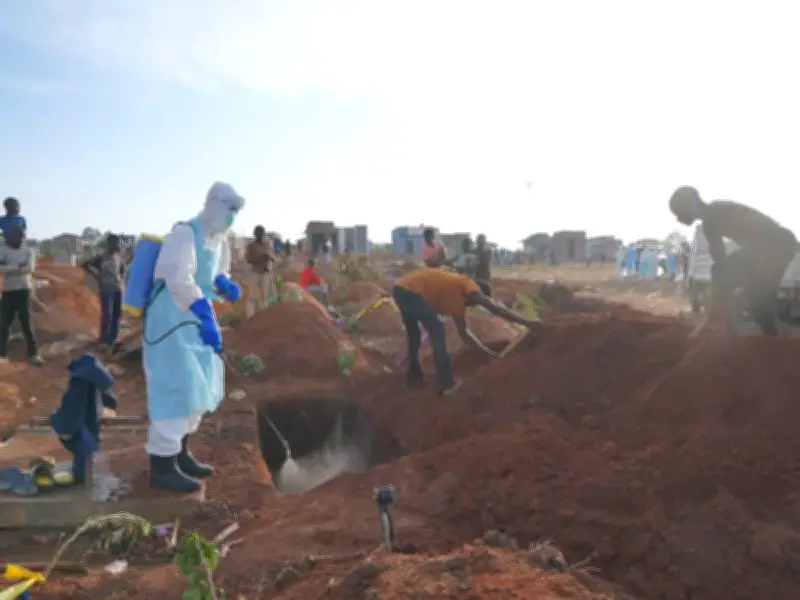
Congo's rapidly escalating Ebola outbreak has now claimed over 2,300 lives, making it the deadliest occurrence of the disease in the Central African nation's history. The outbreak, which is ravaging one of Congo's most vulnerable regions, is the fastest-growing Ebola outbreak ever recorded, with 4,945 cases including 2,325 deaths, according to government data released overnight into Monday.
Record Death Toll and Case Numbers
This marks Congo's 17th outbreak, surpassing the death toll of the country's 2018-2020 outbreak, which saw 2,299 fatalities out of 3,481 cases. The latest figures reveal 101 new cases and 33 deaths reported in the past 24 hours. Over 1,000 individuals have recovered, while 730 remain in hospitals or isolation.
This outbreak has infected and killed more people at a faster rate than any other in history. The World Health Organization has stated that it is on course to exceed the 2014-16 Ebola outbreak in West Africa, the deadliest on record with more than 11,000 deaths.

Challenges in Community Engagement
Trish Newport, emergency coordinator with Doctors Without Borders, known by its French acronym MSF, highlighted limited community engagement as a significant challenge in managing the outbreak.
"The community needs to be aware about the outbreak," she told The Associated Press, emphasising that people "need to be involved in the response, and they need to know what the signs and symptoms are and what to do if they get sick. And this today is not happening in every single place where there are Ebola cases."
From the first confirmed case, the outbreak hit the 2,000 death toll nearly three times quicker than during the 2014-16 outbreak. Certain families have lost as many as 15 relatives in the epicentre, Ituri province, Newport revealed.
Obstacles and WHO Warning
"We rapidly need to scale up to be able to prevent more deaths from happening, more families and communities from being impacted," she added. No approved vaccines or treatments exist for the rare Bundibugyo virus driving the current outbreak across six provinces in eastern Congo. Clinical trials for these are currently underway in Ituri.
The majority of new cases and fatalities are occurring amongst people not under surveillance. Medical teams tackling the outbreak face numerous obstacles, including strikes by unpaid health workers, threats from rebel groups, fury from long-traumatised communities, poor roads hampering access to affected areas, and misinformation suggesting Ebola isn't genuine.
The WHO cautioned over the weekend that the outbreak continues to advance at an "exceptional pace" beyond tracking efforts, highlighting that it achieved a weekly record of 579 cases and 304 deaths in the preceding week.
"A substantial scaling up of response activities is underway to get ahead of the outbreak," the UN health agency stated.