Prime Minister Andy Burnham said he did not want to "alarm" the public over reports of a death from plague in Russia, but would "monitor the situation closely".
His comments come just days after numerous pro-Putin and independent media outlets, along with a regional governor, claimed that the death of a 28-year-old lab worker in Siberia came as a result of exposure to the plague.
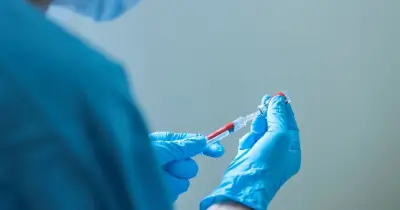
Daria Shipilova fell critically ill and passed away after working a shift at the Irkutsk Anti-Plague Research Institute, where she was employed.
Officials contradict plague reports
The reports that she died of the 'Black Death' were abruptly contradicted by officials at health watchdog Rospotrebnadzor, who stated that Shipilova's diagnosis was "pneumonia of unknown aetiology", rather than the plague.
This update came three days after rumours of the plague being the cause of death circulated across multiple media outlets without any official challenge. Nevertheless, three of the six hospitals in the nearby city of Irkutsk are said to be upholding stringent quarantine measures.
Prime Minister's response
Asked about the claims a woman had died from the disease in Russia, Mr Burnham told reporters in Berlin: "Obviously, we take the greatest of care in relation to any issue that relates to our biosecurity, and at this point in time, while we would monitor the situation closely, I wouldn’t want to say anything further."
"We certainly wouldn’t want to alarm people," he added. "We will do what we can to request that the right steps are being taken, and that’s the approach we’ll take."
UK risk remains low
The UK Health Security Agency (UKHSA) said it was seeking further information on the Russian case but reassured the public about possible spread. Almost 200 people who may have come into contact with the woman are reportedly being monitored in Siberia, local reports suggest, while several hospitals have been placed under quarantine.
UK health officials have now confirmed that the risk in the UK is very low and that they are working to verify reports.
Chris Lewis, director of global health protection at the UKHSA, said: "We are aware of media reports that emergency containment measures have been introduced in Russia’s Irkutsk region following the death of an employee at the Irkutsk anti-plague institute."
"We are seeking information through the International Health Regulations channels to further understand the circumstances and verify the accuracy of these reports," he added. "The public health risk from plague to the wider UK population currently remains very low."
Plague is a disease usually found in small mammals and their fleas. It is no longer found in the UK, but occurs in several countries in Africa, Asia and the Americas.
The disease is usually transmitted to humans from infected animals or fleas, but people can pass it on from coughing and sneezing. Usually, this requires direct and close contact with the person with pneumonic plague. If plague is untreated, it can cause rapid death, but antibiotics can be effective if the disease is caught in time.