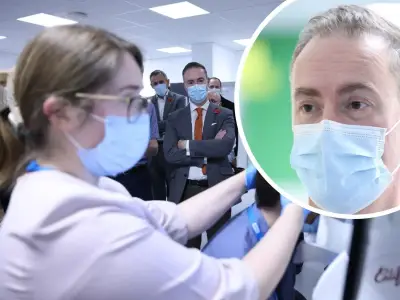
Dr Oscar Duke has urged people to be "brave" and eat parts of foods they would normally throw away, saying it can be both tasty and beneficial to health. Speaking on BBC Morning Live with hosts Rav Wilding and Louise Minchin, the GP said that while most people know vegetables are good for them, a lot of veg still ends up wasted even though it could be eaten and provide "massive benefits".
Fibre Intake Falls Short of Recommendations
These health benefits come from the high-fibre content of the foods. Increasing fibre intake is key as it could help cut the risk of conditions such as cancer and diabetes, he added.
The British Heart Foundation says the UK government recommends adults eat 30g of fibre per day, but many fall short, averaging around 17g a day. Katerina Sakellaropoulou, Nutrition Scientist at the British Nutrition Foundation, says: "In the UK, only around 4 in 100 adults meet the recommended fibre intake, so finding simple ways to include more fibre in everyday meals really matters."
Eat From Tip to Root
Urging people not to chuck food in the bin, and instead see if there are ways to add it to meals, the doctor explained: "This all comes down to what you're brave enough to eat from tip to root. But fibre is incredibly important for us."
Shocked at how little people eat the correct amount of fibre, he explained: "When you actually think about the benefits of fibre, it's really across the board: [it reduces the risk of] heart disease, reduces the risk of cardiovascular disease, diabetes, it makes you feel more full more quickly, so it is helpful in weight management. It's known to reduce the risk of conditions like bowel cancer, diverticulitis and diverticulosis and other conditions that you get within the bowel. So it really is helpful across-the-board in terms of your health."
Foods to Add to Your Diet
According to statistics from the UN Environment Programme (UNEP), more than one billion meals are left uneaten every day, the result of overproduction, spoilage, or poor meal planning.
The GP, who graduated from King's College London School of Medicine in 2010, explained that fibre can come from "all sorts of places you might traditionally have thrown away." He urged people to think about adding the following to their diets:
- Broccoli stalks
- Potatoes with the skin on - just avoid any green bits
- Seeds from bell peppers
- Kiwi fruit - "and if you're really brave, have the skin as well, as a huge amount of fibre comes from the kiwi fruit skin", he said
While he encourages people to eat parts of fruit and veg they might normally avoid, he stresses that you should always check it's safe first, as some foods - such as rhubarb - have sections that are "not good for you to eat."
Check Safety and Increase Gradually
According to Healthline: "Rhubarb leaves are considered inedible due to their high concentration of oxalic acid. In fact, both the stalks and leaves contain oxalic acid, but the leaves have a much higher content."
It explains that "too much oxalate in the body can lead to a condition known as hyperoxaluria, which is when excess oxalate is excreted in the urine. This can also lead to an accumulation of calcium oxalate crystals in the organs. In the kidneys, this can lead to the formation of kidney stones and eventually kidney failure." Symptoms of mild rhubarb leaf poisoning include vomiting and diarrhoea that resolve within a few hours. More serious oxalate toxicity causes sore throat, difficulty swallowing, nausea, vomiting (sometimes including blood), diarrhoea, and abdominal pain.
Health experts at the Mayo Clinic warn that increasing fibre intake too quickly can lead to gas, diarrhoea, cramps and bloating. They advise increasing fibre intake gradually over a few weeks. It adds: "As you eat more fibre, remember to drink plenty of fluids. Some fibres work best when they absorb water, so being well hydrated can help prevent uncomfortable bowel movements."
Concluding his health segment, he stressed: "Do not underestimate the power of fibre. The nice thing is that in solving your health problems and hopefully reducing your risk of many health problems, you can help with waste as well."