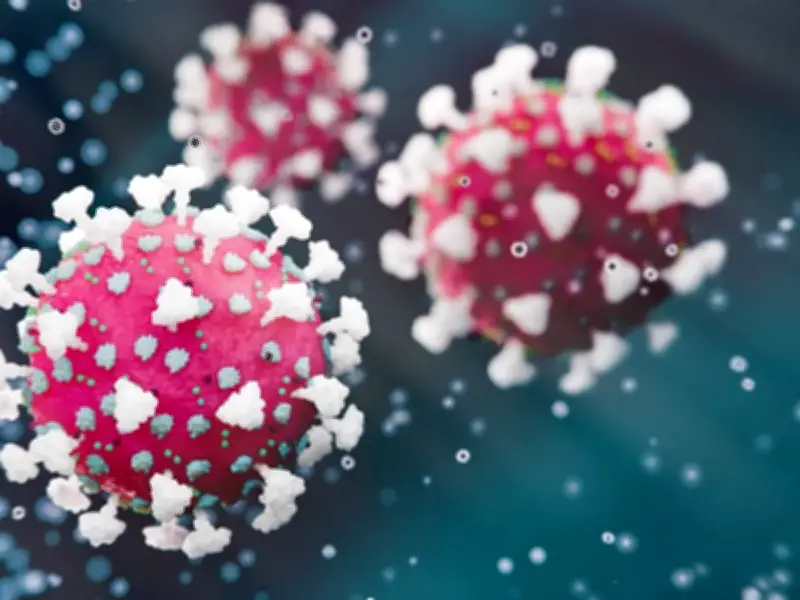
A newly discovered coronavirus strain found in bats has the “high potential” to spread among humans, experts have warned, though the immediate risk to the public is currently low.
The strain, known as HKU5-CoV-2, was discovered in Brazil and possesses a furin cleavage site (FCS) on its surface spike proteins, the same trait that made SARS-CoV-2, the virus behind Covid-19, so infectious during the 2020 pandemic.
Discovery challenges lab origin theory
The finding seemingly disproves the popular theory that Covid-19 was made in a lab, as the same trait has now been found in a natural bat coronavirus.
Laboratory tests have shown that the virus is capable of affecting human lungs and intestines through the same method as Covid-19.
However, Dr Gareth Nye, of the University of Salford, was quick to point out: “It’s a lot less effective than Covid-19, meaning the immediate danger of this bat coronavirus is currently low”.
Zoonotic potential assessed
Following the discovery, researchers hoped to establish the virus’ zoonotic potential, meaning the potential that it can mutate and spread from bats to humans.
Dr Nye, a biomedical science lecturer at the University of Salford, said: “Its zoonotic potential is high, as it can bind to a number of different mammal species, and it could mutate and pass an adapted version onto humans”.
The virus currently has no reported cases of human transmission, meaning that while experts have speculated it won’t be as infectious as Covid-19, there is no data to provide certainty.
Vaccine readiness and wider threat
As it stands, experts are confident that any new developments can be met by the extensive work the world’s virologists have done on preventing new Covid cases.
Professor Paul Klapper OBE, Professor of Clinical Virology at the University of Manchester, said: “The work we’ve done suggests a suitable vaccine could be rapidly produced and deployed if such a virus began human-to-human transmission”.
He continued: “People should not be specifically worried about this virus, but of recent viral pandemics, more than 50% arose in this way. Zoonotic viral infection is a threat because of the burgeoning world population and increase in wildlife-human interactions, together with climate change and its effect on wildlife”.