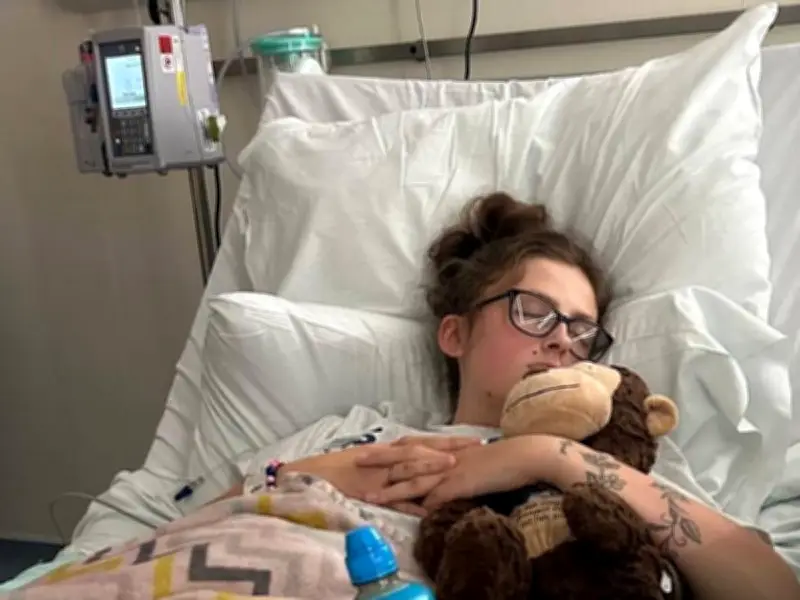
Gracie Mae Cooper, 19, from Congleton, Cheshire, believed she was simply suffering from an unusually painful period — before receiving a devastating ovarian cancer diagnosis. Just months ago, she was thriving, building a career through her childcare apprenticeship at a local nursery.
From Cramps to Cancer Diagnosis
When severe stomach pains began earlier this year, she assumed it was nothing more than particularly bad period cramps. Within just a fortnight, however, her life was turned completely upside down. What she initially dismissed as cramping rapidly escalated into hospital appointments, scans, and tests — before doctors delivered the news no 19-year-old ever expects: she had cancer.
"I had intense stomach pains making me really uncomfortable and I could barely move, this led to going to the doctors thinking it's period pains," explains Gracie. "They advised to go to Royal Stoke hospital to see my gynaecologist to get further checks, which led to an ultrasound."
Following the tests, doctors discovered a cyst on one of Gracie's ovaries. In the overwhelming majority of cases, ovarian cysts are entirely harmless and resolve themselves without medical intervention. At that point, there was nothing to indicate anything more sinister.
"Nothing showed previous signs to what it turned out to be, I just had really bad stomach pains thinking it was period pains," Gracie says. Yet merely a fortnight after initially experiencing symptoms, further tests disclosed that the cyst was actually a rare type of ovarian cancer called germ cell cancer, which primarily strikes teenagers and young adults.
Rare Cancer Diagnosis
Approximately 2,500 individuals in the UK receive germ cell cancer diagnoses annually. While the majority of cases occur in men with testicular germ cell tumours, ovarian germ cell cancers are considerably rarer, representing fewer than 5% of all ovarian cancer diagnoses.
The diagnosis arrived entirely unexpectedly for Gracie, who had been fit and well just days beforehand. The instant she received the news is something she says will remain with her forever. "I remember this moment like it was yesterday, I first thought, 'Oh my god I'm going to die, I'm too young for this,' as I'm sat in the hospital waiting for results," she recalls.
Treatment and Travel Struggles
Gracie hasn't yet been informed what stage her cancer has reached, but she's already commenced treatment, which consists of chemotherapy to reduce the tumour ahead of surgery. She'll undergo four cycles of chemotherapy spanning three to six months, before having additional scans to monitor her progress.
Beyond the physical burden of chemotherapy, Gracie and her relatives are facing regular, exhausting journeys from Cheshire to London for treatment, a round trip of approximately 370 miles. "Treatment has been physically exhausting as we're backwards and forwards from Congleton to London," she says. "Emotionally I have been up and down, but mostly down, as this is not something I was expecting, especially at this age."
The considerable expense of making such lengthy journeys while undergoing treatment has placed enormous financial strain on the family. "[It's] absolutely terrible as the travel is 185 miles taking around four hours each way," she says of the journey. "This was costing a lot of money in fuel, around £80-90 each trip along with accommodation costing £400 for a week."
Being so far from home during treatment has brought further anxieties. "Having to travel all that way to get treatment is not fun, as I'm thinking if anything goes wrong I'm four hours away from help," she says. "As I'm not physically fit enough to do a lot of things, I would just sit looking out the car window watching time go by."
Impact on Mental Health and Apprenticeship
Yet the most challenging aspect of Gracie's battle with cancer has been enduring lengthy stretches apart from her loved ones. "I think that's been the worst part about it all, knowing I can't see my family for long periods at a time," she says. "I believe this is what made my mental health worse."
The diagnosis has additionally compelled her to suspend her apprenticeship, which she describes as tremendously difficult having found a role she truly cherished. "I really loved my apprenticeship as this was my life, I really loved looking after the kids and building a relationship with them," she says. "I didn't understand how much I meant to these kids, I have received lots of cards, handmade from the lovely kids I look after... Putting my apprenticeship on hold has been really difficult as this was a big part of my life."
Determination and Support
Despite the considerable challenges, Gracie says the ordeal has transformed her perspective. "It has made me more determined to do more things I haven't done before and experience what life is made for," she says. "I will make sure I spend more time with my family and take holidays as and when I can as this is a time to get away from life itself. Cancer has flipped mine and my family's life upside down, we have had to cancel many days out and a big family holiday due to this."
Throughout her treatment, she has leaned heavily on those closest to her, with her sister proving to be an invaluable source of strength. "My sister has been my biggest support through this, she has been there for me through all of this, but my family has been there for me through all of this helping me through tough times," she says.
Fundraising and Awareness
Gracie Mae now hopes that by sharing her journey, she can inspire others not to dismiss worrying symptoms and to consult a medical professional should something not feel quite right. "(Don't) feel alone as there are a lot of people that give support," she says. "But more importantly it is to get checked if you think something is off as this will save your life, yes it's scary but it's better to be safe than sorry."
After receiving her diagnosis, Gracie Mae and her relatives established a fundraising initiative to assist with the mounting expenses of journeys to London for medical care and lodging while spending time away from home.