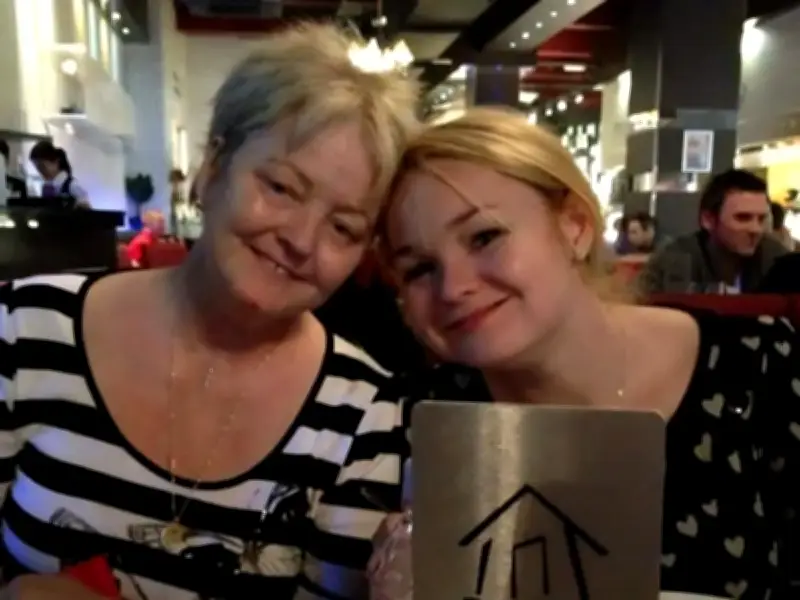
A woman whose mother died of pancreatic cancer nearly 15 years ago says the disease should not still be "a death sentence". Pancreatic cancer is the deadliest of all common cancers, killing over 93% of sufferers within five years of diagnosis.
While significant strides have been made in improving outcomes for many other types of cancer, the odds of surviving pancreatic cancer remain dismally low, and have barely budged since the 1970s.
A Diagnosis Days Before a Wedding
Erin Tabinor, 39, was a week away from her wedding when her mum Susie Campbell was diagnosed with the disease in May 2010. She said: "Before that she had been having some pelvic pain. She worked at Arrowe Park as a healthcare assistant. The pain got quite severe and one of the surgeons who worked with her on the ward said 'I think something's wrong with your gallbladder'. They took her down to have a look at her and that's when they said it was pancreatic cancer."
Erin added: "The first thing I said was 'is she going to die?' and he couldn't answer me. It was like an out of body experience. I was getting married, everyone was ready, but how could I get married if my mum wasn't well?"
Just a few days after Erin's wedding, Susie had an operation known as the Whipple procedure to remove her gallbladder, bile duct, and parts of her pancreas and small intestine. This is the most common surgical operation used to treat pancreatic cancer, but it remains high risk, and can only be performed on 10% of patients. Susie, who lived in Birkenhead, was placed in an induced coma for six weeks following the operation to allow her body to recover.
Recurrence and Loss
Erin, from Aigburth, said: "I was absolutely terrified because I had never seen my mum ill before. She was a typical woman of the 1950s and they all smoked, but she never really drank. She didn't really have any health problems. I was so naive I didn't even know what the pancreas was. We didn't even know you could get cancer of the pancreas."
After seven months of gruelling chemotherapy which aimed to eliminate any leftover cancer cells, Susie was given the all-clear. Tragically, she began to experience vague symptoms of stomach pain and nausea in summer 2011. A check-up scan in November confirmed the cancer had recurred and spread to her liver and lymph nodes.
Recurrence of pancreatic cancer following surgery is common, happening in up to 75% of cases. Susie's Whipple procedure and chemotherapy had successfully prolonged her life, but were not enough to completely destroy the deadly disease. She died on June 7 2012, aged 55, just two months after she found out she was going to be a grandmother for the first time.
A Call for Better Screening
Erin, who was six months pregnant at the time, said: "My dad was quite in denial. He couldn't accept it. Even up to the day she died he was talking about going to Australia when she was better. My sister just fell apart. I was pregnant and I couldn't fall apart, I had to hold it together. It was basically my son who got me through it. She passed away when I was six months pregnant."
She added: "55 is no age. I'm 40 next year and I look at people that age think 'I can't believe it, it's so young'. She hadn't even had a chance to retire. I've worked with Pancreatic Cancer UK for a few years now, doing charity events for them, but nothing has really changed. Considering how deadly of a cancer it is, we should be taking more steps to ensure people are being screened properly."
Pancreatic cancer is the deadliest common cancer, with half of newly diagnosed patients dying within three months. The disease has vague symptoms which are also common to many less serious health conditions and there are no early detection tools or screening programmes, meaning it is often diagnosed at a late stage. Around seven in 10 people with pancreatic cancer are diagnosed too late to receive effective treatment.
Common symptoms of pancreatic cancer include indigestion, back or tummy pain, changes to your poo, unexpected weight-loss or loss of appetite, and jaundice (yellow skin or eyes and itchy skin).
Erin said: "It was around Christmas 2009 that I began to notice she was struggling. She was out of breath, she kept sitting down, she was clutching her stomach quite a lot with cramping, and was having constant indigestion. And I remember her saying to me the GP told her to have a look at her diet. I don't blame anyone for what happened. But why did nobody wonder what was going on?"
She concluded: "I lost a fantastic mum. My son never got chance to meet his grandmother. My stepchildren never got to know her. I now think if she was here, what would she think, what would she do? The passage of time hasn't made it easier. I still miss her. If even one person gets checked and can avoid all this pain it's totally worth it and I will continue to speak out as much as I can."
Diana Jupp, CEO of Pancreatic Cancer UK, said: "Research into the deadliest cancer has been overlooked and underfunded for decades. As a result, most patients are diagnosed at a late stage, when existing treatments are too toxic to tolerate. Seven in 10 people with pancreatic cancer receive no treatment at all. While our world-class researchers work on developing more effective treatments for pancreatic cancer, early diagnosis is vital to give someone the best chance of survival. We urge the public to learn more about the disease and its symptoms this Pancreatic Cancer Awareness Month. While we don’t want people to panic, if you or a loved one have persistent symptoms, it’s crucial that you do not delay seeing your GP."
If you or a loved one are showing any of the common symptoms of pancreatic cancer, contact your GP or call NHS 111. If you have jaundice, go to your GP or A&E straight away.