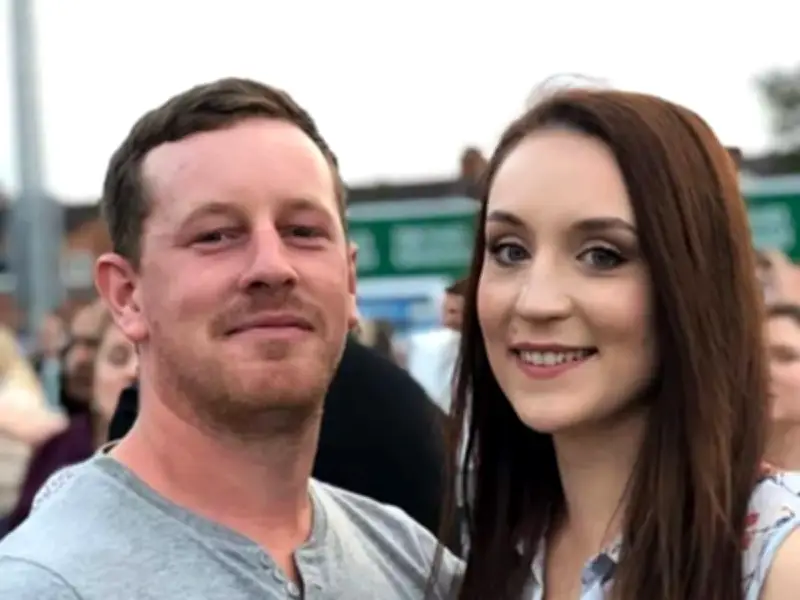
A former soldier with a brain tumour is selling the home he and his wife spent £150,000 adapting to fund 'one last chance' at private cancer treatment. Paul Coleman, 38, was diagnosed with a benign brain tumour in 2012 after noticing hearing loss in one ear, and it was monitored with annual MRI scans. After living a 'normal life' for several years, he and his wife Michelle, 33, renovated their home to make it accessible in case his condition progressed.
Tumour turns cancerous
In 2020, a scan showed the tumour had grown, and a biopsy confirmed it had become cancerous. Paul underwent radiotherapy and chemotherapy before being told he had around five to eight years to live. By 2022, the tumour had grown to grade four and appeared to occupy around 25% of his brain. Paul said further treatment and surgery kept it 'at bay'. Earlier this year, doctors told the couple the tumour had progressed to his brain stem, and with further surgery likely to leave him severely debilitated, surgery was no longer an option.
Paul, who became a groundworker after his time as a soldier, and Michelle, an accountant, are raising funds to secure private treatment costing £4,000 per session. Speaking to PA Real Life, Michelle said: “I just want my husband back…we’re fighting for time. That’s all we’re asking for: time. He’s not ready to go. I’m not ready to lose him. Our family isn’t ready to lose him. We aren’t asking people to cure Paul. We aren’t asking people to fix something that can’t be fixed. We’re asking for a chance. A chance to try this treatment. A chance to fight. A chance to have more time together.”
Adapting their home
Looking back on his diagnosis, Paul noted he 'didn’t think it was anything serious' when he went to get checked out, attributing his hearing loss to his army days, and said the diagnosis was 'a bit of a shock'. After buying their first house together in 2015, Paul was rejected for life insurance, stating: “It felt like they knew more than us on what was to come.” Once they moved home in 2020, the couple spent £150,000 renovating it, widening doors, installing lever taps, rewiring the house so sockets and light switches were within reach, and extending the property to fit a downstairs wet room and bedroom.
Michelle recalled the 2020 biopsy result: “It was the worst news possible. They told us it was incurable but it’s not the end of the game – he was looking at having quite a good lifestyle.” According to the Brain Tumour Charity, people with a grade four glioblastoma have a life expectancy of around 12 to 18 months with standard treatment. Paul described his 2022 brain surgery: “They removed all of it apart from a strip – they said if they took that bit out it would have affected me permanently and left me with brain damage.” Michelle added: “That would have been the hardest time for me, when Paul was in surgery, I basically cried solidly for 10 hours waiting for that phone call. We didn’t know if he’d come out of surgery, or if he’d be really disabled and unable to walk or swallow.”
Desperate appeal for help
Bedbound for a week after the operation, Paul developed a slur, making him sound 'as if he is drunk', and had problems with eye tracking and being 'wobbly' on his feet. He said 'everything was going great until it wasn’t' and 'it’s gone downhill from there'. During radiotherapy this year, he was constantly vomiting, struggled to keep fluids down and suffered 'piercing' headaches. The treatment caused swelling on his brain, his right hand began to tremor and the left side of his face started to droop. He is now unable to use his right hand and has weakness in his right leg.
Doctors have recommended a targeted cancer drug called Bevacizumab, which, according to Cancer Research UK, targets a cancer cell protein called vascular endothelial growth factor (VEGF). This protein helps cancers grow blood vessels so they can get food and oxygen from the blood. Bevacizumab blocks this protein, starving the cancer so it cannot grow. The treatment is not routinely available on the NHS, and doctors told the couple Paul would need to have it privately at £4,000 per treatment, with four initial treatments needed.
Michelle, of Geddington, Northamptonshire, said: “It feels like I’m living through a panic attack on a permanent basis. It feels like a very American problem to have.” The couple set up a GoFundMe with a £20,000 target and have so far raised more than £15,800. “The kindness from everyone has just been unreal and it’s taken a massive weight off our shoulders,” Michelle explained. The couple have now put their house on the market to help fund his treatment and are 'watching every penny'. “All the money we’re paying for our mortgage could be going towards treatment if we downsize. It’s going to be so hard to give this house up – we’ve got friends down the road that come and help us, and we have a whole community here,” Michelle said. Looking ahead, Paul said: “I served in the army, I fought for my country, and I’ll fight this.”