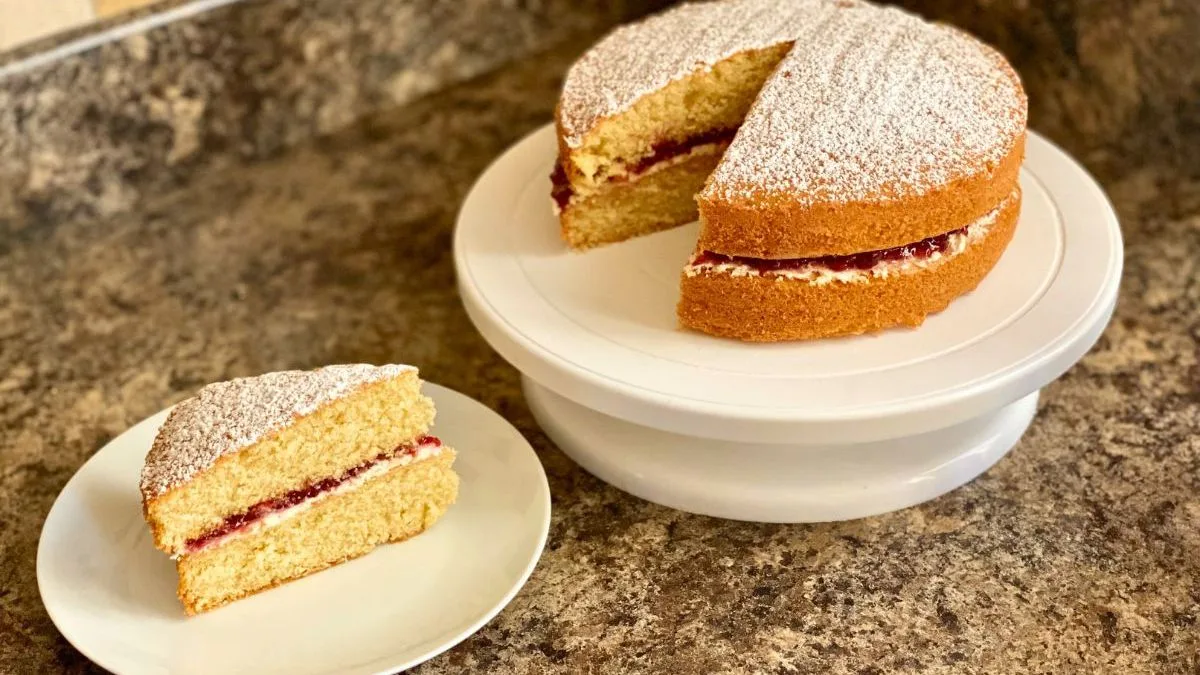
Easter celebrations often feature chocolate eggs, but a fruity springtime treat can be equally delightful. As someone who excels at cooking savoury dishes like roast lamb but struggles with baking, I decided to tackle a classic British dessert: Mary Berry's Victoria sponge cake. Widely regarded as the queen of straightforward baking, Mary Berry's recipe on BBC Food seemed approachable, yet my execution was far from perfect. Surprisingly, my mistakes led to a mouth-watering result that might even surpass the original.
Mary Berry's Victoria Sponge Recipe: The Classic Method
Mary Berry's recipe calls for simple ingredients and clear steps. For the sponge, you need four large free-range eggs, 225g of caster sugar, 225g of self-raising flour, one teaspoon of baking powder, and 225g of softened unsalted butter. The jam requires 200g of raspberries and 250g of jam sugar, while the buttercream consists of 100g of softened unsalted butter, 200g of sifted icing sugar, and two tablespoons of milk.
The method begins by preheating the oven to 180°C and preparing two 20cm tins with greased baking paper. In a large bowl, combine the eggs, sugar, flour, baking powder, and butter, mixing only until blended to maintain a soft, dropping consistency. Divide the batter evenly between the tins, smooth the tops, and bake for 25 minutes until golden and springy. After cooling, the jam is made by mashing raspberries with sugar, boiling for four minutes, and cooling. The buttercream is whipped until smooth, then used to assemble the cake with jam between the layers, topped with a sprinkle of caster sugar.
My Baking Blunders and Unexpected Improvements
Despite following the instructions, I made several errors that altered the cake's texture and flavour. First, I overworked the mixture, resulting in a denser, firmer sponge compared to Mary Berry's light and airy version. This occurred because I used chilled butter that combined lumpily, requiring extra mixing to incorporate. Additionally, I lacked proper equipment and used a single large baking tin instead of two, preventing the cake from achieving the expected rise. However, this shallower cake improved the balance of cream, jam, and sponge, making it more crumbly and delightful.
Ingredient Substitutions That Enhanced the Flavour
I also deviated from the recipe by adding vanilla extract to the sponge, which genuinely boosted the taste. More significantly, I abandoned Mary's jam-and-buttercream approach due to its labour-intensive nature. Instead, I used shop-bought raspberry jam, stirred briefly before spreading, and replaced the buttercream with a quick mixture of double cream, sugar, and vanilla extract. This alternative was less sweet, tasted divine, and came together remarkably quickly. To add a fruity depth, I mashed a handful of raspberries with a fork and folded them into the cream.
Served with whipped cream and fresh raspberries on top, this adapted version became the ultimate springtime indulgence. My blunders, from overmixing to equipment shortcuts, inadvertently created a cake with improved texture and flavour balance. While Mary Berry's recipe remains a classic, my mistakes proved that sometimes improvisation can lead to delicious surprises in the kitchen.