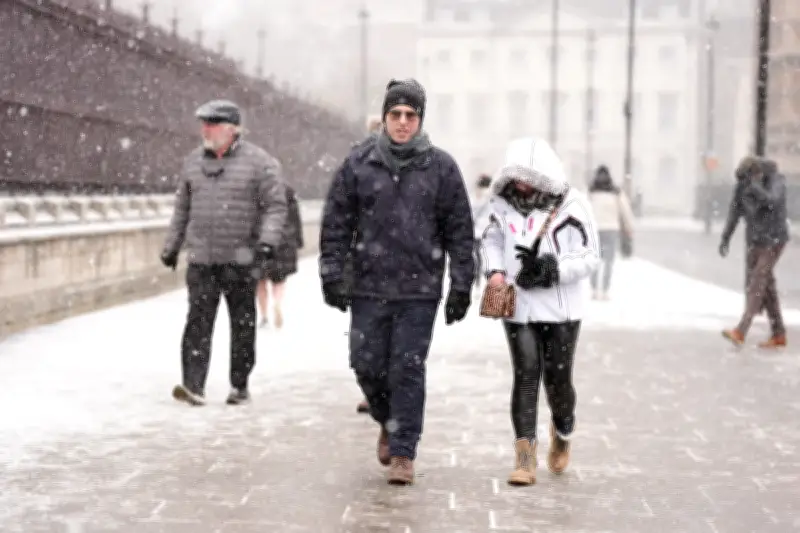
London households could face higher heating costs this winter if a powerful El Niño disrupts the polar vortex and sends bitterly cold air towards Britain. After a record-breaking hot and dry summer, attention is now turning to the possibility of a dramatic change in conditions as winter approaches.
An unusually strong El Niño — dubbed a potential “Godzilla” event because of its scale — could affect weather patterns across the Northern Hemisphere and increase the chances of disruption to the polar vortex. El Niño is a natural climate pattern caused by unusually warm waters in the Pacific Ocean.
What is the polar vortex?
The polar vortex is a vast band of winds high above the Arctic that helps keep some of the coldest air around the North Pole. If it weakens or becomes disrupted, Arctic air can spill much farther south into Europe and North America. For Britain, that can increase the risk of bitter cold, strong winds and snow — although a disrupted polar vortex does not guarantee severe weather in the UK.
Research from the US government’s NOAA Chemical Sciences Laboratory has found that El Niño “tends to promote the breakdown of the polar vortex, especially in late winter”. Any prolonged cold snap could increase energy use as people turn up their heating and keep it on for longer.
How to keep energy bills under control
For households already concerned about the cost of keeping warm, the question is how to prepare now and keep energy bills under control if temperatures plummet. British Gas has highlighted several ways to avoid wasting energy.
- Reflect heat back into the room: Put radiator foil — or a sheet of card covered with tinfoil — behind radiators to help reflect heat back into the room rather than letting it be absorbed by poorly insulated walls.
- Insulate your pipes: Adding foam pipe lagging to hot-water pipes helps keep the water hotter for longer, improves heating efficiency and can help prevent pipes from freezing.
- Block draughts: Check for gaps around windows and doors where warm air can escape. Draught excluders and insulating tape can provide a relatively inexpensive fix. Spare foam pipe lagging can also be cut to size and used along the bottom of a door.
- Bleed cold radiators: If a radiator isn't heating all the way to the top, trapped air could be preventing hot water from circulating properly. British Gas recommends bleeding the radiator to release the air and help it work efficiently.
- Get your boiler serviced: An annual boiler service can help it work efficiently and potentially extend its life. British Gas says servicing should be carried out by a Gas Safe Registered Engineer.
Simple habits that save heat
- Close curtains before it gets dark: Windows can be a major source of heat loss, particularly with older glazing. Closing curtains before darkness falls, or when you're out, can help retain warmth. Thermal curtains can provide additional insulation.
- Give radiators some breathing room: Keep furniture, clothes airers and long curtains away from radiators, as they can trap heat and prevent it circulating around the room.
- Keep your thermostat between 18 and 21C: British Gas recommends setting the main room thermostat somewhere between 18C and 21C, rather than automatically turning it all the way up when temperatures plummet.
- Use a heating timer: Rather than leaving the heating running too high for too long, set the thermostat to a chosen temperature and use a timer so the heating comes on when you need it most.
- Stop heat escaping: Once you’ve tackled simpler measures, British Gas recommends insulating your home. Insulation can reduce heat loss through floors, walls, chimneys and other gaps.