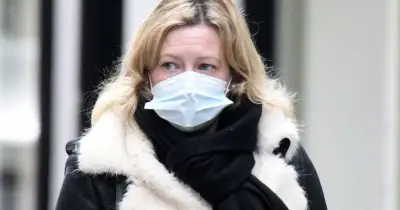
NHS bosses have warned that hospitals are “very, very busy” as winter illnesses rise, with various strains of Covid-19 and a possible early flu season driving up hospital admissions. The UK Health Security Agency (UKHSA) reported that positive Covid-19 tests in September were up seven per cent, while hospital admissions increased by 50 per cent.
Early signs of winter pressure
NHS national medical director Professor Frankie Swords said there are “slightly ominous” early signs of winter pressure for the health service. While flu levels are currently low, September figures were higher than the same period for the last four years, according to the UKHSA’s first weekly winter respiratory virus surveillance report.
Professor Swords said in a briefing: “From an NHS perspective, it is very early in the season, but the number of admissions for flu are the highest that I can remember seeing at this time of year, and it’s coincided with just the start of the expected increase in Covid cases in our hospitals.”
“But this is coming on the back of the busiest summer we’ve ever had in our emergency departments, we have got very, very busy hospitals. So slightly ominous early signs of winter pressure,” he added.
Vaccination drive and flu strains
There are three types of flu virus, and while it is too early to know which one may dominate this winter, the current vaccine protects against all three. Early data from the UKHSA shows an equal mix of subtypes A(H3N2) and A(H1N1) in England.
Prof Swords said 3.9 million people have already had their flu vaccination since the start of last month. The NHS began vaccinating pregnant women, toddlers and school-age children from September 1, with over 65s and other eligible adults offered it from October 1.
“In September, on average, 95% of our occupancy was used every day, and that’s September,” Prof Swords added. “So although the weather’s still nice, and perhaps people aren’t thinking too much about flu at the moment, please, we are acting early, and I’d really encourage people to act early.”
UKHSA surveillance data
The UKHSA’s first flu report showed influenza activity increased and is circulating at baseline levels, with flu positivity rising to 6.5% compared with 5% the previous week. Overall flu hospitalisations were 1.97 per 100,000, though this surveillance formally starts in week 40, so a comparison to the previous week is not possible.
The increases in flu are being driven by young adults. Covid-19 activity is increasing and above baseline, although still at low levels. The strains currently circulating, including those known as XFG, are closely related to strains seen in the UK for over a year. Rhinovirus activity, otherwise known as the common cold, has started to decline after a sharp rise in previous weeks, while Respiratory Syncytial Virus (RSV) activity remains at baseline levels.
Early flu season and virus changes
The UKHSA has said early signs suggest flu season may be starting earlier this year. Flu activity throughout September has been higher than in the same period over the past four winters. While levels remain at baseline, the upward trend suggests an early flu season, driven largely by cases among those aged 18 to 24.
Flu viruses constantly change through a natural process called antigenic drift. Each year, the World Health Organization monitors circulating strains globally and selects which ones should be targeted by that season’s vaccine, but this decision is made months in advance to allow manufacturers time to produce enough doses.
“Sometimes the virus continues to change after that point, resulting in it no longer matching the vaccine strain as closely as originally predicted,” the UKHSA explains. “This year, it’s the A(H1N1) subtype that has drifted from the strain used in the vaccine. It’s still too early in the season to know for certain whether this drifted H1N1 will circulate widely in the UK, or how it will affect vaccine effectiveness.”
Eligibility and booking
The UKHSA says vaccines remain the best defence against severe disease and hospitalisation from flu and Covid-19. Those eligible for vaccination will be contacted by the NHS. Current eligibility includes people aged 75 and over, those with weakened immune systems, and those living in care homes for the elderly.
Those eligible for a free flu vaccine include pregnant women; all children aged two or three years on 31 August, 2026; primary and secondary school-aged children from reception to year 11; young people aged 17 and over attending a special educational needs (SEN) school who are also in a clinical risk group; and all children in clinical risk groups from 6 months to less than 18 years.
The UKHSA has urged those eligible to book an appointment through the NHS App, online, or by contacting a GP practice or local pharmacy. For school-aged children, most vaccines are delivered in schools by local immunisation teams. XFG, also known as the Stratus variant and nicknamed ‘American Covid’, remains the most common current Covid-19 variant, the UKHSA said, adding that it is not new and has been circulating in the UK for around a year.