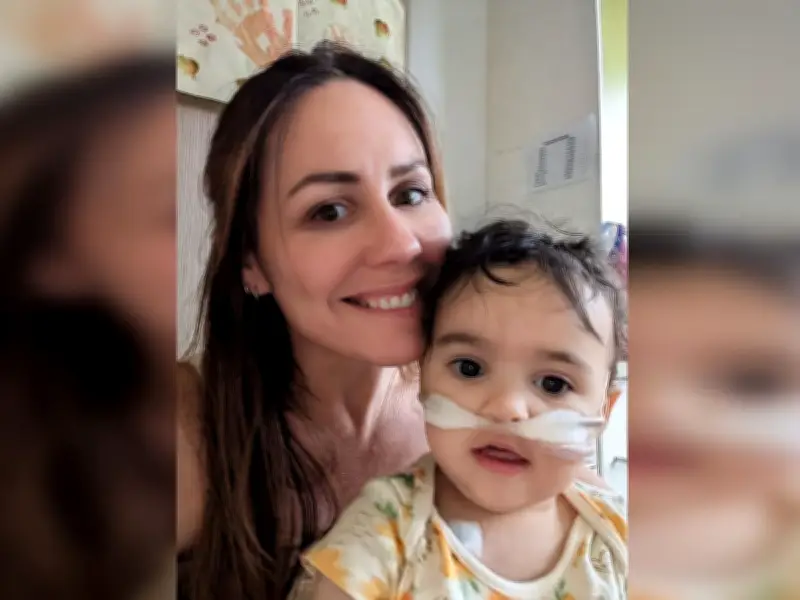
Kelly Eastwood, 42, from Thingwall, Wirral, is urging parents to trust their instincts after her 17-month-old daughter Ava was diagnosed with dilated cardiomyopathy, a rare condition that has left her in heart failure. Ava was given just a one-in-three chance of survival and is currently dependent on intravenous medication at Alder Hey Children's Hospital.
Repeated Dismissals of Symptoms
Kelly claims that doctors repeatedly dismissed her concerns over months of worrying symptoms. She said Ava struggled with feeding and digestion throughout her first year, leading to multiple visits to her GP and Arrowe Park Hospital, including three trips to A&E before her diagnosis. Doctors initially suggested a cow's milk allergy and digestive issues, later reassuring her it was "just a virus."
"I always thought something wasn't right with her gut," Kelly told the ECHO. "She'd be up through the night crying and uncomfortable. She'd be kicking and screaming because she just didn't know what to do with herself. I'd say to the doctors, 'this isn't normal.'"
Critical Diagnosis
On April 4, just two days before a planned trip to Australia for Kelly's sister's wedding, she noticed Ava's breathing had changed, with a grunt and high heart rate. After hours at the hospital pushing for further investigations, including a chest X-ray, doctors discovered Ava's heart was twice its normal size and her lungs were full of fluid. She was urgently transferred to Alder Hey, where her condition rapidly deteriorated.
"She just went floppy in my arms. Her lips were turning purple and she had to be put on a respirator," Kelly said. The consultant told her there was only a one-in-three chance Ava would survive, explaining that with this condition, a third of children don't survive, a third can be managed with medication, and a third eventually require palliative care.
Current Treatment and Future
Ava also developed sepsis, which was successfully treated with antibiotics, but her heart condition has not improved. She is now on a newer heart failure drug as a last resort. If unsuccessful, she may need to remain in hospital for assessment for a heart transplant. Kelly, a single mum and prison officer, has stayed by Ava's bedside around the clock, with her mother caring for her two sons, aged 15 and 18.
Consultants later told Kelly the condition might have been detected sooner with specialist cardiac investigations. "They told me it probably would have been picked up much faster. The digestive system is one of the first things affected because the body sends blood to the vital organs," she said.
Call to Action
Despite everything, Kelly describes Ava as "quirky, sassy and happy." She hopes sharing their story encourages parents to speak up if they believe something is wrong. "Trust your gut. Push for answers. You know your child better than anybody. I want Ava's story to save children in exactly her position before it's too late," she said.
A GoFundMe page has been set up by Kelly's friend, Sonia Williams, to ease financial pressures during Ava's hospital stay. A Wirral University Teaching Hospital spokesperson said: "We are very sorry to hear of the family’s concerns. While we are unable to comment on individual patients due to patient confidentiality, we would encourage the family to contact us directly so we can listen carefully and answer any questions they may have."
Symptoms of Heart Failure in Babies and Toddlers
- Poor appetite and not gaining weight
- Sweaty and clammy, especially when drinking from a bottle or sleeping
- Lethargic
- Tires easily when drinking from a bottle
- Discomfort, especially at night
- Becoming more irritable, including kicking and wrenching
- Rapid breathing or with a grunting noise
- Abdominal swelling
- Coughs, especially when lying down
- High or low heart rate