
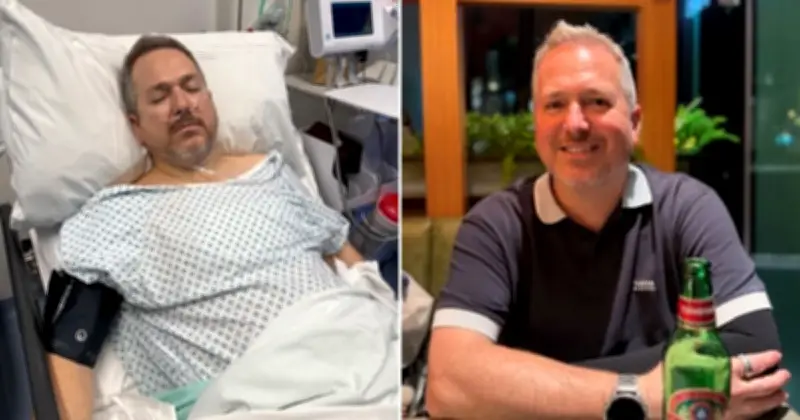
Adam Ramsey, 48, from Ipswich, was asked by the NHS whether he was menopausal after being diagnosed with breast cancer. He is now backing calls for greater awareness that men can get the disease.
Adam was one of around 400 men diagnosed with breast cancer last year. He contacted his GP after noticing an inverted nipple and was sent forms designed for female patients. The forms asked for the date of his last period and whether he was menopausal. Another resource, titled 'Mummy Has A Lump', was mentioned when he was considering how to break the news to his daughter Mia, 10.
Two-thirds of men unaware
A report reveals that two-thirds of men are unaware they can get breast cancer. Adam said: “Going online for help was quite challenging as well. A lot of the major breast cancer resources, charities, organisations are all geared towards women — as they should be because there are an awful lot more women who get breast cancer than men. But there was very little, if any, information for men.”
Adam noticed his inverted nipple in November 2025. His wife Nicki, who worked at their local hospital’s radiotherapy department, urged him to see a doctor. His diagnosis of stage one breast cancer was confirmed last Christmas Eve following a mammogram, ultrasound and biopsy.
Treatment and recovery
Adam underwent a mastectomy, which removed 464g of tissue, followed by radiotherapy. He said: “They removed a tumour that was just a bit smaller than a golf ball. I had no idea it was there. The inverted nipple was the slam dunk symptom, according to the hospital. But I had no idea that could even be a thing for a guy.”
Adam has been given the all-clear but lives with a seroma — a pocket left after surgery where fluid accumulates and must be drained — and lymphedema in his left arm, causing swelling. He said his hospital care was “first class” but many resources and messaging from well-meaning charities only focused on women. He once looked into joining a breast cancer charity bike ride, but was barred from taking part due to his gender.
Adam added that he does not want to “take any light away from breast cancer for women…but it does need to be noted that men have breasts too, and men can get breast cancer”.
Moobs report findings
Adam is now supporting Moobs, the UK’s first breast cancer organisation for men. A survey of 2,000 people for the first Moobs Report found that only 42% of people knew that breast cancer could affect men. Recognition was lower among men than women, at 33% compared with 51%. Younger people were the least aware, with just 21% of 18 to 24-year-olds identifying it.
Moobs founder James Richards said: “These findings confirm what many men affected by breast cancer have been saying for years. Too many do not realise breast cancer can affect them, while those who are diagnosed still encounter information and support that fail to reflect their experiences. I know because I was one of them — when I was diagnosed at 36, I had no idea men could get breast cancer.”
The report calls for men to be included in wording and imagery for public awareness campaigns about the disease. It also suggests breast cancer organisations should have someone who takes responsibility for including men, and that health services should review forms, leaflets, websites and support information provided to male patients.
Ross McLean, a consultant oncoplastic breast surgeon at Queen Elizabeth Hospital, Tyne and Wear, who is quoted in the report, said: “If men do not know breast cancer can affect them, why would they think to seek help when they notice a change? The more we talk about breast cancer in men through campaigns and increased media representation, the more likely we are to reach someone earlier, encourage them to seek advice and ultimately improve outcomes.”
James added: “This report shows how widespread the awareness gap remains and sets out practical steps to address it. There is no silver bullet, so I am calling on breast cancer organisations, health professionals and support providers to work with Moobs and men with lived experience to turn these recommendations into real change.”
An NHS spokesperson said: "Patients should only be asked questions that are relevant to their care. Breast cancer is rare in men, but it does happen, so any man who notices a lump in their chest or armpit, or changes in their nipple or chest that are not normal to them, should contact their GP without delay."




