

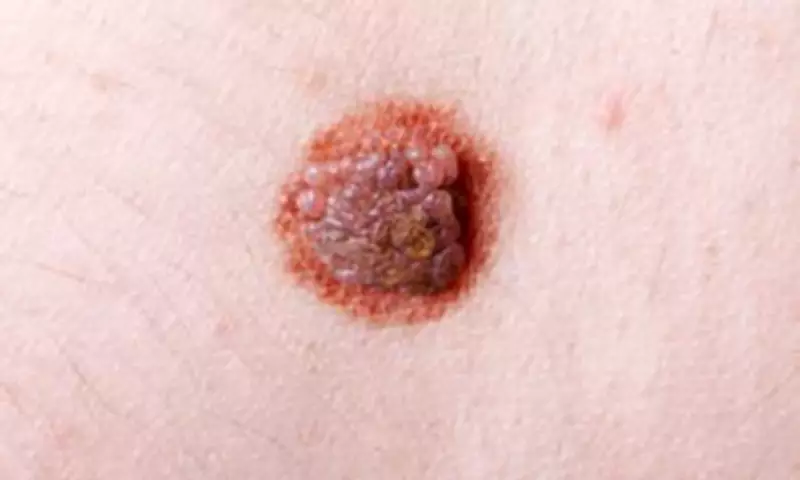
A new study has issued a stark warning that skin cancer cases could surge dramatically by 2050, with deadly melanoma becoming an even greater global killer. Diagnoses of skin cancer have climbed significantly in Britain over the past decade, with cases of melanoma—the deadliest form of the disease—rising by almost a third.
Current Statistics in the UK
There are around 19,400 new cases of melanoma every year in the UK and approximately 2,600 deaths. Exposure to ultraviolet rays (UV) from the sun or sunbeds is the leading cause of the disease. The two main forms of non-melanoma skin cancer—basal cell carcinoma (BCC) and squamous cell carcinoma (SCC)—also largely caused by UV exposure, are rising as well.
Global Trends
This problem is not unique to the UK. Cases of skin cancer are rising across the world, with melanoma diagnoses increasing from 287,723 in 2018 to 331,722 in 2022. Researchers from Shenzhen People's Hospital in China now say the global burden of all three major skin cancers could continue worsening over the coming decades.

Writing in the journal JAMA Dermatology, the team analysed global health data from 1990 to 2023 on skin cancer cases, deaths and disability, before predicting how rates could look by 2050. Using a tool named disability-adjusted life years (DALYs)—which analyses years lost to premature death as well as years lived with disability—the researchers estimate the toll from melanoma will rise from around 2 million years of healthy life lost to more than 3.3 million.
Predictions for SCC and BCC
For SCC, this is predicted to jump from 1.2 million DALYs to 4 million, while BCC—the most common form of skin cancer—could account for almost 5 million DALYs globally by 2050.
Regional Variations
The highest rates of DALYs for melanoma are currently in Australia, New Zealand and Nordic countries, where there are lighter-skinned populations and higher UV exposure. SCC DALYs are most concentrated in Australia, Brazil, the Caribbean and the US. Meanwhile, BCC DALYs are most common in Australia, North America and Northern Europe.
Gender and Age Differences
The team also found that men consistently had higher rates of all three skin cancers. For melanoma, there were 28.2 cases per 100,000 in men compared with 25.6 per 100,000 in women. Melanoma cases also rose among adults aged 70 and over, while declining in younger adults aged 30 to 49.
Alarming Survey Results
The findings come weeks after a worrying survey revealed that one in five British adults have deliberately burnt their skin—putting them at a heightened risk of melanoma. The survey of more than 3,000 adults in the UK found that an astonishing one in three adults (35 per cent) also admitted to never using sunscreen during the summer months.
As 86 per cent of melanoma cases are preventable in the UK, experts from charity Melanoma Focus, who carried out the research, urged Britons to look after their skin. Susanna Daniels, the charity's chief executive, said 'it is alarming to see that so many individuals are putting themselves at serious risk' and 'overlooking the vital importance of sun protection'.
Understanding UV Rays
There are two main types of UV ray, both of which can damage the skin and cause skin cancer. The first type, UVA, penetrates deeper into the skin while UVB targets the outer layer and causes most sunburns. The UV index monitors the intensity of both UVA and UVB and informs people of the radiation levels from low—between a number of one or two—to extremely high at 11; however, anything above three can be harmful to the skin for most people.
The tool is useful as it makes people aware of how they could be at risk of sunburn and how much protection they need. But less than half of those surveyed understood what it meant—sparking concern as being sunburnt more than five times can more than double a person's risk of melanoma, which is the fifth most common cancer in the UK behind breast, prostate, lung and bowel cancer.

Symptoms and Prevention
Symptoms of the disease include a new mole—or change to an existing mole—anywhere on the body, but more commonly in areas exposed to the sun. The NHS website advises: 'Checking your moles every few months is essential.' Rare types can also show up in the eyes, soles of the feet, palms of the hands, genitals and fingernails. The NHS recommends staying out of the sun during the hottest part of the day, when UV rays are strongest, keeping legs and arms covered and using sunscreen with a sun protection factor (SPF) of at least 30.





