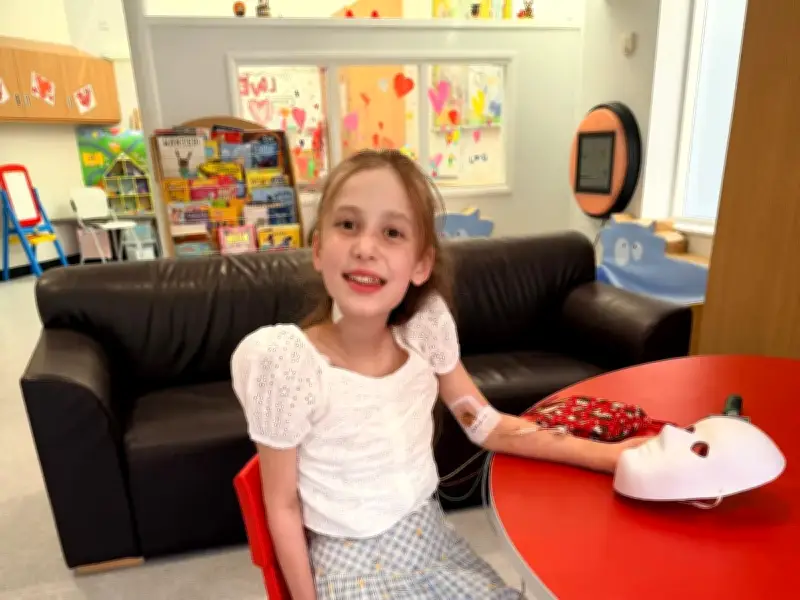
Scarlett Icke, 11, was placed on the "super urgent" heart transplant list at the Freeman Hospital after persistent vomiting revealed a previously undetected, potentially lethal heart condition. She received a transplant after 19 days of support from an ECMO machine, which took over her breathing.
Sudden illness and diagnosis
Scarlett, from Bolton, Lancashire, had no history of heart issues, but last Spring she fell ill with symptoms that wouldn't shift. She was persistently sick and vomiting for "several weeks." Initially thought to have a gastrointestinal illness, she was sent for a heart scan as symptoms worsened and she became more lethargic.
The echocardiogram, carried out at a hospital near her home, revealed she had dilated cardiomyopathy. The condition causes the heart to become enlarged and weakened, making it less able to pump blood around the body.
Transplant and recovery
Scarlett was rushed to the Freeman Hospital's Children's Heart Unit, where she was added to the "super urgent" transplant waiting list. As medics prepared to implant a mechanical pump in her chest (a Left Ventricular Assist Device or LVAD), a transplant heart became available. An adult donor heart was suitable, which had hugely increased the pool of potential organs for Scarlett.
Now, she is back being a "typical 11-year-old girl." Her mum Hannah said: "Before Scarlett became unwell, organ donation wasn't something we had really thought about or spoken about as a family. Going through this experience has shown us just how important it is. We saw first-hand how many people are waiting for a transplant and that not everyone receives the organ they need in time. We will always be grateful to Scarlett's donor and their family. At a time of immense loss for them, they made a decision that saved our daughter's life."
Staff and donor families praised
Hannah added: "Everything happened so quickly. Scarlett went from being a healthy, active child to needing specialist care almost overnight. She was frightened and faced many weeks in hospital away from home, but the staff were incredible. The nurses, doctors and wider teams supported not only Scarlett but our whole family throughout her treatment."
Barbara Cardoso, paediatric cardiology consultant and transplant physician, said: "As transplant physicians, we see first-hand the extraordinary difference that organ donation makes to children waiting for a heart transplant. When Scarlett became critically ill, she was fortunate to receive a transplant quickly thanks to the gift of an adult donor heart. Her story is a powerful reminder of the generosity of donor families, whose legacy lives on through the lives they save."
However, the consultant added: "Sadly, many children are not as fortunate and face increasingly long waits for a suitable donor heart, with organs for young children remaining desperately scarce. Scarlett's journey highlights both the life-changing impact of organ donation and the importance of continuing to raise awareness and encourage conversations about donation. For children awaiting a transplant, the gift of a donor organ can mean the difference between life and death."
Urgent call for donors
Anthony Clarkson, director of organ and tissue donation and transplantation at the national NHS Blood and Transplant agency, said: "We are facing one of the most challenging periods for organ donation in over a decade. The sharp decline in donors and the rising number of people waiting for a transplant need urgent action. We have already adapted significantly to changes in the donation environment. But saving lives and reducing the waiting list needs collective effort across the NHS and society."
He added: "There is a simple action the public can take to help save lives. Please sign the NHS Organ Donor Register. Most of us would accept an organ if we needed one but opportunities to save lives are being lost because families didn't know what their loved ones wanted. Leave them certain."
Organ Donation Week is taking place from 21 to 27 September. In the North East alone, there are currently 341 people waiting for an organ transplant, and NHSBT has launched an "urgent response" to tackle the shortfall in donation rates.
To find out more, or confirm support for organ donation, visit organdonation.nhs.uk, call 0300 123 23 23 or use the NHS app. It is important to tell loved ones about your decision, as while the system is now "opt-out," it is common for families to overrule a loved one's decision.