
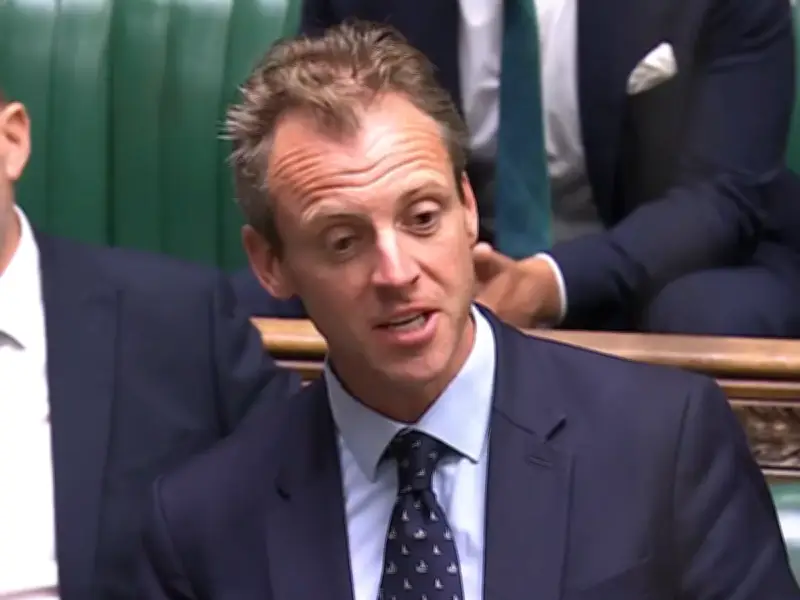
The Department for Work and Pensions (DWP) has responded to calls that it is “time to end” cash payments for people with conditions such as ADHD. In a House of Commons debate, Minister for Social Security and Disability Sir Stephen Timms was asked about the rise in claimants.
He told the House that the Office for Budget Responsibility official forecast predicted that at the end of the current Parliament, in 2029-30, UK welfare spending will be about £390 billion. He added that spending on working-age adults’ and children’s welfare is forecast to be 4.9% of GDP at the end of the current Parliament, which he said was the same proportion as now.
PIP claimant numbers rise
A total of 4.09 million people were entitled to claim Personal Independence Payment (PIP) as of July 31 2026, according to data published by the DWP. This is up from 3.83 million a year earlier – a rise of 262,045, or 7%. The number of claimants has roughly doubled since comparable figures began in January 2019, when the total stood at 2.05 million.
The DWP has said the Timms review will ensure PIP is “fit and fair for the future”. PIP is designed to help people with the additional costs that can come with being disabled.
MPs debate cash vs therapeutic support
In the Commons, Tory Joe Robertson asked: “The number of children between the ages of six and 11 with attention deficit hyperactivity disorder has grown sixfold, which means that in the years ahead there will be a surge in the number of applications for personal independence payment as children become adults.
“Even the Secretary of State accepts that owing to the growing number of children receiving disability living allowance, most will be transferred to PIP. Does the Minister agree that it is time to end a cash payments benefit system for people with more minor conditions, and ensure that those with genuine needs receive the therapeutic support that will enable them to learn, work and contribute to the economy?”
Sir Stephen replied: “The hon Gentleman will have seen Professor Peter Fonagy’s recent report about the incidence of ADHD, autism and other conditions. He will also know that I am co-chairing a review of PIP which is looking into how we can ensure that the system meets the very real needs of many disabled people, and that the benefit is on a sustainable financial footing for the future. The report of my review will be published before the end of the year.”
Support for tailored help
On the issue of swapping cash for other specific help, Labour’s Deirdre Costigan asked: “According to a recent report from the Good Growth Foundation, 50% of disability claimants would swap up to £1,000 of benefits for help such as employment support, therapy and physical aids. Does the Minister agree that giving disabled people tailored support could both reduce the welfare bill and stop those who want to work being written off by the system?”
Sir Stephen replied: “I do agree with my hon. Friend, and, as she has said, we inherited a system that wrote people off. We are pleased with the early results emerging from our Connect to Work programme, which is providing exactly that kind of tailored support for disabled people and others faced with complex barriers to work. We recently published the second set of quarterly outcome statistics, and the news is very encouraging.”
Of the 4.09 million PIP claimants at the end of July, 1.60 million were listed as having psychiatric disorders, or 39% – the highest proportion for any type of disability. Some 268,965 claimants were classed as having autistic spectrum disorders, more than three times the 79,395 in January 2019 when data began. A further 442,666 claimants had mixed anxiety and depressive disorders, up from 171,833 in January 2019, while 106,087 had the hyperkinetic disorders ADHD or ADD, up from 23,741.
The second most common type of disability among claimants was general musculoskeletal diseases, which applied to 764,305 people in July this year, or 19% of the total. Just over a third (35.8%) of new PIP claims in July were granted, while 61.4% were disallowed and 2.8% were withdrawn. The grant rate for new claims has been on a downward trend for the past two years, having stood at 41.1% in July 2025 and 46.4% in July 2024.
The Prime Minister’s official spokesman said Andy Burnham believes “we have got to get serious as a country about welfare reform”.




