

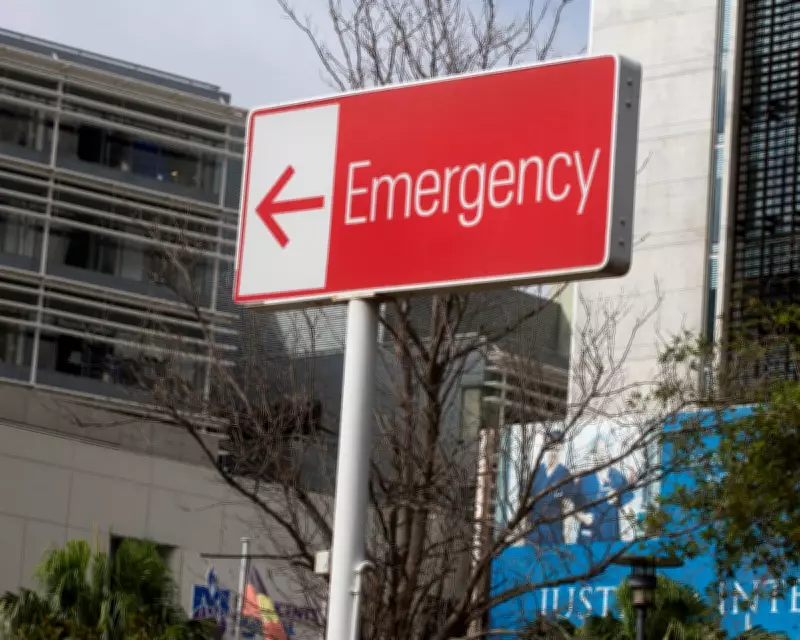
Australian hospitals are trapped in a dangerous 'doom loop' where chronic overcapacity leads to deteriorating patient health and systemic failures, according to leading oncologist Ranjana Srivastava. Where 85% occupancy is considered safe for effective healthcare delivery, Australian medical facilities frequently operate at full or overcapacity, creating a cascade of negative consequences throughout the entire health system.
The Vicious Cycle of Hospital Overcrowding
Long waiting times directly contribute to sicker patients arriving at hospitals, and these sicker patients subsequently require more extensive treatment and longer hospital stays. This creates a self-perpetuating cycle where extended hospitalisation clogs precious capacity, which in turn extends wait times for everyone else seeking medical attention. Doctors refer to this phenomenon as 'complex care,' while a recent Economist report has more starkly labelled it a 'doom loop' that threatens healthcare systems across developed nations.
International Comparisons Reveal Widespread Problems
The healthcare challenges facing Australia are not isolated. During conversations with international colleagues, Srivastava learned that in South Korea's universal healthcare system, paramedics must call dozens of hospitals seeking permission to offload patients, with one tragic case seeing a woman hit by a truck die after an ambulance couldn't find any of thirty hospitals willing to accept her. Meanwhile, in the United Kingdom, doctors have undertaken fifteen separate strikes over three years to protest working conditions, while in the United States, 47% of citizens report being unable to afford healthcare costs and grade their country's system as a C.

The Post-Pandemic Healthcare Landscape
The COVID-19 pandemic exacerbated existing healthcare vulnerabilities across Australia and other developed nations. During the early pandemic years when beds were closed, screening deferred, rehabilitation delayed, and mental health neglected, patients didn't stop developing cancer, chronic pain conditions, or depression. They simply waited and worsened. Among eighteen wealthy countries studied, satisfaction with healthcare quality fell sharply after COVID-19 struck and remains significantly below pre-pandemic levels.
Despite healthcare funding reaching historic highs in many nations, productivity outside pandemic response has stalled. In Australia specifically, the medical workforce has expanded by 20% since 2019, yet elective surgeries have flatlined and patients are waiting longer for treatment. Similar patterns are emerging in France, Canada, Germany, the United States, and the United Kingdom.
The Human Cost of Systemic Failure
The practical consequences of hospital overcapacity are visible throughout Australian medical facilities. The number of patients transferred promptly from ambulance to emergency departments has fallen dramatically while ambulance ramping has increased sharply. Elderly and frail patients become stuck in emergency departments or, worse, occupy precious intensive-care beds while awaiting ward placement. Ward beds themselves remain occupied by patients requiring senior services, rehabilitation, disability support, and palliative care placements that are increasingly difficult to arrange.
Mental healthcare presents its own category of challenges, with emergency departments becoming particularly unsuitable environments for calming distressed patients. Security guards, once fixtures primarily in emergency rooms, now regularly patrol hospital wards as well. Srivastava recounts one recent incident where her medical team froze at piercing screams suggesting violent attack, only to discover overwhelmed relatives in conflict with each other while security personnel intervened.
The Workforce Exodus and Its Consequences
COVID-19 triggered a mass exodus of experienced nurses and doctors who either resigned or retired early from the healthcare system. Those professionals who remained often reduced their 'discretionary effort'—the extra hours, teaching, mentoring, and myriad supportive activities that help the medical profession thrive. Medicine has become increasingly transactional for everyone involved, not just patients.

When experienced staff depart, their inexperienced replacements require years to develop the confidence and finesse necessary to positively influence patient care. This impact extends throughout healthcare administration, where seasoned clerks might proactively alert oncologists about distressed waiting patients while temporary staff wouldn't consider such intervention. Veteran nurses understand the nuanced difference between suggesting and demanding action, while graduate nurses may take years to develop this discernment. Ultimately, patients bear the consequences of these experience gaps.
Addressing Systemic Rather Than Individual Issues
The fundamental problem, according to Srivastava, is that administrators continue treating stress, burnout, and 'quiet quitting' as individual issues to be expunged, despite overwhelming evidence that these are systemic problems directly affecting patient care quality. Unravelling the healthcare doom loop appears to depend more on methodological changes than simply increasing funding.
Modern healthcare desperately requires robust, structured community focus instead of current fragmentation. Aged care services must expand to better meet elders' needs, while physical rehabilitation and psychological support must become more accessible outside hospital settings. In this era of chronic disease prevalence, education must begin in schools to reinforce that while hospitals will always assist those in need, prevention truly represents superior medicine to cure.





