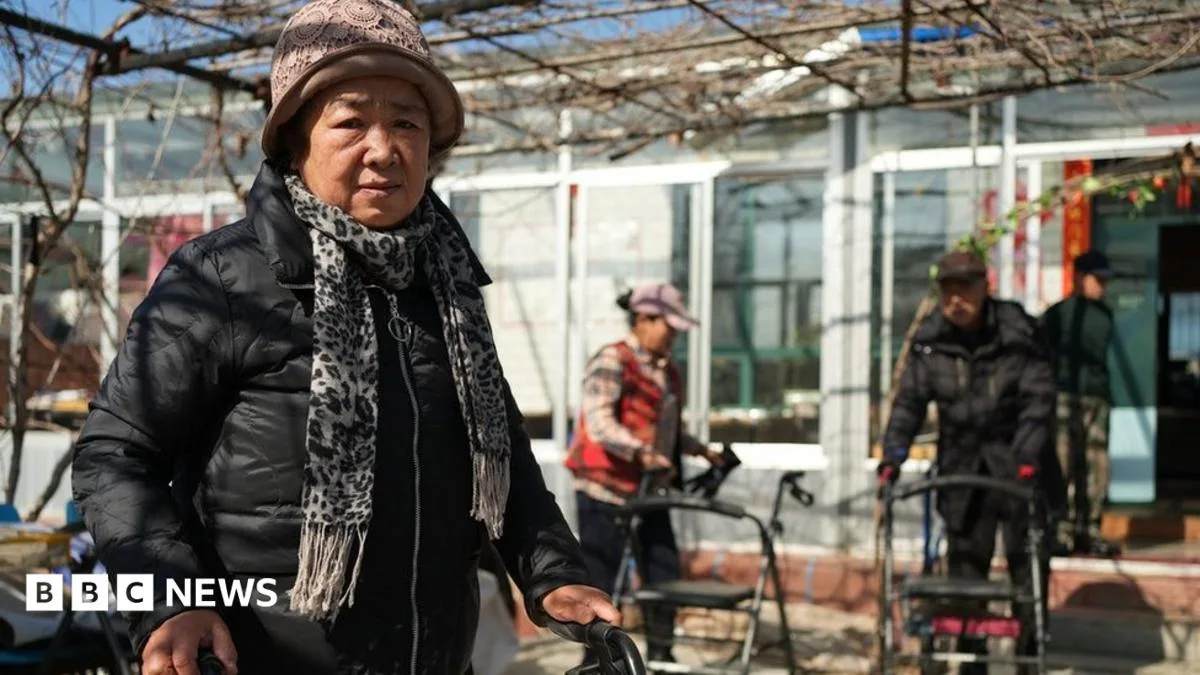
Huanchun Cao, a 72-year-old farmer from Liaoning province, has no pension and continues working to survive. He and his wife, married for over 45 years, earn around 20,000 yuan (£2,200) a year from farming, but face rising costs and cannot afford illness. Mr Cao fears becoming a burden on his children within five years.
His situation reflects a broader demographic crisis in China. Nearly a quarter of Liaoning's population is aged 65 or older, as working-age adults leave for bigger cities. The country now has more citizens over 65 than under 15, a historic shift driven by the former one-child policy and rising life expectancy.
China's pension fund may run dry by 2035, according to a 2019 estimate by the state-run Chinese Academy of Social Sciences, a projection that predates the economic impact of the pandemic. The government has also considered raising the retirement age from one of the world's lowest: 60 for men, 55 for white-collar women, and 50 for blue-collar women.
In response, some entrepreneurs like 55-year-old Guohui Tang have opened small care homes. Ms Tang's facility near Shenyang houses six elderly residents, relying on crops and livestock to cover costs. She pays into her own pension monthly, determined not to depend solely on her only daughter. Traditional filial piety is weakening as families shrink and young people migrate, leaving the elderly vulnerable.