

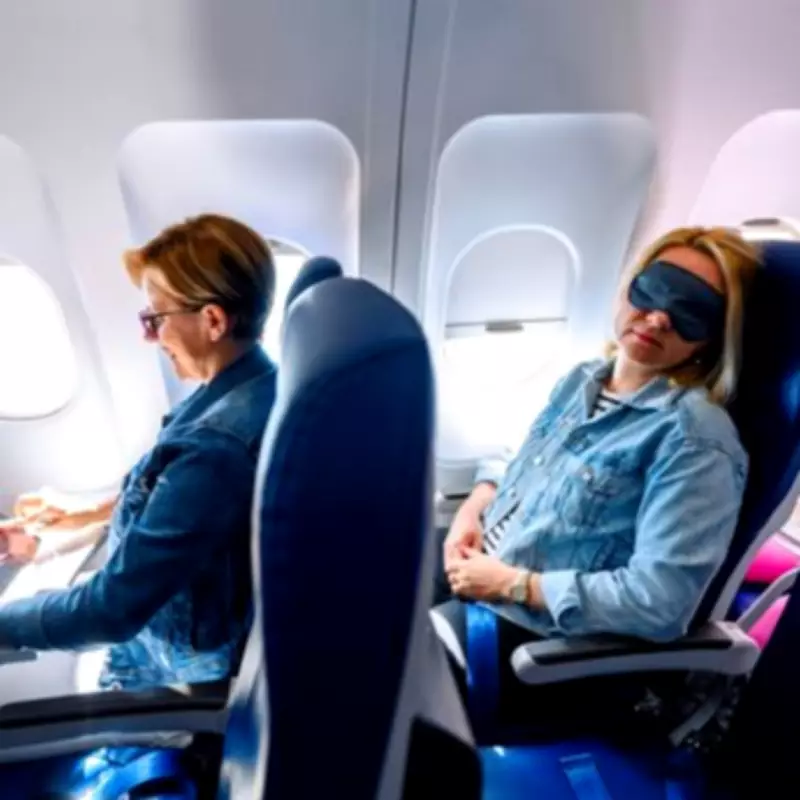
A flight attendant has issued a significant warning to passengers about the dangers of crossing their legs during a flight, highlighting the increased risk of deep vein thrombosis (DVT).
Expert Advice on Seating Positions
With thousands of Britons preparing to jet off this spring and summer despite concerns over a potential jet fuel shortage, travel experts have been sharing tips to ensure a safe and comfortable journey. One such expert is a flight attendant known as Barbiebac La Azafata, who took to TikTok to emphasize the importance of proper seating posture while in the air.
Barbiebac cautioned against sitting cross-legged due to the risk of developing a blood clot. According to the NHS, deep vein thrombosis is a blood clot in a vein, usually in the leg. The NHS advises: "Do not cross your legs while you're sitting." For air travel, it recommends staying well-hydrated, avoiding alcohol, walking around when possible, and wearing loose clothing.

Additional Tips for Comfort and Safety
Beyond avoiding crossing your legs, Barbiebac urged travelers to shift positions multiple times during the flight, refrain from placing feet on the seat in front, and avoid sleeping propped against the window. She stated: "Most passengers sit in the wrong positions and then complain that everything hurts. Do not cross your legs for a long time. It can cut off your circulation, and on long flights, you are at greater risk of thrombosis. Change position several times. Don't put your feet on the seat in front. It is very unhygienic and disrespectful to other passengers. Don't sleep against the window. The aircraft's vibration can give you a headache, and it is also very dirty because of other passengers' faces. Take a pillow, and do not recline your seat during the entire flight. The passenger behind you may be bothered."
Barbiebac is not alone in offering guidance. Another industry expert, Sherry Peters, who spent 27 years as a flight attendant, shared advice on catching rest while airborne. She recommended choosing a window seat for greater control over the environment, explaining: "Being next to the window gives you much more control over your environment, which is key to falling asleep. You can close the shade, lean against the wall for support, and avoid being elbowed by people passing in the aisle. It's one of the closest things to a controlled sleep environment on a plane. Even if you only have one or two hours, it makes a huge difference." She also advised avoiding seats near the galley or lavatories, describing them as the worst spots for sleep due to high foot traffic and constant activity.






