A man who told paramedics 'I'm going to go now' seconds before his heart stopped has been brought back to life after a single shock from a defibrillator restored his heart's normal rhythm. Ken Culley, from Windlesham, Surrey, was being treated in an ambulance outside his office in Godalming when he went into cardiac arrest.
A chilling warning before the heart stopped
Ken was alone in his Godalming office on July 30 when he began experiencing chest pains. 'I'd had pain there before, but this felt worse. I was getting clammy and I thought I should sit down as, being 6ft 3in, it's a long way to fall if I fainted,' he said.
Fortunately, Gary Burchill, who had previously worked in another office in the building, happened to call in. 'It was crazy lucky that I went in when I did, as I hadn't popped in for weeks,' he said. 'I got Ken a glass of water, but just in that time he looked worse and I thought, we've got to call an ambulance.'
The South East Coast Ambulance Service crew arrived and recognised that Ken was suffering a heart attack. His colleague Chris Atly helped the paramedics move him into the ambulance, where his condition suddenly deteriorated. Paramedic Millie Lawlor recalled Ken's chilling warning moments before he went into cardiac arrest: 'We get taught that sometimes people will feel the end is coming and give notice of impending doom, if you like. I'd never seen that before, but you were sure something was about to happen.'
Immediate action and recovery
Millie Lawlor and ambulance associate practitioner Sophia Whetstone were already prepared for the worst, having attached monitoring equipment and readied a defibrillator. When Ken's heart stopped, a single shock restored its normal rhythm. He was rushed to Frimley Park Hospital, where the cardiac team fitted two stents. Remarkably, just 57 hours after entering the ambulance, he was discharged from hospital.
Ken remembers little from the following minutes, but recalls being in a 'very dark place'. 'The next thing I know I'm in the ambulance. I said "You've brought me back, haven't you?" You said yes, and I said "thank you, ladies",' he said.
Thanking the crew
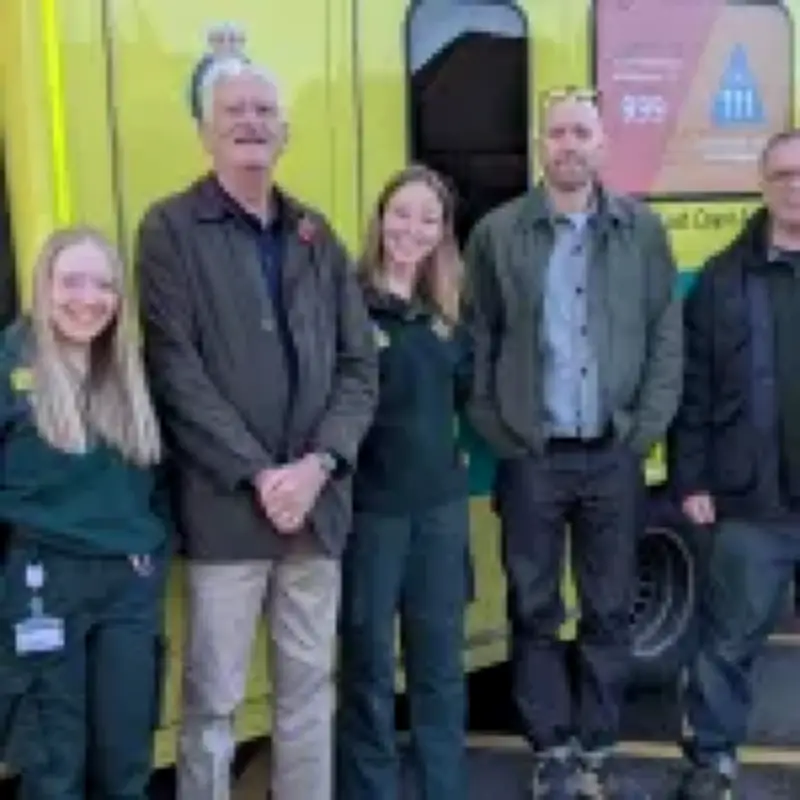
Three months later, Ken returned to Godalming ambulance station to thank the women who brought him back to life. At a meeting last week, he thanked the paramedics and the hospital team. 'Thanks to your professionalism and expert skills, and the crash team who operated on me at Frimley, I'm still here and able to say thank you in person,' he said.
Sophia described the reunion as a particularly rewarding moment. 'It's beyond words, really, to bring someone back and then get the full circle moment of seeing you now, looking so much better,' she said. Millie said the incident demonstrated the importance of recognising cardiac arrest quickly, having a defibrillator ready and ensuring patients receive specialist hospital treatment without delay.
South East Coast Ambulance Service recorded a 30-day cardiac arrest survival rate of 17.2 percent in May 2026, its highest monthly figure and above the national average of 10.2 percent. The trust is working to improve survival rates further through increased public access to defibrillators, CPR training and support for community first responders.