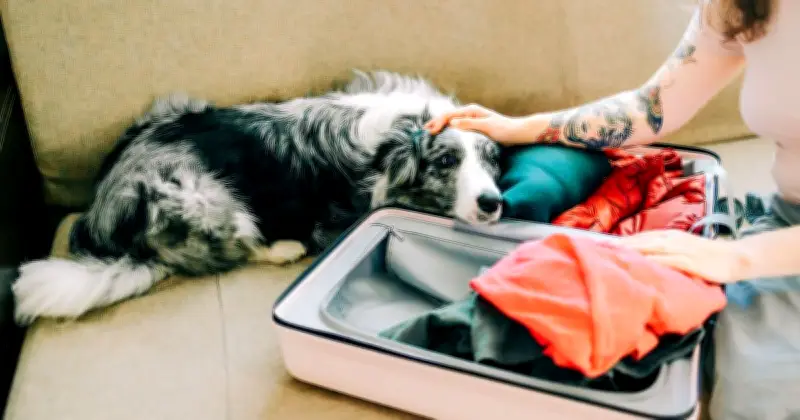
Some dog breeds are more prone to behavioural issues when left alone, and research into a dog's needs is important before getting one. If you work in an office or another job which has you out of home a lot, it’s important to make sure your dog won’t suffer being left alone. In general, no dog breed should be left alone for longer than six to eight hours. For puppies, they should not be left alone for longer than an hour or so as they need constant attention. Older dogs also need more companionship, so longer than a couple of hours is not recommended.
What is separation anxiety?
Separation anxiety is a clinical panic and behavioural disorder in dogs that causes them to feel intense fear or panic when left alone. It can stem from not being taught how to be alone as a puppy, or by changes in routine such as a house move or stress.
The common signs of separation anxiety are persistent barking, whining or crying as well as destructive behaviour such as chewing furniture or clawing at doors. Some dogs may also soil the home with urine or feces and can become visibly distressed. They may pace, pant or drool excessively as they see you preparing to leave.
How can I help my dog with separation anxiety?
Trying to train a dog out of separation anxiety can be difficult. One thing you can try is practising leaving for short amounts of time, then slowly increasing the time to help them adapt. Do not make a big fuss about leaving, or when you return. Keep your departure and return a calm, neutral experience for your dog.
Never punish your dog for their anxiety - this will only make it worse. If your dog is extremely anxious, it’s a good idea to speak to a vet for coping mechanisms or potential medications that may help your dog to remain calm.
Which dog breeds are prone to separation anxiety?
Although any dog can develop separation anxiety, there are some breeds which are more prone to it due to their highly sociable nature. According to Furbo, one of the most common breeds that will experience anxiety is also one of the UK’s favourite breeds.
The Labrador Retriever is highly prone to separation anxiety despite their typically relaxed disposition. They are highly social, and love nothing more than being around people.
Border Collies are incredibly smart and because of this they need a lot of mental stimulation. In addition to this, they’re very high energy so need physical exercise too. For this reason, if they are left alone for long periods, they can become bored and then stressed, which can lead to anxiety.
Cavalier King Charles Spaniels were bred as companions for humans and so being alongside their owner is built into their personality. They are usually more anxious in general and when left alone can quickly become even more anxious. They are likely to develop issues with barking and destructive behaviour if left by themselves for long periods.
Jack Russell Terriers might be small but these dogs are packed full of energy. They bore quickly and need lots of physical activity and entertainment to stop them from becoming destructive. Don’t be fooled by their small bodies - they can cause a surprising amount of damage when left to their own devices.
German Shepherds are a working breed and they need a lot of exercise to keep them happy and healthy. If they are left alone and grow bored, they can quickly develop anxiety issues.
Australian Shepherds are also a working breed, these dogs may be smaller than a German Shepherd but they need just as much exercise and mental stimulation. If they are alone for long periods, they may become anxious with nothing to do.
Bichon Frises, like the spaniel, were bred to keep humans company and do not do well on their own. If left by themselves, they can become extremely lonely and develop depression and anxiety problems.