The recently published Register of British Slave-Traders, reported exclusively in the Guardian, lists 13,000 men and women who invested in and profited from the trafficking of more than three million enslaved Africans between 1563 and 1807. The Register captures a broad range of investors, from ordinary men and women in provincial towns to the monarchy.
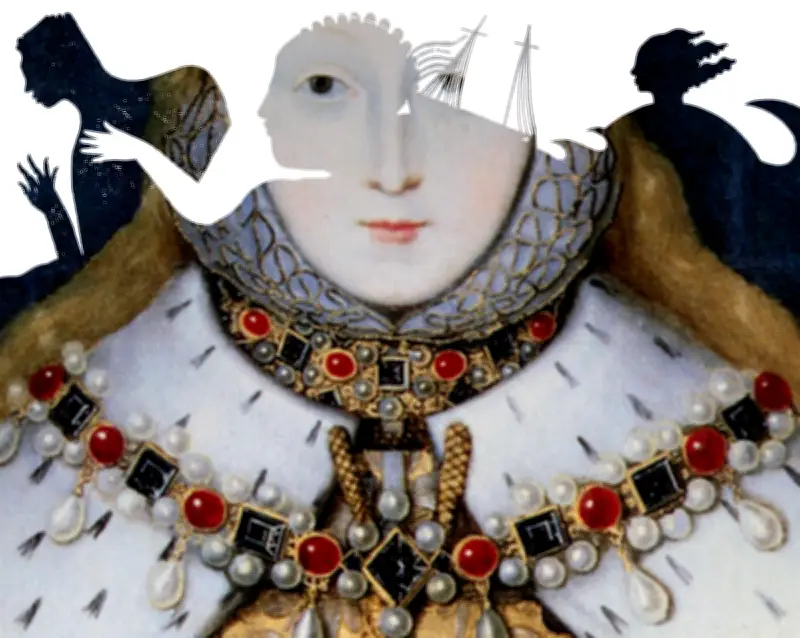
Queen Elizabeth I and many in her court invested in John Hawkins's 1563 and subsequent missions. They provided Hawkins with money and ships, including the royal ship Jesus of Lübeck, which trafficked 359 Africans to the Americas in 1568. Elizabeth I's successors – including James I, Charles I, Charles II, James II, William III, Queen Anne, George I, and George II – were major investors, shareholders, and directors in the state-sponsored Company of Royal Adventurers Trading in Africa, the Royal African Company, and the South Sea Company.
Investors included philosophers, vicars, and bankers
Other investors included famed philosopher John Locke (who ironically championed the concept of natural rights) and Tobias Rustat, a University of Cambridge benefactor whose bust is still displayed in the Chapel at Jesus College despite the college's attempts to seek permission from an ecclesiastical court to remove it. Forty-five vicars from the Church of England and 24 directors and governors of the Bank of England were also investors. As the project's lead researcher, William Pettigrew, has stated, slavery was not a footnote in British history – it helped shape the country.
Some have expressed surprise at the extent of the involvement. The question worth asking is this: why, 193 years after emancipation, is the true scale of Britain's role in chattel slavery still not fully understood in Britain?
Pre-existing evidence
The findings are not surprising to scholars in the Caribbean and the wider diaspora. Eighty-two years ago, Eric Williams, the Trinidadian scholar who later became prime minister, argued in Capitalism and Slavery that profits from chattel enslavement “financed the Industrial Revolution” in Britain. Williams showed how manufacturing towns and industries, including banking, shipbuilding, insurance and warehousing, were integrated into colonial trade, as were some families.
The Nigerian scholar Joseph Inikori, in Africans and the Industrial Revolution in England, has shown that these linkages provided the scaffolding for Britain's industrial advancement. During the 2007 Commons debate marking the Bicentenary of the Abolition of the Slave Trade, William Hague pointedly stated that: “William Pitt, when he was prime minister, said 80% of British overseas income was derived from our West Indian colonies.” Pitt should know.
Caribbean scholars, among them Williams, Sir Arthur Lewis, CLR James, Walter Rodney, Elsa Goveia, Kamau Brathwaite, Hilary Beckles, Orlando Patterson, George Beckford and Verene Shepherd, have spent their professional careers exposing the magnitude of Britain's involvement in the trafficking of enslaved Africans and its impact across the Caribbean archipelago. Plantation ledgers, deeds, wills and probate inventories, whether in repositories in the Caribbean, Britain, or across Europe, show the accumulation and transfer of mind-numbing wealth to Britain.
Ship records document the names of ship captains and owners as well as the sadistic violence inflicted on enslaved men, women and children. Those of us who have worked in these archives have spent our careers seeing the names of these monarchs, merchants, vicars, bankers, absentee owners and institutions written alongside the names of the enslaved men, women, and children they owned as “property”. The evidence is not new.
Wall of silence
The reception of the Register reveals much about British attitudes towards chattel slavery and how it is taught in schools (pdf) as well as raising questions about why Britain's role in chattel slavery has not been fully realised. The reason, Catherine Hall has argued, is the conscious effort to occlude the archives. Hall argued that forgetting a nation's violent past is an active process, not an accident, and Britain's began as soon as the trafficking in enslaved people was outlawed in 1807.
Thomas Clarkson's history of the abolition campaign celebrated white humanitarian men and omitted Black and women abolitionists and the horrors of trafficking in enslaved people. Abolition of the trafficking in 1807 and emancipation of chattel slavery in 1833 were recast as proof of British liberty and virtue. At the same time, the newly freed people were forced into an unpaid “apprenticeship” while the government paid £20m – or 40% of Britain's public expenditure – in compensation to the owners of enslaved people. What emerged was an amalgamation of institutions and social and cultural forces to create a wall of silence around the period of chattel enslavement, colonialism and its harmful legacies.
The reaction to the Register shows that what Hall described 13 years ago remains true today. The real strength of the Register is that it will help break the wall of silence around Britain's trafficking in enslaved Africans and “undo the forgetting”.