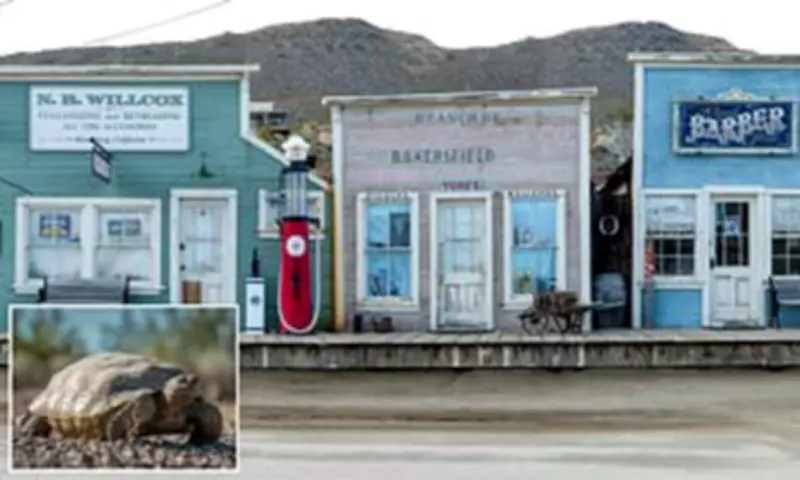
A Wild West mining village with a population of under 100 is facing an existential threat as a new California law impedes access in an effort to protect tortoises. Randsburg, a tiny mountainous town off Highway 395, has recently been sustained by off-road drivers who pass through the historic town on weekend rides.
Off-Roading as a Lifeline
Local business owners have credited Southern California's off-roading culture as critical to keeping Randsburg alive, as the town has endured a tumultuous history of floods, fires and declining economic prosperity due to the decline of mining. After World War II, California's mining towns diminished and Randsburg became one of many villages that struggled to thrive.
The town seemed to be frozen in time, with saloons and a downtown strip reminiscent of the Wild West in old films. Randsburg then found newfound prosperity in off-roading culture as thousands of riders from across the country stopped in for the town's charm.

Court Ruling Blocks Off-Road Routes
However, a federal judge ruled earlier this year that over 2,000 miles of routes for off-roaders were dangerous to the Mojave tortoise population. The Bureau of Land Management had previously proposed off-road vehicle routes across the desert, known as the West Mojave Route Network Project. The network spanned across public lands in Riverside, San Bernardino, Kern and Inyo counties, connecting over 1 million acres of conservation lands.
The Center for Biological Diversity and other environmental groups sued the BLM over the proposal, accusing the federal agency of failing to protect the desert and its inhabitants from damage caused by off-road vehicles. A federal judge in San Francisco agreed with the environmental groups and prohibited off-roaders from riding in critical habitat for desert tortoises in January. The judge said that the BLM had violated the Endangered Species Act by adopting nearly 6,000 miles of dirt roads for off-road vehicle use.
Environmental activists praised the decision, with Jeff Aardahl, a representative of the Defenders of Wildlife, saying in a press release, 'With the BLM now required to close all off-highway vehicle routes in critical habitat areas, we can breathe a sigh of relief for these remarkable creatures. What's more, is that 270,000 acres of public land in the Western Mojave will continue to be available for unlimited off-highway vehicle recreation; this is a win for everyone.'
Residents Fear Economic Collapse
However, residents of Randsburg have argued that the decision cuts them off from critical access to off-roaders that stimulated their small economy. Lorene and Travis Frankel, two architects who live in Randsburg and work remotely, told SF Gate that they relocated to the desert hideaway during the pandemic. They bought a property on Butte Avenue that was formerly an automotive repair shop and gas station, with a vision to turn it into a space for photo shoots and events. They also bought the town's old high school, which ceased operations in 1960 as the town's population declined. The couple hoped to use the building as an event space as well.
January's court ruling threw a wrench in their plans. Travis told SF Gate that they were 'blindsided.' 'If we don't continue to get the off-roaders here, I'm not sure that our business plan even pencils out. It would be hard to replace that [off-roader] community and still have this place feel the way that it feels,' he added.
Neil Shotwell, the owner of the town's famous dive bar, the Joint, echoed a similar concern, telling SF Gate, 'Without off-roaders, this town is done.' Adding to the town's woes, Shotwell noted that the off-roaders provided a pivotal lifeline after a flood last September wiped out all but one road into Randsburg.
Brad Myers, who owns the town's only restaurant, the Vault, added, 'Without the dirt bike riders, I’ll be closed by this time next month.' He said he was already planning to close the Vault, telling the outlet he would sell the remaining food shipment and close up shop by mid-June. 'There’s just not enough people coming into town to sustain the businesses. I don’t see, unless a miracle happens, how we’re going to make it,' he explained.