
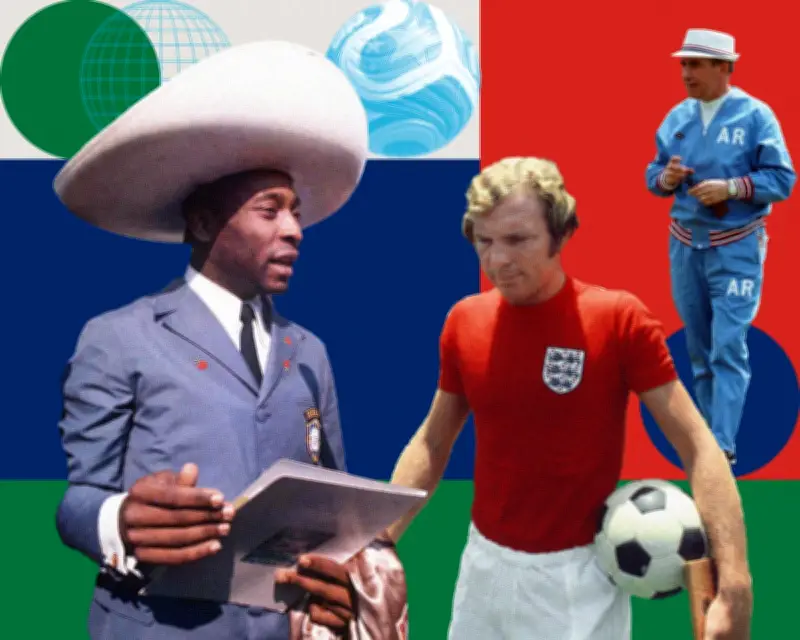
The 1970 World Cup in Mexico presented unique challenges due to high altitude and heat, prompting teams to adopt various preparation methods. Bulgaria, for instance, trained in the Pirin mountains but restricted water intake to simulate heat, a strategy that backfired as they lost their first two matches. Israel trained in Ethiopia and Colorado, Uruguay in Quito and Bogotá, and Mexico held a five-month camp with 13 friendlies.
England's Paranoid Preparations
England, the defending champions, were particularly anxious. Team doctor Neil Phillips studied heat and altitude, recommending salt tablets, and brought in physiologist Dr. Griffith Pugh, who had worked on Everest expeditions. However, manager Alf Ramsey's xenophobia led him to import British bus, food, and water. Mexican authorities, offended by Ramsey's comments, impounded and burned England's frozen meat due to foot-and-mouth disease fears, forcing the team to survive on fishfingers and ready meals. Ramsey's strict regimen included timed sunbathing sessions. During a stopover in Colombia, captain Bobby Moore was arrested for alleged theft but was later exonerated after diplomatic efforts.
Brazil's Scientific Approach
Brazil's preparation was the most thorough. Coach João Saldanha met with army officers Cláudio Coutinho and Lamartine Da Costa, who used biometeorology and observations from the 1968 Olympics. The team spent 100 days at army facilities, with made-to-measure kits designed to avoid sweat accumulation. They used a NASA-inspired Cooper test to monitor fitness. Arriving in Mexico 32 days early, Brazil scored 12 of their 19 goals in the second half, showcasing superior endurance.
Cameroon's Shambolic 1990 Campaign
In contrast, Cameroon's 1990 preparations were chaotic. Coach Valery Nepomnyashchy spoke little French, and the team lacked equipment. Despite two red cards, they beat Argentina 1-0 in their opening match, becoming the first sub-Saharan African team to win a World Cup game, eventually reaching the quarter-finals.
As the 2026 World Cup approaches, these stories highlight the importance of preparation. While modern teams cannot spend months in isolation, adapting to conditions and having a gameplan remains crucial.




