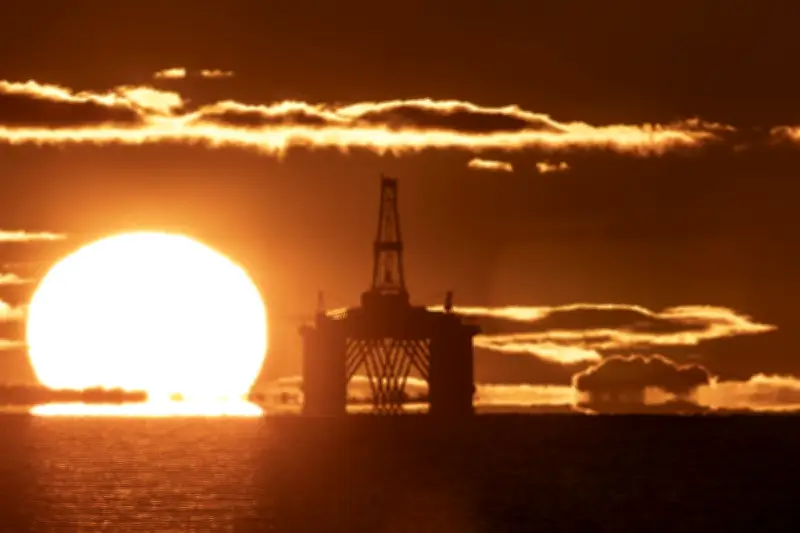
Replacing the UK's current windfall tax on oil and gas firms could cost the country up to £8.6 billion by 2030, campaigners have claimed. The Westminster Government has already outlined plans to replace the charge – known officially as the energy profits levy – with a new scheme called the oil and gas revenue levy.
This is due to happen in 2030, but energy firms are pushing for the replacement regime to start earlier. Industry body Offshore Energies UK (OEUK) says introducing the new tax system earlier, coupled with a “more pragmatic” approach to licensing from Westminster, could unlock 111 projects in the UK Continental Shelf.
Campaigners condemn industry push for tax breaks
Campaigners at Global Witness said it was “scandalous” that energy firms, who have “cashed in on crisis”, were now “pushing for tax breaks”. Energy prices have risen again as a result of the conflict in the Middle East, with supplies impacted by significantly reduced shipping in the Strait of Hormuz.
Research for Global Witness found that if oil prices remained at around 100 US dollars a barrel, the oil and gas revenue levy would raise £8.6 billion less than the current windfall tax by 2030. Meanwhile, if oil prices dropped to 70 US dollars a barrel, the new tax system would net ministers no cash, compared with the £4.6 billion that could be raised by the current windfall tax over the same period, the analysis suggested.
It raised the issue in a letter sent to Chancellor John Healey, which has also been signed by groups such as Greenpeace UK, the End Fuel Poverty Coalition, Stamp Out Poverty and Tax Justice UK.
Ministers urged to resist early end to levy
Urging ministers to resist calls to end the windfall tax early, Flossie Boyd, a senior campaigner with Global Witness, said: “It’s been galling to see a few wealthy fossil fuel firms cashing in on fallout from the US-Israel war on Iran while families endure soaring energy bills, food costs and deadly heat extremes.
“The fact that these mega-wealthy oil firms – having cashed in on crisis – are now pushing for tax breaks is nothing short of scandalous. Their claims that these tax cuts would generate jobs and investment are ludicrous. The UK’s oil industry is a dying sector whose jobs were in decline long before windfall tax was introduced.”
She said: “Now more than ever, we need strong action from (Prime Minister Andy) Burnham to rein in the dangerous excesses of the fossil fuel industry. That means no new oil and gas drilling, and fair, robust polluter taxes which help fund the solar panels, flood defences and building adaptations we so desperately need.”
Industry defends investment case
Clare Aston, the tax expert involved in the research, said: “The replacement for the energy profits levy must be capable of raising broadly equivalent amounts for the Government, but analysis shows that the new windfall tax will collect billions less due to its design – no wonder the industry are desperate for it to take over immediately. The thresholds and rates need urgent revision in October’s Budget to improve its design.”
Meanwhile, Simon Francis, from the End Fuel Poverty Coalition, said that “cutting taxes for oil and gas giants now would be a betrayal”. And Rudy Schulkind, political campaigner at Greenpeace UK, was also critical of energy firms, saying: “The oil and gas industry knowingly fuelled the biggest planetary crisis of our time, made billions off it, and left ordinary people to pick up the economic and environmental bill. Now, they’re trying to lobby the Government for an enormous tax break.”
A UK Government spokesperson said: “We’re giving the sector and its investors the long-term certainty to plan, invest and support jobs with plans to replace the energy profits levy when it ends by 2030, or earlier if its price floor is triggered. We are also making sure the North Sea has a prosperous and sustainable future through record investment that helps deliver the next generation of skilled jobs while growing the clean energy industries of the future.”
Enrique Cornejo, OEUK’s energy policy director, said the Global Witness analysis “fails to capture the material economic, fiscal and employment benefits that could result from policies designed to encourage long-term investment in domestic energy production”.
Mr Cornejo said: “The Government should introduce the permanent windfall tax, the oil and gas revenue levy in January 2027, because this would generate greater and more sustainable long-term revenues for the UK Treasury. OEUK analysis shows that this would give operators the confidence to invest and arrest the decline in domestic production and deliver an estimated £14.9 billion more in tax revenue over the next decade. This fiscal reform, complemented by a regulatory regime prioritising domestic supply over imports, could unlock a total of £50 billion in private capital investment, supporting 111 additional projects. Acting promptly would protect jobs, slow down the decline in production, reduce dependence on costly LNG imports and safeguard the supply chain and infrastructure needed for the UK to deliver the transition to low-carbon energy.”