
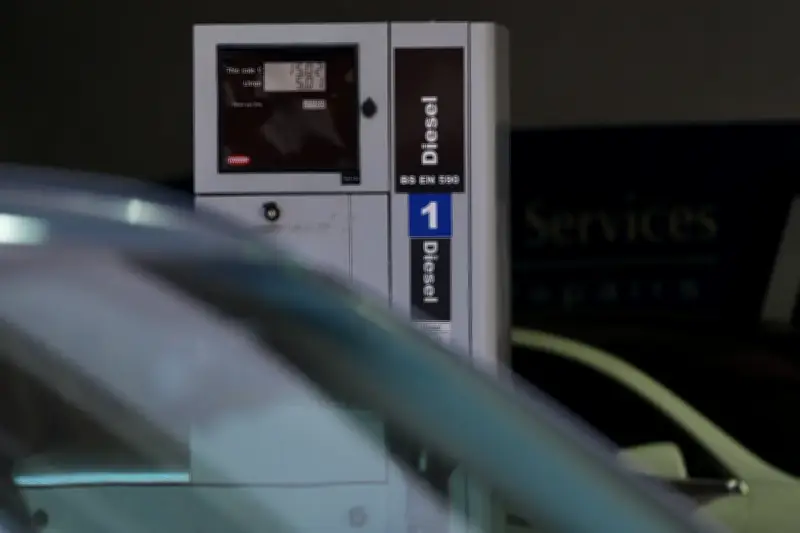
Releasing diesel reserves could be a “short-term buffer” against soaring prices, but it risks limiting protection against future shocks, experts have said as the Government insisted Britain is not facing a shortage.
Average diesel prices reached £2 a litre for the first time in the UK on Friday, RAC figures show, as the war in Iran continues to disrupt the passage of oil tankers through the Strait of Hormuz.
Britain joined talks with Brussels on Thursday as they discussed whether to release fuel stocks amid pressure from the US to begin drawing down on reserves.
Government insists on diverse supply
Transport minister Keir Mather insisted Britain has a diverse range of supply of diesel and people should not be concerned about shortages.
Jonathan Owens, an operations and supply chain expert at the University of Salford, said: “Releasing emergency stocks can provide an important short-term buffer.
“Additional diesel entering the market could help maintain availability, reduce immediate supply pressures and potentially limit extreme price movements.
“Crucially, it also buys businesses time to adapt their logistics, sourcing and inventory strategies.”
Emergency stocks as insurance
However, Mr Owens said emergency stocks are “effectively an insurance policy”, adding: “Using them now reduces protection against future disruption until those stocks are replenished.”
He said drawing down on reserves can help manage the “immediate symptoms of a supply shock”, but it does not resolve underlying problems such as around weaker refining capacity and dependence on international energy markets.
“Emergency stocks can provide valuable breathing space, but they are a short-term intervention rather than a long-term solution,” he said.
US export ban concerns
US President Donald Trump has said he is “thinking” about introducing a ban on exports of US diesel.
This would force Britain to compete with other countries for an alternative.
Angel Talavera, chief European economist for Oxford Economics, said a ban would have “devastating consequences” for consumers.
“If enacted, a full ban could lift European diesel prices by 40% to 50%, which would have devastating consequences for consumers who have seen prices at the pump already go up by 40% since the start of the US war with Iran,” he said.
Manufacturers warn of supply chain pressure
It comes as companies have been flagging that higher prices are pushing up transportation costs and putting pressure on their supply chains.
Fhaheen Khan, senior economist for Make UK, a group representing manufacturers, said: “The debate around diesel reserves highlights a broader challenge facing manufacturers: the need for reliable and affordable energy supplies.
“Businesses can cope with many pressures, but persistent uncertainty in global energy markets feeds through into costs across supply chains, logistics and the wider economy.
“That’s why strengthening the UK’s energy security is so important for long-term competitiveness.
“This should include making the most of domestic energy sources where appropriate and reducing manufacturers’ exposure to volatile global markets.”
He also said the Government could take immediate steps to reduce energy costs for manufacturing firms by removing policy levies from electricity bills – meaning charges that pay for schemes like energy efficiency.




