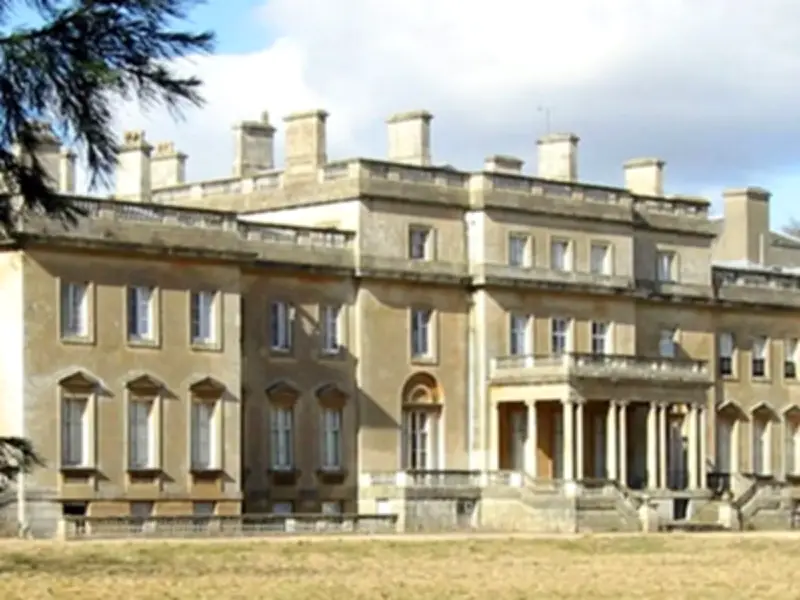
A billionaire has been given the green light to build a 40-acre solar farm on his land despite being locked in a planning row with his neighbours. Chris Rokos, a hedge fund owner, has been renovating a 100-bed mansion in Marlborough, Wiltshire, known as Tottenham House. Plans were submitted to Wiltshire Council by his representatives to turn 40 acres of his 4,500-acre Savernake estate into a solar farm.
In spite of locals raising their concerns with the project, the plans were approved. The project 'seeks to ensure Tottenham House and Estate's long term and sustainable future'. In order to do this, the project's outline said it will supply the mansion and its outbuildings with 'a sustainable form of power and water to enable its functional operation'.
Neighbour objections and approval
One of Mr Rokos' neighbours branded the plan a 'substantial visual and historical intrusion'. With Wiltshire Council approving key construction details for the project, Mr Rokos can now move forward with his venture. A planning condition covering construction and environmental management has been partially discharged by council planners. This move allows work on the solar array itself to begin.
Both neighbours and the local parish council criticised the plans when they initially emerged. Some fear that the huge number of panels would negatively impact the 'area of outstanding natural beauty'. Situated on the northern boundary of the extensive plot, the proposed site is currently used as pasture for dairy cows and for producing silage. A public footpath which runs between the hamlet of Durley and St Katharine's Church and a primary school are adjacent to the site.
Energy generation and sustainability
The ground-mounted panels are expected to generate around 794,600 kilowatt hours of electricity a year once operational. This is enough electricity to meet a significant share of the estate's energy needs. About 44 per cent of the electricity produced will be used on site, with the remainder exported to the local grid. Having undergone extensive restoration in recent years, the project forms part of efforts to secure a more sustainable future for Tottenham House.
Planners concluded the benefits of the project outweighed any harm to the heritage setting. Despite it being located within the estate's historic parkland, the array will be screened by existing woodland and new planting designed to reduce its visibility. Additionally, the panels will be mounted on screw piles rather than permanent concrete foundations, meaning the installation could be removed in the future if required in an easier process.
Wider works and further objections
The land will remain in agricultural use, with grazing able to continue around the panels. A large water storage lagoon, a new mains water connection and landscape improvements across the estate were part of a wider package of works which were approved along with the solar project. Further environmental management details will still need to be approved before work begins on other parts of the wider development, in spite of construction of the solar array being allowed to proceed.
Venting his frustration with the news, nearby resident Richard Frics said: "The restoration of Tottenham House is clearly a very desirable step in reversing the degradation of a Grade 1 Listed mansion, which was on the register of Heritage Assets at Risk. The creation of a solar PV array has not previously been mooted and it is in respect of this element of the latest planning application that we wish to lodge our objection. We understand that the ground mounted PV array will cover 'a little over one hectare of ground'. Not only will it be situated in an AONB but also a Grade 2* Registered Park and Garden next to a Capability Brown landscape. In addition it will be in direct view of the Grade 2* listed stable block. The glare from a three acre block of glass will massively change the outlook from this protected historic building."
He added: "The proposal will erode the special qualities of this Heritage Landscape. It will also set an undesirable precedent for future planning applications elsewhere in the country." Another neighbour, Mark Colquhoun, described the plans as 'an exemplary project', but said that the solar farm move may cause a 'substantial visual and historical intrusion'. He stated: "To place modern energy infrastructure here undermines the character and legibility of this protected setting, contrary to national and local heritage policies."
The former owner of Tottenham House, the Earl of Cardigan David Brudenell-Bruce, sold the 4,500-acre Savernake Estate to a developer in 2014 for £11.25 million after it had been in the same family for 200 years.