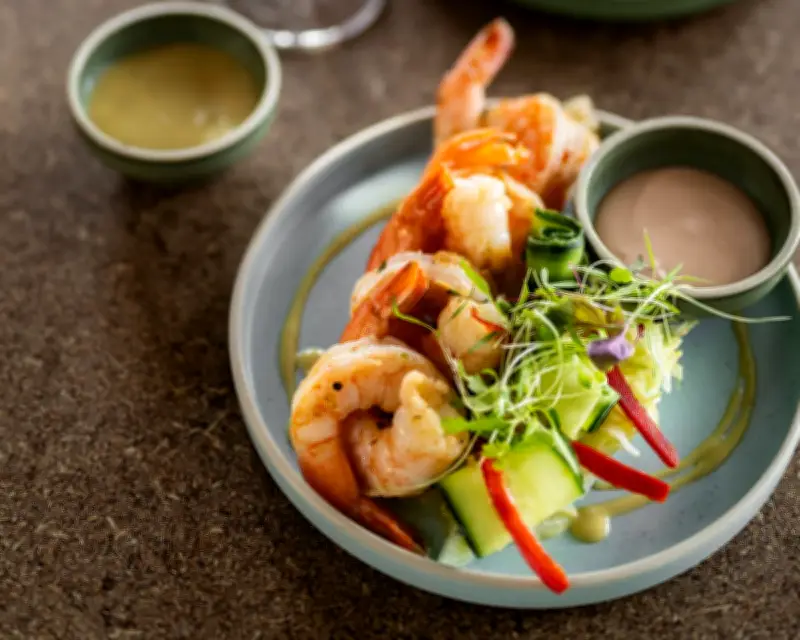
Starting July 1, restaurants, cafes, market stalls, food trucks, and fast-food venues across Australia must disclose whether their fish and seafood is Australian or imported. The federal government’s new “Aim” system requires clear labeling with “A” for Australian, “I” for imported, or “M” for mixed. This initiative aims to give diners more information and support local seafood businesses.
Why the Change Matters
Julie Petty, general manager of Seafood Industry Australia, who lobbied for the change, highlighted that about 64% of seafood consumed in Australia is imported. “Most Australians don’t realise it,” Petty said. “For the first time it really provides that clarity to the end consumer, and frankly it provides informed choice about what it is you’re going to spend your money on.” The labeling brings restaurants in line with information already available on packaged seafood.
How the System Works
Businesses can display A, I, or M next to a menu item, similar to gluten-free or vegetarian labels. Alternatively, they can use descriptive wording such as “Australian Sydney rock lobster” or “Sydney rock lobster – Australian origin.” Exclusions include dishes with shelf-stable seafood items like canned tuna, shrimp paste, or fish stock. Food service providers in schools, hospitals, and prisons are exempt.

Chef and Industry Reactions
Juan Carlos Negrete, chef and co-owner of Maiz, a Mexican restaurant in Sydney’s Newtown, said his business welcomed the change. “It’s a product that has a higher cost for us, so obviously it’s important for us that the customer understands where our food is coming from,” Negrete explained. He noted that some hospitality owners were unaware of the shift until recently, causing a rush to reprint menus. “Overall everyone was just a little bit like, ‘Why is this happening? Why are we doing this for fish only or not for meat, or vegetables?’” he said.
Government and Environmental Perspectives
Minister for Industry Tim Ayres stated, “Australian seafood is great quality, safe, environmentally friendly and backs coastal fishing communities.” Fisheries Minister Julie Collins added that diners had “floundered” for too long, “which is why we’re reeling this in.” However, Kim Riskas, campaigner for the Australian Marine Conservation Society (AMCS), noted that the labels are broad. “Aim unfortunately doesn’t tell you anything more than whether it came from Australia or came from overseas,” Riskas said. The AMCS advocates for including the Australian fish names standard and state or territory of origin for Australian seafood.
Looking Ahead
Petty suggested specifying a country of origin rather than just “imported” would be ideal. The new labeling is seen as a first step toward greater transparency, though some call for more detailed information to help consumers make sustainable choices.