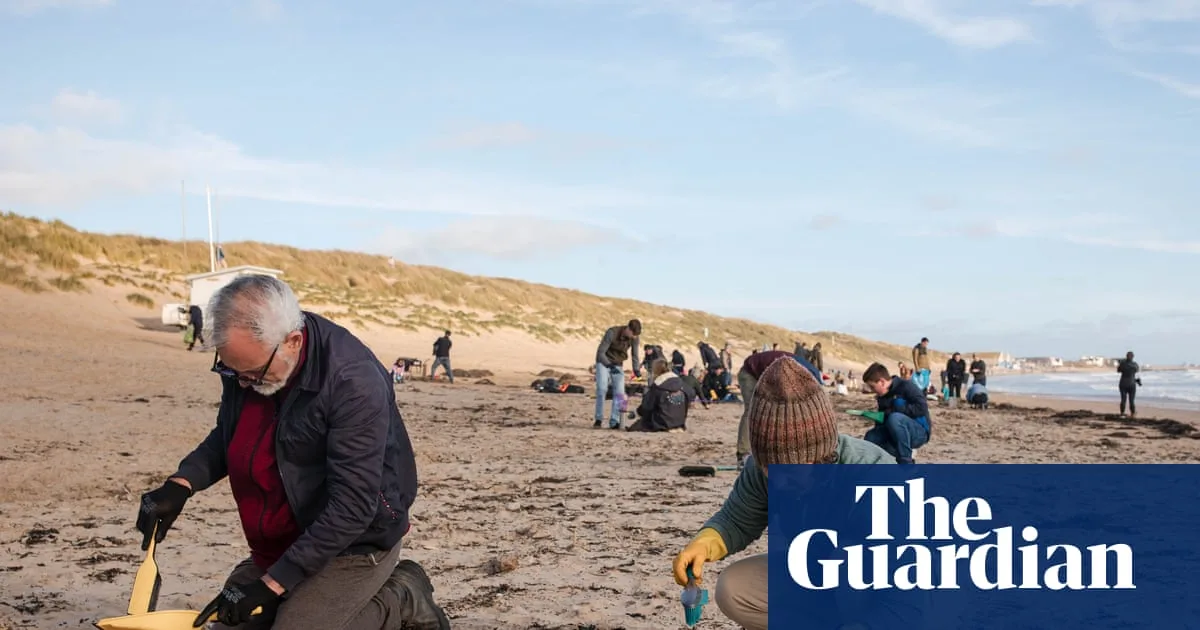
An environmental disaster has struck Camber Sands beach in Sussex, where millions of black plastic biobeads have spilled from Eastbourne Wastewater Treatment Works, owned by Southern Water. The beads, used in wastewater treatment, were released after a mechanical failure, prompting a massive cleanup effort involving volunteers and specialised machinery.
Volunteers have been painstakingly picking the peppercorn-sized beads from the sand by hand, a tedious process that many find frustrating. 'Kneeling on the sand, on your knees, just picking them out, one by one, is futile,' said Nick, a volunteer from Tunbridge Wells. Some have improvised sieves, like one volunteer who used a mesh onion sack.
To accelerate the cleanup, environmental scientist Joshua Beech has brought in a microplastic removal machine, reminiscent of the Teletubbies character Noo-Noo. The machine vacuums up the beads, separates them by density, and collects pure plastic. Beech and colleague Roy Beal have worked tirelessly from sunrise to sunset for five days.
The spill has raised concerns about wildlife and habitat damage. Tamara Galloway, professor of ecotoxicology at the University of Exeter, warned that microplastics can enter the food web and transfer contaminants into cells and tissues. Nearby Rye Harbour nature reserve has confirmed biobead pollution, threatening its globally threatened vegetated shingle habitat and over 4,355 species.
While three seals and a porpoise have washed up on the beach, the UK Cetacean Strandings Investigation Programme does not currently link these deaths to the spill. Andy Dinsdale of Strandliners, coordinating the cleanup, expressed exhaustion but determination: 'We can only do our best.'