Drawing Eyes on Food Packaging May Stop Seagulls from Stealing Your Lunch
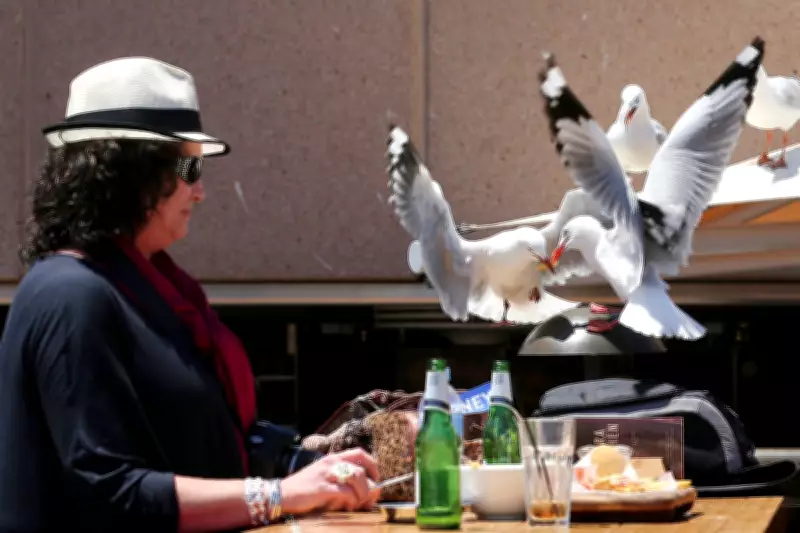
Animals generally respond defensively when they see eyes staring at them, a behaviour that researchers are now leveraging to combat food theft by seagulls in urban areas. The increasingly urban lifestyles of seagulls across the UK and Europe have turned them into adept opportunists, skilled at grabbing food from unsuspecting outdoor diners.
Seagull Food Theft in Coastal Towns
Herring gulls, in particular, are gaining notoriety for their food-stealing antics in seaside towns like Falmouth in Cornwall. On a day out at the beach last summer, researcher Laura Kelley observed one gull rummaging through an unattended bag and making off with a packet of crisps. This incident, though the gull did not stick around to open the packaging, sparked curiosity into new deterrent methods.
This observation led Kelley and her colleague Neeltje Boogert to explore innovative ways to deter these resourceful birds. Their new research demonstrates that displaying a pair of eyes on food packaging can be sufficient to stop some gulls from pinching your food. This builds on previous work showing that herring gulls approach food more slowly when someone is looking at them directly, compared to when they are looking away.

The Science Behind Eyespots as Deterrents
Many animals, both wild and domesticated, are highly aware of eyes, which can signal the presence of a predator or communicate intent. Direct eye contact often conveys aggression, while looking away indicates a lack of threat. Animals typically respond defensively to staring eyes, likely as an instinctive survival mechanism to avoid predation.
Some species have evolved markings to exploit this behaviour. Known as eyespots, these markings are found on various insects, amphibians, and fish, coming in diverse colour, size, and pattern combinations. Scientists have debated for over a century how eyespots deter predators, with theories suggesting they may be mistaken for predator eyes or divert attacks to less vital body parts.
Given evolution's suggestion that eyes increase animal wariness, mimicking nature with fake eyes has been tested in various settings. In Botswana, for instance, livestock face risks from ambush predators like lions and leopards, leading to conflicts with farmers. Experimenters painted pairs of eyes or crosses on cattle rumps or left them unmarked across multiple herds, recording any attacks.
During the study, 19 cattle were killed by lions or leopards, but none had eyespots on their rumps. Cattle with eyespots were also attacked less frequently than those with crosses or no markings, indicating that eyespots can be an effective deterrent for a broad range of animals.
Testing Eyespots on Herring Gulls
For the study on herring gulls, researchers tested this concept in coastal towns in Cornwall, where gulls are known to snatch food from people eating outdoors. They stuck pairs of eyes onto food takeaway boxes and presented individual gulls with a choice of two boxes placed two metres apart: one with eyes and one plain.
Gulls appeared deterred by the eyes, approaching these boxes more slowly and being less likely to peck at them compared to boxes without eyes. To assess whether gulls would eventually realise the eyes were not threatening, researchers presented 30 gulls with one takeaway box, either with or without eyes, three times each over a short period.
Approximately half the birds never pecked at the box with eyes, while the other half quickly approached and pecked. This suggests a sustained effect from fake eyes for some gulls that do not recognise the deception.
Future Applications and Human Responses
Researchers now aim to test this in more realistic settings by collaborating with food vendors to use takeaway boxes with eyes. While this might only deter half of gulls from stealing food, combining it with other deterrents, such as shouting, could reduce food theft overall.
Eye-like markings have already been employed to exclude birds from certain areas, including keeping starlings away from crops, seabirds from fishing nets, and raptors from airports. Interestingly, humans also respond to eyes, with images of human eyes found to reduce bicycle theft, reinforce honesty, and increase charitable donations by creating a sense of being watched.

As social beings, people tend to act more honestly when they feel observed. However, similar to herring gulls, the effect on human behaviour is inconsistent, with eyes nudging behaviour in some situations but not working on everyone.
Conclusion
Whether protecting chips, bicycles, or cattle, the next step is understanding why some animals and people do not find eyes aversive. Nonetheless, evidence clearly indicates that fake eyes offer a cheap, simple method to mitigate conflicts with humans and other animals, providing a promising tool for urban wildlife management.
Laura Kelley is an Associate Professor at the Centre for Ecology and Conservation, University of Exeter. This article is republished from The Conversation under a Creative Commons license.