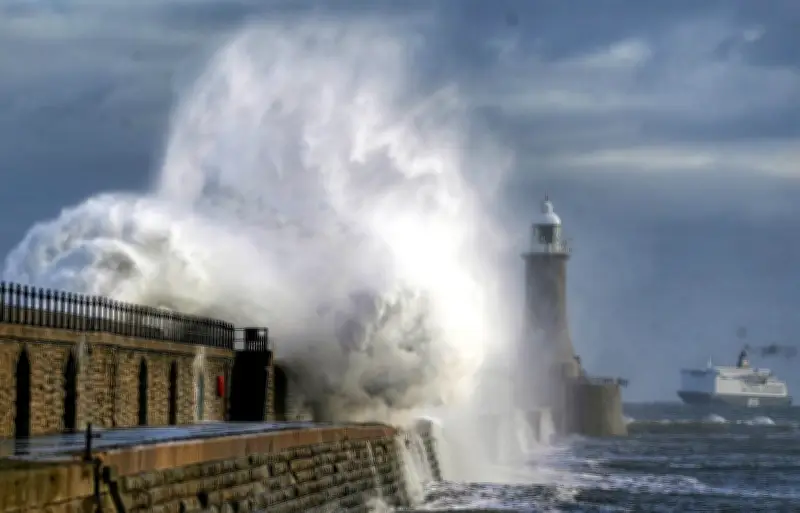
The United Nations has issued a stark warning about the accelerating deterioration of the world's oceans, with the rate of sea-level rise doubling over the past decade. The third World Ocean Assessment, compiled by nearly 600 scientists from 86 countries, paints a grim picture of cumulative human impacts on marine ecosystems.
Key findings from the report
The assessment, which covers the period from 2021 to 2025, reveals that sea levels are now rising at 4.3mm per year, up from 2mm annually before 2015. This acceleration is a clear indicator of the intensifying effects of climate change. Additionally, 16% of the increase in global ocean heat since 1955 has occurred after 2018, with the Atlantic Ocean and southern parts of the Indian and Pacific Oceans experiencing the greatest warming.
Despite advances in scientific understanding, large gaps remain. Only 27% of the ocean floor has been mapped by 2025, leaving deep-sea ecosystems poorly understood. The report also highlights that 52.1 million tonnes of plastic enter the ocean each year, contributing to an estimated 24.4 trillion microplastic particles that affect over 4,000 marine species.
Human activities driving ocean degradation
The main drivers of marine environmental change include population growth, technological advances, and geopolitical instability. The global population rose from 7.7 billion in 2017 to 8.2 billion by late 2024, with more than a third of people living within 100km of coasts and 11% residing on land less than 10 metres above sea level. These factors exacerbate pollution, industrial fishing, and habitat destruction.
UN Secretary-General António Guterres called for urgent global collaboration, stating: "We cannot keep treating the ocean as limitless. We must build a new relationship with the ocean grounded in science, framed by international law, and built on shared responsibility across nations, sectors, and generations."
Progress and challenges in ocean governance
While significant strides have been made, including the landmark high seas treaty that came into force in 2025 to protect international waters, governance remains fragmented. The report notes that 56 other ocean protection treaties have improved biodiversity conservation and resource management, but stronger coordination is critical.
The ocean covers over 70% of the planet and plays a central role in regulating climate, absorbing 90% of excess heat and 30% of carbon dioxide from fossil fuel emissions. However, changing ocean currents and their impact on future climate breakdown are poorly understood, according to the report.
Call for action from environmental groups
Greenpeace described the findings as an "urgent wake-up call" for governments to protect the ocean from deep-sea mining and industrial fishing. Lukas Meus, Greenpeace's global ocean campaigner, urged: "We are calling on governments to create fully protected ocean sanctuaries that will close vast areas off from extractive activities. Governments have promised to protect 30% of the world's ocean by 2030 – the minimum scientists say we need for recovery."
The report underscores the severe and accelerating stress on marine ecosystems, with cumulative impacts leading to widespread biodiversity loss. It concludes that immediate and coordinated global action is essential to safeguard the ocean's health for future generations.