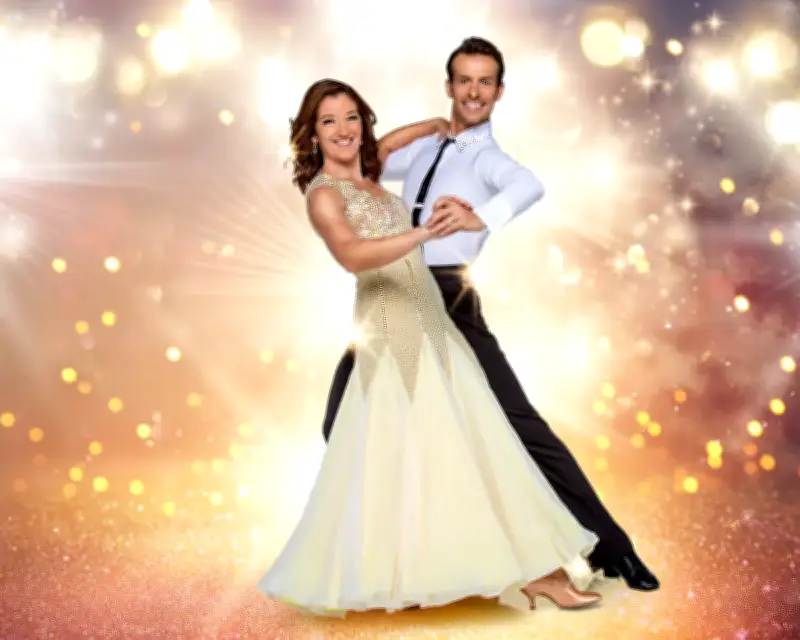
Victoria Hislop, a bestselling author in Greece, has described how instinct took over when she forgot every move during the Greek version of Strictly Come Dancing, leading to a step-perfect performance. She was still recovering from cancer treatment and had signed up for the show in what she called a moment of madness.
A challenging invitation
Hislop, who is British, appeared on Dancing With the Stars in Greece, which follows the same format as the UK show, with an identical studio, a matching shiny floor, and even many of the same costumes hired out and circulated among international versions of the BBC programme. In the season she took part in, Covid restrictions had been imposed, intensifying the strangeness.
By the time of her appearance, Hislop had become a bestselling author in Greece. In 2010, her first novel, The Island, was adapted for a 26-part series, achieving the country's highest-ever ratings for a TV drama. In 2020, she was granted honorary citizenship by the Greek prime minister, all of which had made her a minor celebrity.
Training and fear
Hislop never imagined the competition would be easy. The only woman older than her among the dozen or so contestants was Bessy Argyraki, a Eurovision entrant in 1977, while Hislop was still at school. In the first week, they found each other weeping in the ladies' and became best friends. All the other women could do the splits, but they were still struggling to remember basic steps.
There were six weeks of training and preparation, with rehearsal every day except one, when she practised at home using a video recorded on her phone. She was exhausted, bruised, living on painkillers, and suffering intense aches and pains – side-effects not just of the dance regime but also of a drug she was taking after cancer treatment six months earlier. If she had wanted a challenge to celebrate survival, she had found it, and more.
The fear of the first live show was beyond anything she could have imagined. She could not eat for two days before, and during rehearsal she forgot almost every move. The director was unimpressed, the choreographer was disappointed, and her partner was furious. The dress rehearsal was even worse. Meanwhile, the other contestants – Olympic athletes, glamorous TV presenters, models and media superstars – glided through their dances effortlessly.
Muscle memory takes over
Hislop knew all her Greek friends would be watching, as the Sunday night slot was popular and Star Channel was one of the most highly rated commercial stations. She watched from the wings as one couple after another scored almost top marks, then went to get her hair done, which involved an industrial can of spray to stiffen it into a solid helmet. One of her fake eyelashes had to be re-glued to her eyelid.
She retired to her dressing room, popped some painkillers, and watched the video of her dance over and over again, still trying to get it into her head. Then there was a sharp knock at her door. She pushed her bunioned feet into pointy ballroom shoes and followed the production assistant towards what felt like the gallows. The props for the dance, an airport arrivals scenario, were being shunted into position, and suddenly she heard the opening bars of their tune.
She said under her breath to her partner, "Break a leg," and thought she heard him say back "Skata," the Greek good luck equivalent, which literally translates as "shit." She thought it probably would be. Almost suffocating in her body-hugging frothy tulle costume, she floated out across the stage. There was a warm ripple of applause, and her mind was left behind – along with all the anxiety she had been holding. Muscle memory kicked in, and her body had no need for instructions; it followed its own instincts, its own paths, taking her through a routine she was not even sure she had memorised.
Her brain was quiet in those minutes. If for a second she had allowed herself to think "What comes next?" all would have been lost. In her whole life, she had never abandoned the rational and allowed pure instinct to tell her what to do. It was a transcendental moment. The euphoria arrived with the final note of the music, and she was in a state of joyous disbelief. They had been step-perfect. She stood in front of the judges to listen to their compliments but took hardly anything in, wondering if the person they were referring to had been her.
Voted out but magical moments
In the following weeks, there were a few more times when she was gripped by instinct and nothing else. Eventually, although she had technically become a better dancer, they were voted out. Perhaps the judges and audience could see that the surprise takeover of her mind by a greater force did not always happen. But in those precious moments, it had felt like magic.