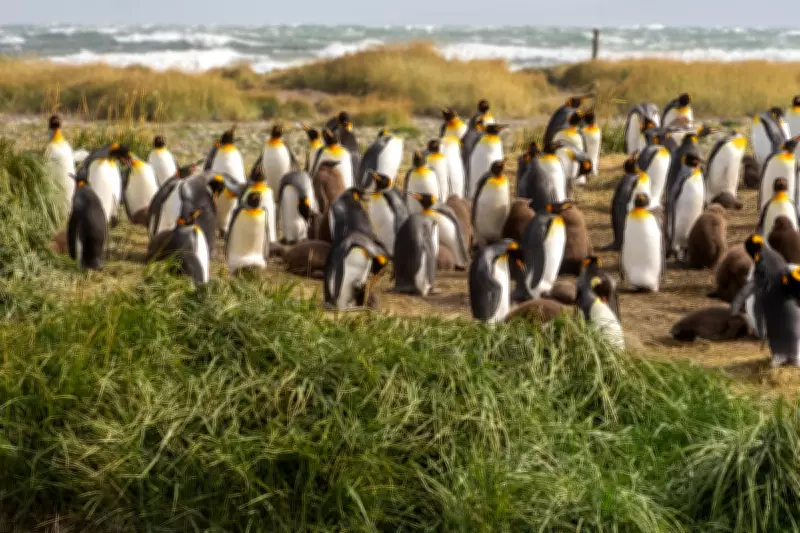
Scientists have announced the discovery of a massive colony of king penguins on an island in remote southern Chile, estimated to contain over 1 million breeding pairs. The colony, located on an island in the Useless Bay area of the Brunswick Peninsula, is believed to be one of the largest ever recorded for this species.
Unexpected Find
The discovery was made by a team of researchers from the Chilean Antarctic Institute (INACH) and the University of Magallanes during an expedition to study seabird populations. Dr. Maria Contreras, lead scientist on the project, described the moment they realized the scale of the colony: "We were flying over the area and saw this massive pinkish stain on the island. When we got closer, we realized it was thousands upon thousands of king penguins."
Significance for Conservation
The find is significant not only for its size but also because it provides a unique opportunity to study king penguin behavior and ecology in a relatively undisturbed environment. King penguins are typically found in sub-Antarctic regions, and this colony represents a northern extension of their known range. The researchers believe the colony may have existed for decades but remained undetected due to its remote location and the difficulty of accessing the area.

- Population Estimate: Initial surveys suggest between 1.2 and 1.5 million breeding pairs, making it one of the largest king penguin colonies in the world.
- Location: The island is part of the Useless Bay archipelago, a protected area known for its rich biodiversity.
- Conservation Status: King penguins are currently listed as Least Concern by the IUCN, but populations are threatened by climate change and overfishing.
Ecological Impact
The colony is expected to have a significant impact on the local ecosystem. Penguins bring nutrients from the sea to the land through their guano, which fertilizes the soil and supports plant growth. However, the sheer size of the colony also raises concerns about potential conflicts with other seabird species and the risk of disease outbreaks.
Future Research
The research team plans to conduct detailed studies of the colony, including tracking penguin movements, monitoring breeding success, and assessing the impact of climate change. They also aim to work with Chilean authorities to ensure the site is protected from human disturbance.
"This discovery highlights how much we still have to learn about our planet's biodiversity," said Dr. Contreras. "It is a reminder of the importance of protecting these remote and fragile ecosystems."