
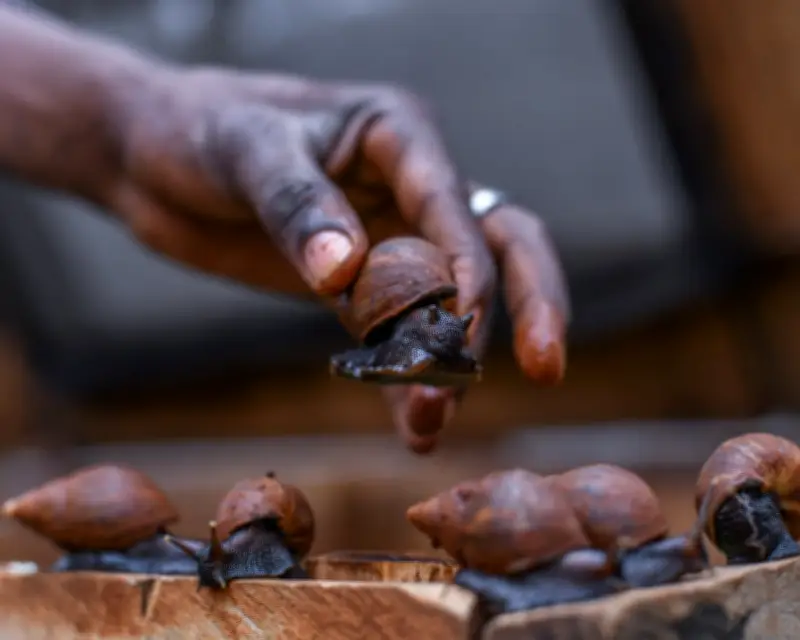
Heliciculture – the farming of land snails for human consumption or cosmetic use – is emerging as a profitable industry with low environmental impact. In Ghana, this practice is being championed by marine biologist Dr Issah Seidu as a sustainable alternative to fishing critically endangered guitarfish.
The Plight of Guitarfish
Guitarfish, an ancient species with a shark-like tail and ray-like body, are driven toward extinction due to high demand for their fins and meat. In West Africa, they are a local delicacy, and their fins are exported to China. Over half of guitarfish species are listed as critically endangered on the IUCN Red List, making them one of the most threatened fish groups.
These slow-maturing rays produce young annually and are considered indicator species for ecosystem health. Their decline poses challenges for coastal fisheries management. In Ghana, guitarfish are the most valuable landed fish, but overfishing has drastically reduced their numbers.
A Grassroots Conservation Campaign
In 2019, Dr Issah Seidu, a lecturer at Kwame Nkrumah University of Science and Technology, founded AquaLife Conservancy to protect guitarfish. With three staff and volunteers, the organisation monitors guitarfish populations and promotes alternative livelihoods for fishing communities.
Seidu discovered the extinction threat while visiting his uncle in Dixcove, a coastal town in western Ghana. He observed that industrial fishing fleets had depleted fish stocks, pushing artisanal fishers to target sharks and rays using gillnets, which indiscriminately catch marine megafauna.
Transition to Snail Farming
Seidu proposed snail farming as a viable alternative. Giant African land snails (Achatina achatina) are fast-growing, require low capital investment, and have two harvest cycles per year. Their meat is a popular protein source in Ghana, sold in chop houses and markets.
An artisanal fisher earns 750–1,000 Ghanaian cedis (about £50–65) per month, while snail farming can generate up to 10,000 cedis monthly. Despite initial hostility from fishers fearing income loss, Seidu engaged them in monitoring and training. About 200 fishers have reduced or stopped guitarfish catches, and 43 have adopted snail farming.
International Recognition
Seidu’s work gained global attention. In 2025, he was appointed co-chair of the IUCN shark specialist group for Africa. In March 2025, the Whitley Fund for Nature awarded him a prize presented by Princess Anne at the Royal Geographical Society. Dr Rima Jabado, chair of the IUCN shark group, praised Seidu’s efforts as exactly what is needed.
Future Goals
Seidu aims to establish Ghana’s first locally managed marine protected area. “Ghana’s coastline is more than just a place,” he says. “It is life, culture and survival for millions of people.”




