Rescue Efforts Continue Against the Clock
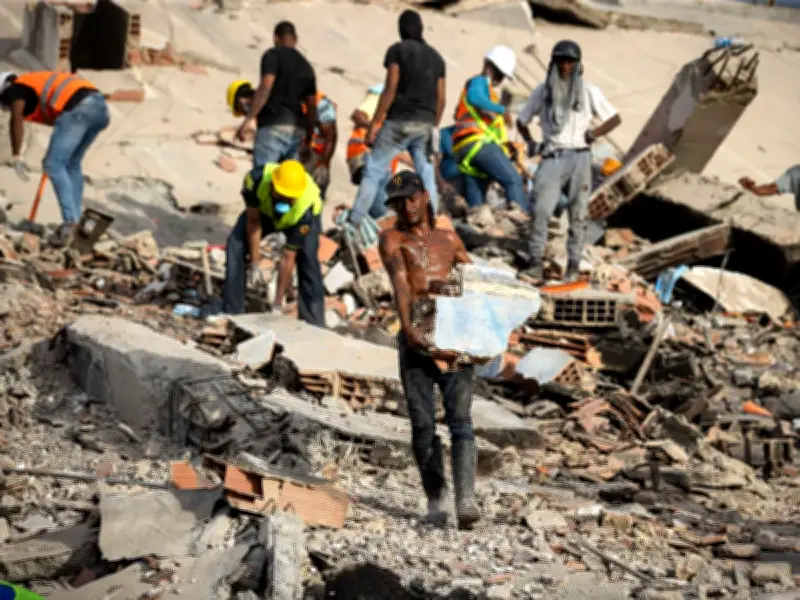
Time is running out to save anyone still alive under the rubble after the devastating Venezuela earthquake, as the death toll continues to climb. Over 1,700 people are now confirmed dead from last week's double quake, according to the latest official estimates, while another 69,000 are still unaccounted for. President Delcy Rodríguez described it as the "most brutal natural catastrophe" in Venezuela's history.
Humanitarian Crisis Unfolds
Attention is now turning to an unfolding humanitarian crisis, with thousands left homeless as a result of the quakes. Makeshift camps have appeared on the streets of the capital Caracas. The South American nation had already been in a perilous financial and political situation prior to the disaster and will now need to face up to the estimated $6.7 billion (£5 billion) cost to the country's economy.
Families Forced into Makeshift Camps
Venezuelans who lost their homes are to be housed in 15 temporary camps, acting President Delcy Rodríguez announced yesterday, after the devastating earthquake left thousands of people sleeping on the streets. Some were left with no choice but to stay on pavements and in parks after high-rise flats were toppled, while others have said they are too concerned about further collapses to go home.
Red Cross Warns of Dire Conditions
The Red Cross has warned of dire conditions in the worst-hit region of La Guaira, where victims of the earthquake have been left without running water or electricity. A statement issued last night read: "Assessment teams estimate that 95% of the infrastructure in La Guaira has been affected. There is a complete suspension of essential basic services – electricity, water, gas and telecommunications remain totally or intermittently interrupted in areas of La Guaira, limiting access to reliable information and basic services."
Despair as Searches Go On
Relatives of victims mourned the deaths of loved ones during burials at the Cementerio General del Sur in Caracas yesterday. Much of the impact in the capital has been witnessed in the 'barrios' – precariously built homes that cling to the steep hillsides surrounding the city, similar to Brazilian favelas.
Army Deployed to Manage Crisis
Venezuela's armed forces have been managing distribution of aid across the country and have also been deployed on major motorways and at the capital's damaged airport. Military convoys are currently the only traffic allowed on some vital routes. In both La Guaira and Caracas, soldiers have been stationed outside collapsed supermarkets, chemists, and abandoned housing complexes to guard against looting.
Sleeping on the Streets
Exposure to the elements from rough sleeping is adding to the existing public health emergency caused by the earthquake. One volunteer providing help to the newly homeless said: "There's nothing that we can do to help somebody in the street that doesn't have a house... they lost everything. Passports, money, house. There's no insurance. The buildings are not habitable."
Health Risks Begin to Appear
A spokesperson from the World Health Organisation said there were "critical gaps" in Venezuela's healthcare system since the earthquakes, including the collapse of forensic and morgue services, inadequate casualty registration, and tracking of missing persons. "There's an increased risk now of outbreaks of vaccine-preventable diseases, such as measles, diphtheria, pertussis, as well as yellow fever and other vector and waterborne diseases, including dengue, chikungunya, Zika, oropouche and malaria," he said.